13 taken to hospital after AYE crash; second heavy vehicle pile-up in 24 hours
Thirteen people were hospitalized after a multi-vehicle accident involving two lorries and a bus on the AYE in Singapore, marking the second heavy vehicle pile-up within 24 hours.
Intelligence analysis by Gemini 2.5 Flash
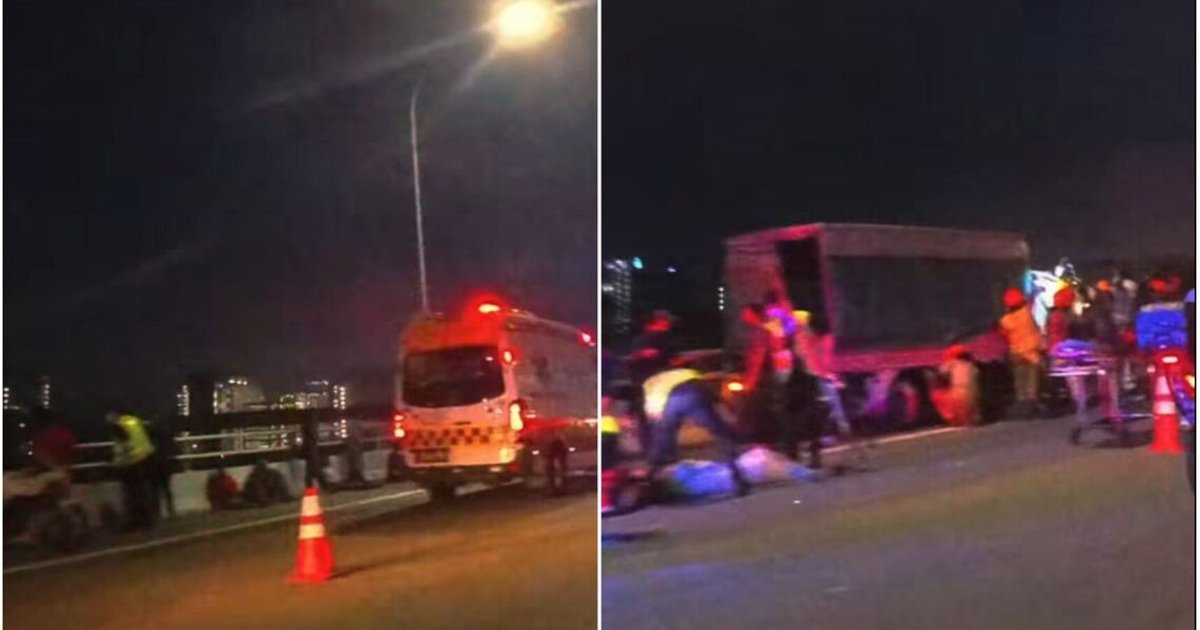
An early morning crash on the Ayer Rajah Expressway (AYE) sent 13 individuals, including a lorry driver and 12 passengers, to the hospital. This incident follows closely on the heels of another heavy vehicle accident in Tuas the previous day, raising concerns about road safety and the frequency of such occurrences involving commercial vehicles.
Imagine if a few big trucks and a bus bumped into each other on a very busy road, like when toy cars crash on a playmat. This happened in Singapore, and 13 people had to go to the hospital because they got hurt. What's extra worrying is that a very similar crash with big vehicles happened just the day before, making people wonder why so many big vehicles are getting into accidents so close together.
Analysis
The recent accident on the Ayer Rajah Expressway (AYE), which resulted in 13 hospitalizations, underscores a concerning trend in Singapore's road safety landscape. Occurring in the early hours, the collision involved two lorries and a bus, a common configuration for commercial transport in the city-state. The fact that this is the second such heavy vehicle pile-up within a mere 24 hours suggests either an alarming coincidence or potentially deeper systemic issues that warrant immediate attention from authorities and transport operators. The AYE, being one of Singapore's major expressways, experiences high traffic volume, making any incident, especially one involving multiple heavy vehicles, a significant disruption and a serious safety concern for all road users. The involvement of lorry passengers, often migrant workers being transported to or from work sites, also brings to light the specific vulnerabilities of this demographic in road accidents.
AYE
The Ayer Rajah Expressway (AYE) is a critical artery in Singapore's road network, connecting the western industrial areas and residential towns to the city center and other major expressways like the MCE. Its strategic importance means that any disruption, such as a multi-vehicle accident, has significant ripple effects on traffic flow and commuter times across the island. The location of the crash, before the Jalan Boon Lay exit towards the MCE, points to a busy stretch where heavy vehicles are frequently present, navigating junctions and merging lanes. The sheer volume of traffic, combined with the presence of large commercial vehicles, necessitates stringent safety protocols and vigilant driving. Investigations into the specific circumstances of this AYE crash will be crucial in determining contributing factors, whether they relate to driver behavior, vehicle condition, road design, or environmental elements like visibility at dawn.
24 hours
The most striking aspect of this incident is its timing: it occurred less than 24 hours after another major heavy vehicle accident in Tuas. The previous incident on November 4 involved a bus, a lorry, and a tipper truck, resulting in 26 people being hospitalized. This rapid succession of similar events raises serious questions about the overall state of heavy vehicle safety in Singapore. While individual accidents can be attributed to various factors, two significant pile-ups involving multiple heavy vehicles and numerous casualties within such a short timeframe could indicate a broader pattern. This might prompt a review of existing regulations, enforcement measures, and industry practices concerning heavy vehicle operations, including driver training, working hours, vehicle maintenance schedules, and passenger transport safety standards. The authorities will likely face pressure to address these concerns proactively to prevent further occurrences.
13
The human toll of the AYE crash is significant, with 13 individuals, including a 42-year-old lorry driver and 12 male lorry passengers aged between 24 and 51, requiring hospitalization. The distribution of casualties across Ng Teng Fong General Hospital and National University Hospital highlights the scale of the emergency response. While the article states they were taken conscious to the hospital, the nature of heavy vehicle collisions often leads to serious injuries, even if not immediately life-threatening. The involvement of multiple passengers in a lorry, a common practice for transporting workers, also underscores the potential for high casualty counts in such incidents. The ongoing police investigations, with the lorry driver assisting, will aim to establish accountability and understand the sequence of events that led to this unfortunate outcome. The welfare of these individuals and the implications for their livelihoods will also be a key concern following such a traumatic event.
Key points
- Thirteen people were hospitalized after an accident involving two lorries and a bus on the AYE.
- The incident occurred around 5:50 AM on November 5, towards the MCE before the Jalan Boon Lay exit.
- A 42-year-old male lorry driver and 12 male lorry passengers, aged 24 to 51, were among those taken to Ng Teng Fong General Hospital and National University Hospital.
- This is the second reported heavy vehicle pile-up in Singapore within 24 hours, following a similar incident in Tuas on November 4.
- Police investigations into the AYE crash are ongoing, with the lorry driver assisting.
The recurrence of heavy vehicle accidents within a short timeframe could signal underlying issues with driver fatigue, vehicle maintenance, or road safety regulations, potentially leading to increased public concern and calls for stricter enforcement. Without effective interventions, similar incidents might continue, posing ongoing risks to commuters and impacting traffic flow on major expressways.