AES-Cedeao: The two blocs announce their intention to work towards a "framework agreement"
The Alliance of Sahel States (AES) and ECOWAS have resumed dialogue in Dakar, agreeing to establish joint working groups to develop a cooperation framework agreement, marking the first official ministerial meeting since AES members departed the bloc in January 2024.
Intelligence analysis by Gemini 2.5 Flash
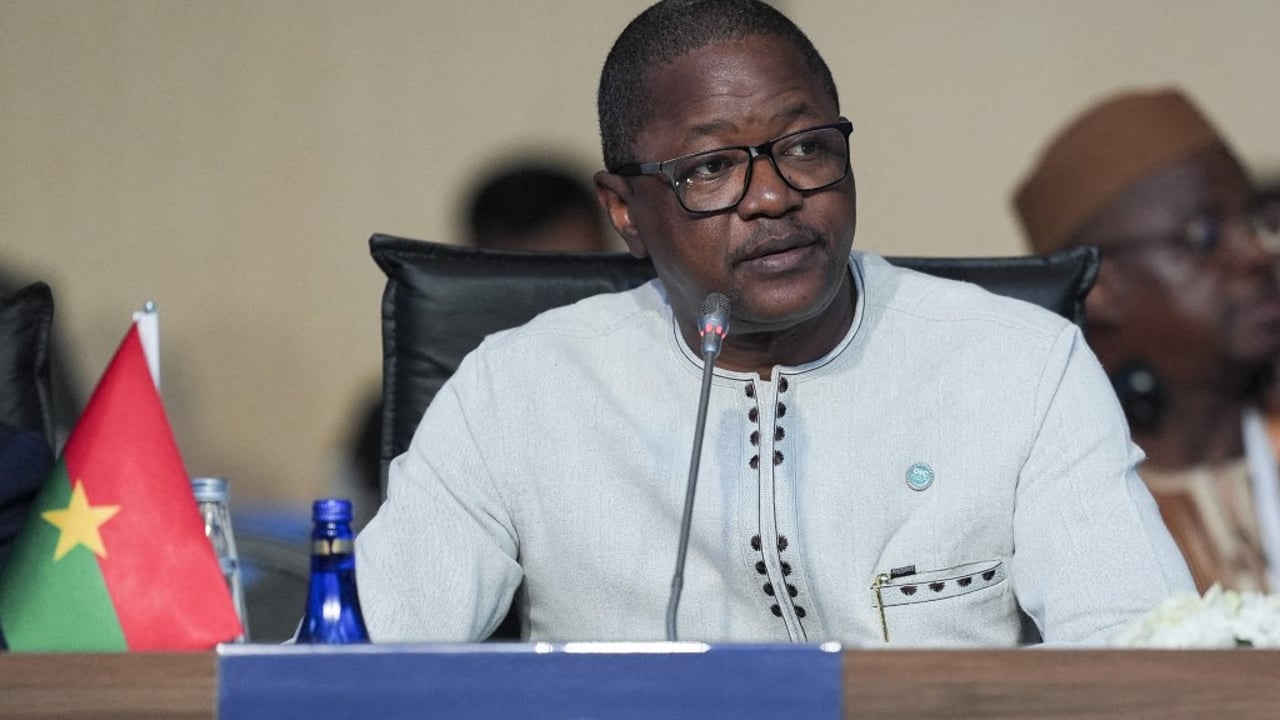
Following the departure of Burkina Faso, Mali, and Niger from ECOWAS in January 2024, the two regional blocs held their first official ministerial meeting in Dakar on October 17, 2023, expressing a desire for "fraternity" and "mutual respect" as they commit to forging a new cooperation framework.
Imagine two groups of friends who had a big fight and stopped playing together. Now, the leaders of these two groups met up and decided they want to try and be friends again, or at least work together on some things. They're going to make a plan to cooperate, which is like drawing up new rules for how they can share toys and play nicely, even if they're not in the same club anymore.
Analysis
The recent dialogue between the Alliance of Sahel States (AES) and the Economic Community of West African States (ECOWAS) represents a pivotal moment in West African regional politics, signaling a potential thaw in relations that have been strained since the departure of Burkina Faso, Mali, and Niger from ECOWAS in January 2024. This official ministerial meeting, held in Dakar on October 17, 2023, is the first of its kind since the schism, indicating a pragmatic shift towards re-engagement rather than continued isolation. The joint communiqué, which highlighted a spirit of "fraternity, mutual respect, and openness," underscores a shared recognition of the imperative for regional stability and cooperation, despite fundamental disagreements over governance and external alliances. The agreement to establish joint thematic working groups to forge a cooperation framework agreement suggests a structured approach to rebuilding bridges, focusing on practical areas where collaboration can yield mutual benefits.
Karamoko Jean-Marie Traoré
The leadership of the AES delegation by Karamoko Jean-Marie Traoré, Burkina Faso's Minister of Foreign Affairs, signifies the high-level commitment of the military-led states to this renewed dialogue. His presence at the forefront of the discussions lends considerable weight to the AES's stated intention to engage constructively with ECOWAS. This direct engagement at the ministerial level moves beyond previous informal contacts, establishing a formal channel for communication and negotiation between the two blocs. The choice of a foreign minister to lead the delegation also suggests a focus on diplomatic solutions and the establishment of formal interstate relations, rather than solely security-oriented discussions.
The participation of such a senior official from Burkina Faso, a key member of the AES, indicates a collective decision by the alliance to explore avenues for coexistence with ECOWAS. This move could be interpreted as an acknowledgment that complete disengagement from the regional body carries significant economic and political costs for the Sahelian states. By sending a high-ranking diplomat, the AES demonstrates a willingness to negotiate the terms of future interactions, potentially seeking a new modus vivendi that respects their sovereignty while addressing regional challenges. This diplomatic overture is crucial for setting a precedent for future engagements and for signaling a desire to move past the initial acrimony of their departure.
Dakar
The selection of Dakar, Senegal, as the venue for this crucial meeting holds significant symbolic and practical importance. As the capital of Senegal, which currently holds the rotating presidency of ECOWAS under President Bassirou Diomaye Faye, Dakar serves as a central hub for West African diplomacy. Hosting the meeting there underscores ECOWAS's role as the established regional body and provides a neutral, yet authoritative, ground for discussions. The location facilitates accessibility for both delegations and reinforces the idea that the dialogue is occurring within the broader framework of West African regional affairs.
Furthermore, Dakar's role as a diplomatic center allows for a more structured and formal environment for negotiations, contrasting with previous, less official engagements. The choice of venue itself can be seen as a gesture of goodwill from ECOWAS, providing a platform for the AES to re-engage with the wider regional community. This strategic location helps to frame the discussions as a regional effort to overcome divisions, rather than a bilateral negotiation, thereby elevating the potential impact and legitimacy of any resulting framework agreement. The city's history as a site for significant regional summits adds to the gravitas of the proceedings.
Bassirou Diomaye Faye
The role of Senegalese President Bassirou Diomaye Faye, as the current president of ECOWAS, has been instrumental in fostering this renewed dialogue. His proactive engagement, including a bilateral meeting with Malian junta leader Assimi Goïta in July 2023, demonstrated a willingness to pursue diplomatic solutions and bridge divides. This approach contrasts with the more confrontational stance adopted by ECOWAS under previous leadership, which had imposed sanctions on the military-led states. President Faye's emphasis on "good neighborly relations" and respect for sovereignty has likely created a more conducive environment for the AES to consider re-engagement.
His leadership signals a potential shift in ECOWAS's strategy towards the Sahelian states, moving from punitive measures to a more conciliatory and dialogue-driven approach. This change in leadership and diplomatic tone has been crucial in opening channels for communication that were previously closed. By prioritizing dialogue and mutual respect, President Faye has facilitated the conditions necessary for the two blocs to announce their intention to work towards a framework agreement, offering a pathway to de-escalate tensions and explore practical cooperation in areas of shared interest, such as security and economic development. His personal engagement has been a significant factor in this diplomatic breakthrough.
Key points
- The Alliance of Sahel States (AES) and ECOWAS held their first official ministerial meeting since AES members left the regional bloc.
- The meeting took place in Dakar on October 17, 2023, with delegations led by Burkina Faso's Foreign Minister Karamoko Jean-Marie Traoré for AES and Senegal's Cheikh Niang for ECOWAS.
- Both parties expressed a spirit of "fraternity, mutual respect, and openness" and emphasized maintaining "good neighborly relations" while respecting sovereignty.
- They agreed to establish joint thematic working groups to develop a comprehensive cooperation framework agreement.
- This dialogue follows earlier signs of détente, including a visit by Côte d'Ivoire's intelligence chief to Bamako and a bilateral meeting between Senegalese President Bassirou Diomaye Faye and Malian junta leader Assimi Goïta.
This agreement to work towards a framework agreement could lead to a significant de-escalation of regional tensions, fostering greater stability and cooperation on critical issues like counter-terrorism and economic development. A structured dialogue could pave the way for the AES states to reintegrate into regional initiatives, benefiting from shared resources and coordinated policies. This diplomatic breakthrough might also encourage a more unified regional front against common challenges, strengthening West Africa's collective security and economic prospects.
Despite the stated intentions, the deep-seated political differences and mistrust between the military-led AES states and ECOWAS could hinder the progress of the working groups, leading to prolonged negotiations without concrete outcomes. The underlying issues of governance, democratic transitions, and external alliances remain unresolved, potentially causing future friction and preventing the full implementation of any framework agreement. A failure to reach a meaningful accord could further entrench the division, exacerbating regional instability and undermining efforts for collective security and economic integration.