AI to help planes avoid climate-warming contrails above North Atlantic
A new £5m UK trial, Operation Blue Skies, will use AI to predict where climate-warming contrails are likely to form, allowing planes to adjust their altitude and avoid them.
Intelligence analysis by Gemini 2.5 Flash
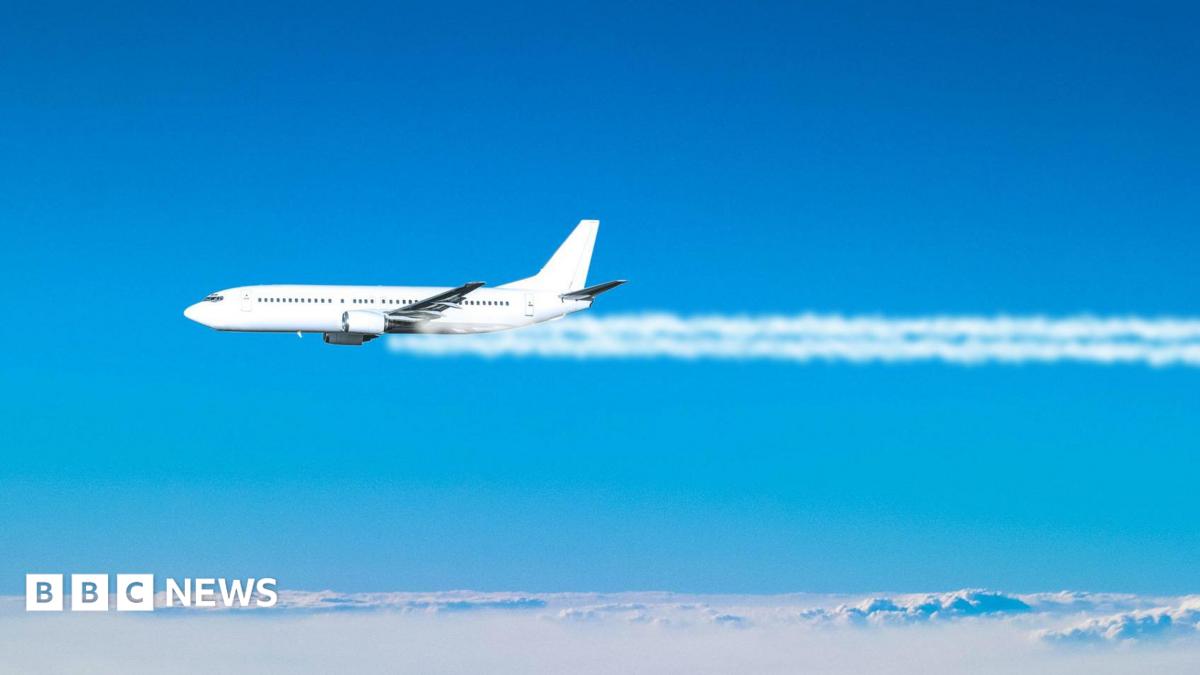
The 30-month project, involving Google, the UK government, Met Office, and NATS, aims to reduce aviation's climate impact by tackling contrails over the North Atlantic. AI will analyze satellite and flight data with weather patterns to forecast contrail formation, guiding air traffic controllers to make minor altitude adjustments for aircraft.
Imagine airplanes leaving white lines in the sky, like 'sky graffiti,' which can trap heat and warm up our planet. Scientists are using a super-smart computer brain, called AI, to predict exactly where these lines are most likely to form. Then, planes can fly a tiny bit higher or lower, like changing lanes on a highway, to avoid making those warming clouds, helping keep the Earth cooler.
Analysis
The Operation Blue Skies initiative represents a significant collaborative effort to mitigate the environmental impact of aviation. This £5 million UK trial, spanning 30 months, brings together a consortium of key players including Google, the UK government, the Met Office, and National Air Traffic Services (NATS), alongside academic researchers. Its primary objective is to leverage artificial intelligence to predict the atmospheric conditions conducive to the formation of persistent contrails, which are estimated to contribute substantially to aviation's climate warming footprint. By identifying these zones, the project aims to enable proactive adjustments to flight paths, primarily through minor changes in altitude, thereby preventing the creation of these heat-trapping ice clouds. The trial's focus on the Shanwick Oceanic airspace underscores its strategic importance, as this corridor accounts for approximately 5% of global contrail warming, making it an impactful testbed for the technology.
Dr Paul Hodgson, Google's technical lead for Operation Blue Skies, has emphasized the scale of the problem, noting that contrail warming is responsible for roughly a third of all aviation's climate impact. While acknowledging some uncertainty in the precise figures, he stressed that scientists are confident it represents a significant environmental challenge. Hodgson's insights highlight the project's potential to yield substantial climate benefits, even considering the slight increase in fuel consumption that might result from altitude deviations. He indicated that previous trials suggest the additional CO2 penalty from such deviations is minimal, less than 1%, compared to the much larger climate cost of contrails themselves. This perspective is crucial for understanding the net climate benefit the project aims to achieve, positioning AI as a tool for optimizing flight efficiency not just for fuel, but for environmental impact.
The practical implementation of the trial will concentrate on the Shanwick Oceanic airspace, a critical segment of the North Atlantic corridor. This specific focus allows for a controlled yet representative environment to test the AI's predictive capabilities and the operational feasibility of contrail avoidance. The process involves Google's AI analyzing satellite imagery and historical flight data, combined with real-time weather patterns, to generate forecasts for contrail formation. This information is then relayed to NATS, enabling air traffic controllers to guide pilots to adjust their aircraft's altitude by around 2,000 feet. Such adjustments are routine for avoiding turbulence or bad weather, meaning passengers are unlikely to notice any difference. Testing is scheduled for selected evenings and nights during the winters of 2026-27 and 2027-28, periods of lower air traffic, with an estimated 10,000 flights passing through the airspace during these trial windows. The Department for Transport's £2.65 million contribution, alongside Google's £1.4 million in AI research and infrastructure, underscores the significant investment in this innovative approach to aviation sustainability.
Key points
- A £5m UK trial, Operation Blue Skies, will use AI to predict and help planes avoid climate-warming contrails.
- The project involves Google, the UK government, Met Office, and NATS, focusing on the North Atlantic's Shanwick Oceanic airspace.
- Contrails, or 'sky graffiti,' are estimated to be responsible for about a third of all aviation's climate warming.
- AI will combine satellite images, flight data, and weather patterns to forecast contrail formation zones.
- Pilots will make minor altitude adjustments (around 2,000ft) to avoid these zones, with minimal impact on passengers.
- Previous trials suggest the additional fuel burn from deviations is less than 1% of the contrail's climate cost.
This project could significantly reduce aviation's climate impact by effectively mitigating contrail warming, offering a scalable solution that integrates seamlessly into existing air traffic control procedures. Successful implementation could pave the way for similar AI-driven environmental optimizations across global airspaces, making air travel substantially cleaner.
While promising, the project faces challenges in ensuring the accuracy of AI predictions across diverse weather conditions and minimizing any additional fuel burn from altitude changes. If the climate benefit of contrail avoidance is outweighed by increased CO2 emissions from deviations, or if global scaling proves difficult, its overall impact could be limited.