Alarm over $20m plan to supply ICE officers with electric-shock gloves
The Department of Homeland Security plans to spend up to $20m outfitting ICE officers with electric-shock gloves by next March, alarming civil liberties groups. A Kentucky man died after allegedly being shocked 40 times with similar devices.
Intelligence analysis by Llama
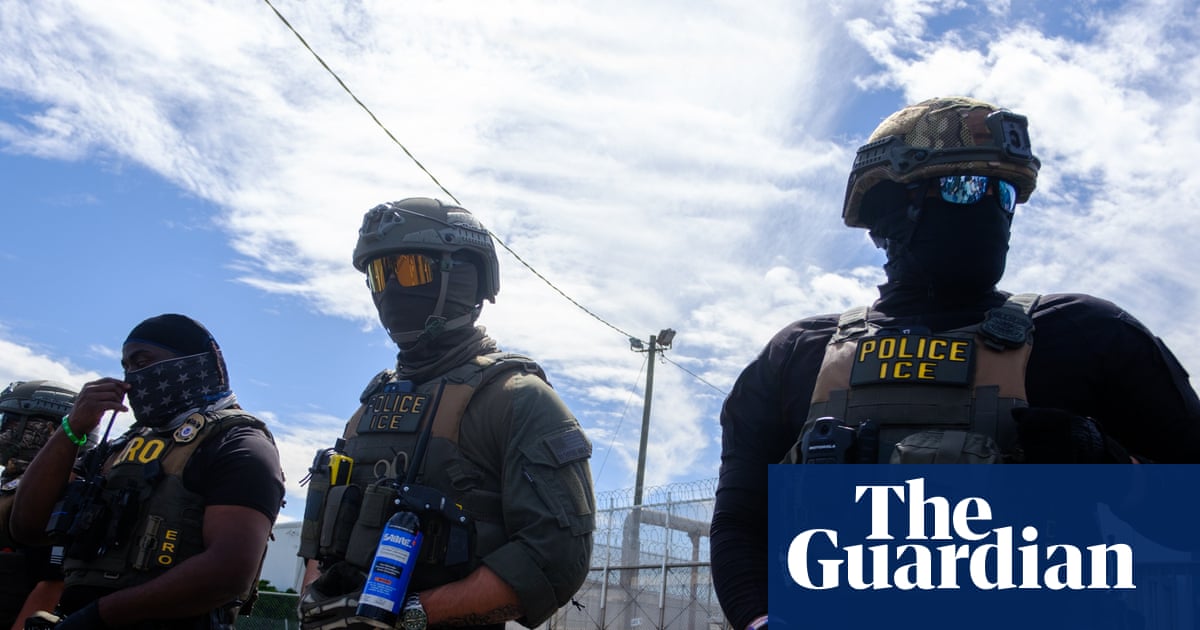
DHS wants to equip ICE officers with conductive-shock gloves manufactured by Compliant Technologies, a Kentucky firm, drawing sharp criticism from the ACLU amid a wrongful-death suit over a similar device.
The government wants to give ICE officers special gloves that can zap someone with electricity to make them stop fighting. Some grown-ups are worried because one man already died after being zapped many times with the same kind of glove, and they think the gloves are too dangerous, especially for kids and people in jail.
Analysis
The G.L.O.V.E. device
The technology at the center of the controversy is the G.L.O.V.E., which stands for Generated Low Output Voltage Emitter and is built by Compliant Technologies, a Lexington, Kentucky company owned by military veterans. The CT-G5 model, the version under consideration, delivers a minimum of 324 volts and a maximum of 380 volts when the wearer presses a button while touching bare skin. The product manual explicitly warns against use on the elderly, small children, pregnant women, and disabled people, a list of carve-outs that illustrates how narrow the manufacturer itself considers the safe-use envelope to be. By comparison, a Taser typically delivers 1,200 to 1,500 volts via fired prongs, so the glove is not pitched as a substitute for a Taser but as a close-contact distraction and de-escalation tool. The vendor's own demonstration videos show a user causing a volunteer to buckle to the ground and shout expletives after a two-second grip on the forearm, with founder and CEO Jeff Niklaus laughing in the footage as the volunteer fell.
Fort Bliss
The ACLU's sharpest concerns center on where the gloves might end up being used out of public view. Sarah Mehta, deputy director of government affairs in the ACLU's equality division, warned that what is "also scary is what [their] uses will be where we can't see them," pointing specifically to Fort Bliss, the largest migrant detention facility in the US. Allegations of abuse at Fort Bliss have circulated for months, and the government has denied claims of inhumane conditions, but the ACLU argues that putting a conducted-energy device in the hands of an agency that has loosened its hiring standards multiplies the risk of unmonitored harm. Mehta also warned of a potential street-deployment chilling effect, suggesting the gloves could be wielded as much for intimidation as for tactical necessity during immigration enforcement operations. The combination of relaxed recruitment, opaque detention environments, and a new close-contact weapon is what civil liberties advocates say makes the $20m procurement so alarming.
$20m contract
Earlier this month, DHS published plans to spend up to $20m (£15m) to outfit ICE officers by March of next year with the gloves, which are also already in use at roughly 50 police departments across 20 states, according to an NPR analysis. The scale of the planned federal purchase dwarfs prior deployments: in May 2025, for example, the Omaha police department bought 40 pairs for use in public schools for just under $66,000. Twenty-nine of Omaha's 34 school resource officers have since trained on the device, and an incident report reviewed by the Guardian describes a female SRO applying the glove to a male middle school student's forearm twice, causing him to drop to the floor face down. A DHS spokesperson said ICE is "constantly assessing the needs of our officers in the field" and that every technology decision is reviewed against applicable law enforcement standards, but the agency has not addressed the Kentucky wrongful-death suit directly. Compliant Technologies did not respond to a series of questions and requests for comment from the Guardian.
Key points
- DHS plans to spend up to $20m outfitting ICE officers with electric-shock gloves by March of next year
- A 43-year-old Kentucky man died after allegedly being shocked 40 times with a similar device, and his widow is suing
- The ACLU calls the plan alarming and warns about deployment at Fort Bliss and on the streets
- The Compliant Technologies CT-G5 delivers 324 to 380 volts on direct skin contact, versus 1,200 to 1,500 volts for a typical Taser
- About 50 police departments in 20 states already use the technology, including 29 school resource officers in Omaha
If DHS institutes rigorous training, transparent reporting, and independent oversight, the gloves could serve as a close-range alternative to higher-voltage Tasers and reduce injuries in situations where officers currently escalate to greater force. Tightened use-of-force data collection would also give the public a clearer picture of how the devices are deployed in schools and detention facilities.
The ACLU warns that combining the gloves with relaxed ICE hiring standards and opaque detention environments like Fort Bliss creates a real risk of abuse, particularly against people who cannot easily resist or whose accounts are unlikely to surface. The prior Kentucky death and the Omaha middle-school incident illustrate how the device can cause sudden collapse and injury even when the user is briefly touching bare skin.