‘An intrusion’: data centre fights test Southeast Asia’s AI ambitions
Residents in Malaysia and the Philippines are resisting the construction of data centres for AI projects near their homes, citing concerns over noise, water use, traffic, and land suitability.
Intelligence analysis by Llama
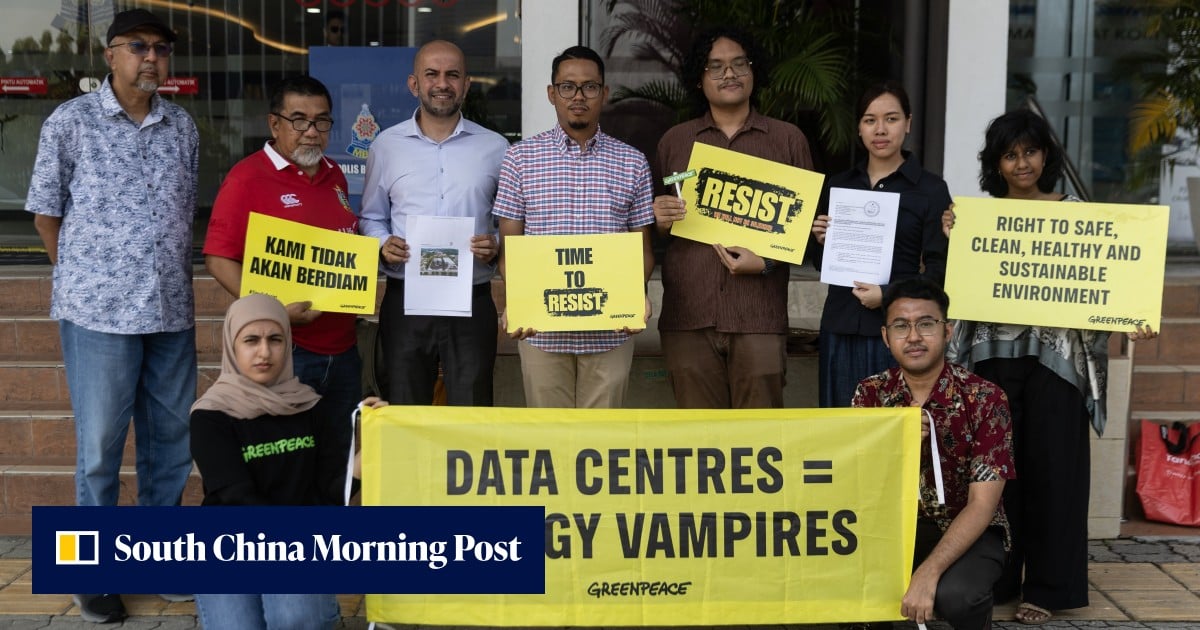
The proposed data centres are part of the growing infrastructure for cloud computing and AI in Southeast Asia, but nearby residents are objecting to their potential impact on their communities.
Imagine you live in a quiet neighborhood, and someone comes and says they want to build a huge building that will make a lot of noise and use a lot of water. You might not want that building there, right? That's what's happening in Malaysia and the Philippines, where people are resisting the construction of data centres for AI projects near their homes.
Analysis
Petaling Jaya's Data Centre Dilemma
The proposed data centre in Petaling Jaya, Malaysia, has sparked controversy among residents who are concerned about the potential impact on their community. The data centre would be built on a vacant land opposite their homes, and they are worried about the noise, water use, and traffic it would generate. The council had received about 290 objections to the proposal, and the developer's consultant eventually withdrew the application to reassess the site's feasibility and development components.
Oton's AI Data Centre Debacle
A similar scene played out in Oton, a municipality in the central Philippine province of Iloilo, where residents and farmers questioned a proposed 50-megawatt AI data centre during a public hearing. The proponent walked out, and local media reported two days later that the proposal had been withdrawn. The incident highlights the growing resistance to data centre construction in Southeast Asia, particularly in densely populated areas.
The AI Infrastructure Conundrum
The proposed data centres are part of the growing infrastructure for cloud computing and AI in Southeast Asia. While they promise foreign investment, digital jobs, and a place in the fast-growing AI economy, they also raise questions over their impact on local communities. The resistance to data centre construction highlights the tension between the economic benefits of AI and the social costs of its infrastructure.
Key points
- Residents in Malaysia and the Philippines are resisting the construction of data centres for AI projects near their homes.
- The proposed data centres are part of the growing infrastructure for cloud computing and AI in Southeast Asia.
- The resistance to data centre construction highlights the tension between the economic benefits of AI and the social costs of its infrastructure.
- The proposed data centres in Petaling Jaya and Oton have been withdrawn due to public objections.
- The incident highlights the growing resistance to data centre construction in Southeast Asia, particularly in densely populated areas.
If the resistance to data centre construction continues, it could lead to more sustainable and community-friendly AI infrastructure development in Southeast Asia. This could involve working with local communities to identify suitable locations for data centres and ensuring that they are designed and built with minimal impact on the environment and local residents.
If the resistance to data centre construction is not addressed, it could lead to a shortage of data centre capacity in Southeast Asia, which could hinder the growth of the AI economy. This could also lead to a decrease in foreign investment and digital job creation, which could have negative impacts on the region's economy.