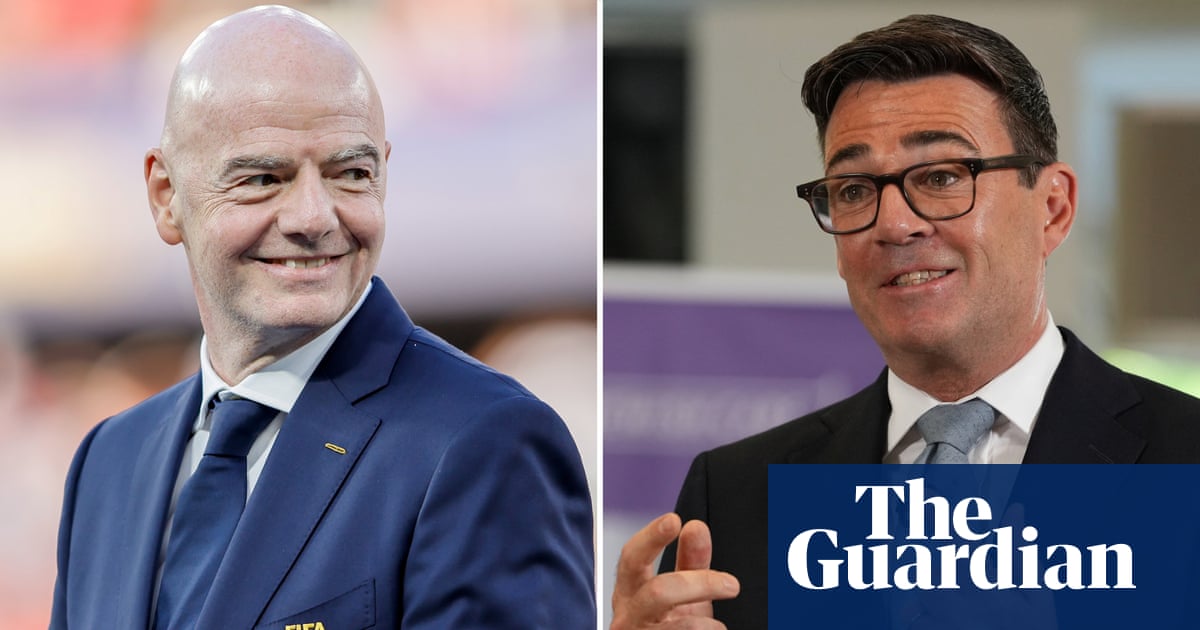
Andy Burnham calls on Infantino to resign over ‘outrageous’ World Cup plans
UK Prime Minister Andy Burnham has called for FIFA President Gianni Infantino's resignation over his "outrageous" proposal to sell a $4.2 billion stake in the World Cup's commercial rights, a plan facing widespread backlash.
Intelligence analysis by Gemini 2.5 Flash
FIFA's plan to create an investment vehicle for World Cup commercial rights and sell a portion to investors has sparked significant controversy. This move has drawn strong criticism from European football bodies, prompted a senior adviser's resignation, and now led to UK Prime Minister Andy Burnham demanding Infantino step down.
Imagine the biggest football tournament in the world, like a giant party everyone loves. The person in charge wants to sell a piece of the party's special decorations and tickets to rich grown-ups for lots of money. But many people, including a very important leader from the UK, think that's a really bad idea because the party belongs to all the fans and players, not just investors. They believe the person in charge should step down because of this plan.
Analysis
FIFA's Divisive Commercial Strategy
FIFA's leadership, under President Gianni Infantino, has put forward a controversial proposal to sell a stake in the World Cup's commercial rights. The plan involves creating an investment vehicle that would hold these rights, with a portion then sold to external investors for an estimated $4.2 billion (£3.1 billion). This move is framed by FIFA as a way to generate significant capital, but it has been met with fierce opposition from various football bodies, particularly UEFA, which represents European national associations.
The core of the criticism revolves around the perception that the World Cup, a global sporting spectacle, is being treated as a mere commercial product rather than a shared cultural asset. Critics argue that such a sale could compromise the integrity and long-term future of the game, shifting control and benefits away from the football community and towards private investors. The financial implications for member associations, particularly smaller ones, are also a point of contention, with concerns that the deal might not ultimately benefit the broader football ecosystem.
Escalating Political and Internal Opposition
The backlash against Infantino's proposal has intensified, reaching the highest levels of political leadership. UK Prime Minister Andy Burnham has become the first leader of a major nation to publicly call for Infantino's resignation, describing the plans as "outrageous." Burnham, a lifelong football fan, emphasized that "Football does not belong to investors. It belongs to the people who fill the stands." His intervention signals a significant escalation in the pressure on FIFA's president.
Adding to the internal turmoil, Carlos Cordeiro, a senior adviser to Infantino since 2021, resigned over the proposal. Cordeiro unequivocally stated his opposition, calling it "a bad deal for Fifa’s member associations, a bad deal for football, and a bad deal for the long-term future of the game." His resignation underscores the deep divisions within FIFA's own ranks regarding the wisdom and ethics of the commercialization strategy, further weakening Infantino's position.
The Future of World Cup Governance and Finance
FIFA's insistence on proceeding with the World Cup sell-off, despite the threat of a boycott from all 55 European nations, highlights a critical juncture for global football governance. The standoff raises questions about the balance of power within FIFA and the extent to which member associations can influence major commercial decisions. A boycott, if it materializes, would have profound implications for the World Cup's prestige, financial viability, and global appeal, potentially fracturing the sport's international structure.
The debate also touches upon broader themes of sports ethics and the role of commercial interests in shaping major cultural events. The outcome of this dispute could redefine how international sporting bodies manage their assets, balance revenue generation with stakeholder interests, and maintain public trust. It will be a test of leadership for Infantino and a pivotal moment for the financial and ethical direction of the world's most popular sport.
Key points
- UK Prime Minister Andy Burnham called for FIFA President Gianni Infantino's resignation.
- The demand stems from Infantino's plan to sell a $4.2 billion stake in World Cup commercial rights.
- The proposal faces strong opposition from European football bodies and led to a senior adviser's resignation.
- Critics argue the World Cup is not a product to be sold and belongs to the fans.
- FIFA insists on proceeding despite threats of a boycott from 55 European nations.
If the widespread opposition forces FIFA to reconsider its commercialization strategy, it could lead to a more transparent and stakeholder-inclusive governance model, ensuring the World Cup's long-term integrity and public appeal are prioritized over short-term financial gains.
Should FIFA proceed with the sale despite the strong backlash, it risks alienating major football associations and fans, potentially leading to boycotts, diminished prestige for the World Cup, and a fractured global football landscape.