Are Raccoons Evolving Into Pets?
A Long Island woman's home has become a sanctuary for a group of raccoons, who have adapted to living with humans and even developed distinctive traits. The phenomenon has sparked debate about whether raccoons are domesticating themselves, much like wolves.
Intelligence analysis by Llama
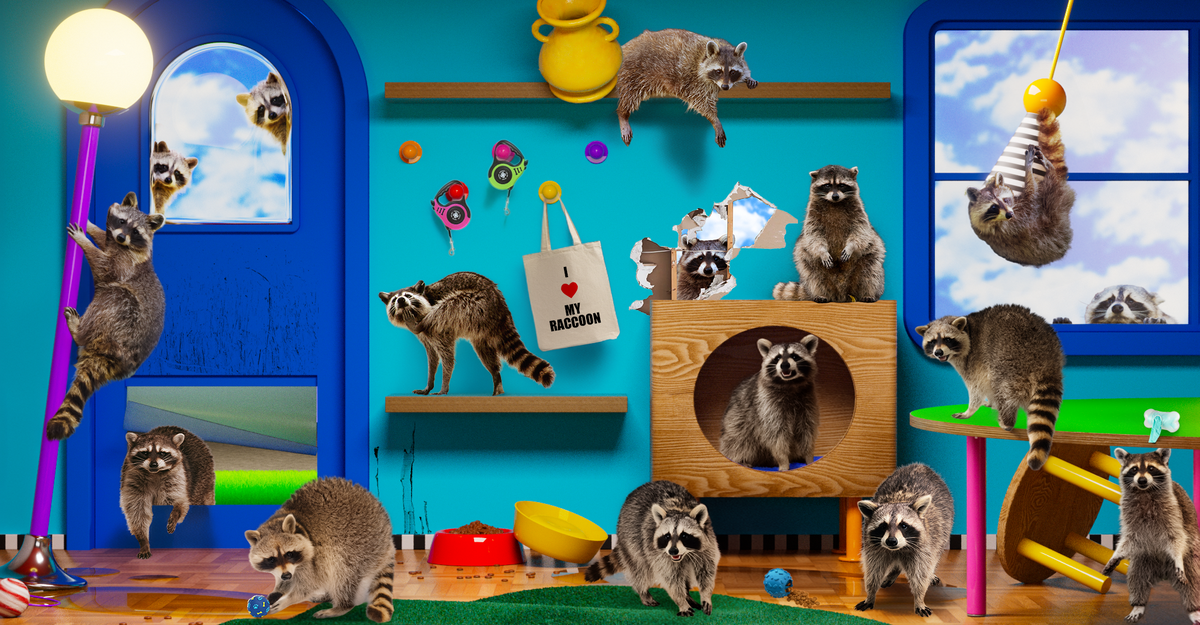
Raccoons on Long Island have adapted to living with humans, developing traits similar to those of tame species. Some believe they are domesticating themselves, while others see it as a remarkable turnaround in their relationship with humans.
Imagine you have a pet raccoon that you feed and take care of. Over time, the raccoon starts to trust you and becomes more curious about its surroundings. It even starts to develop its own personality and quirks, like a pet dog or cat. This is what's happening with the raccoons on Long Island, who are adapting to living with humans and even developing traits similar to those of tame species.
Analysis
The Rise of the Raccoon as a Pet Species
The phenomenon of raccoons adapting to living with humans is not new, but it has gained significant attention in recent years. A study published in Frontiers in Zoology last year confirmed what many Americans suspected about the creatures rummaging through their recycling bins. More than that, it confirmed what many Americans wanted to believe about these floofy, fluffy cuddle-badgers, with their picklock fingers and Zorro masks.
Raccoons aren't just raccoons, after all. They're up there with capybaras and deep-sea anglerfish as objects of unhinged human adoration. They're trash pandas. They're Rocket and Bandit. They're Jimothy, a spry, deformed raccoon who has become so popular in Seattle that its city council officially decreed it 'Jimothy Summer.'
Standing in Smith's kitchen, surrounded by lasagna pans and scat, I half-felt that I was watching Darwinian evolution occurring in real time, and even wondered whether the raccoons of Long Island somehow wanted to domesticate. Then again, that might be nothing more than what a lot of Americans want to believe.
The History of Raccoon Domestication
When Christopher Columbus arrived on Long Island (the one in the Bahamas, not New York) in 1492, he noticed a local fisherman keeping some strange kind of dogs as pets. He was far from the last colonist to be confused by the species, described nearly 300 years later by the explorer Jonathan Carver as possessing a badger's body, fox's head, dog's muzzle, cat's tail, and sharp claws that let it climb like a monkey.
Following Columbus's second voyage, Europeans ate so many of the animals that they went extinct on the island of Hispaniola. Over the following centuries, colonizers exploited raccoons not so much for food as for fur. Jaunty association with the king of the wild frontier notwithstanding, raccoon pelts were considered inferior to beaver pelts, 'common or even undignified for
The Future of Raccoon Domestication
The phenomenon of raccoons adapting to living with humans has sparked debate about whether they are domesticating themselves, much like wolves. While some believe that raccoons are actively seeking to become pets, others see it as a remarkable turnaround in their relationship with humans.
As the story of the raccoons on Long Island highlights, the changing relationship between humans and wildlife has significant implications for conservation and our understanding of animal behavior. By studying the behavior of raccoons and other wildlife, we can gain a deeper understanding of the complex interactions between humans and the natural world.
Key points
- Raccoons on Long Island have adapted to living with humans and developed distinctive traits.
- The phenomenon has sparked debate about whether raccoons are domesticating themselves, much like wolves.
- The changing relationship between humans and wildlife has significant implications for conservation and our understanding of animal behavior.
- Studying the behavior of raccoons and other wildlife can gain a deeper understanding of the complex interactions between humans and the natural world.
If the raccoons on Long Island continue to adapt to living with humans, it could lead to a greater understanding of animal behavior and the complex interactions between humans and the natural world. This could also lead to new opportunities for conservation and wildlife management.
However, the increasing presence of raccoons in human settlements could also lead to conflicts with humans, particularly if the raccoons start to damage property or spread disease. Additionally, the domestication of raccoons could lead to a loss of their natural behavior and instincts, potentially harming the species as a whole.