Avalanche’s AVAX leads crypto gains following NYSE tokenization deal
Avalanche's AVAX token surged after the NYSE announced it would use the Avalanche blockchain to settle trades on a new platform for tokenized stocks, aiming for faster, 24/7 trading.
Intelligence analysis by Gemini 2.5 Flash
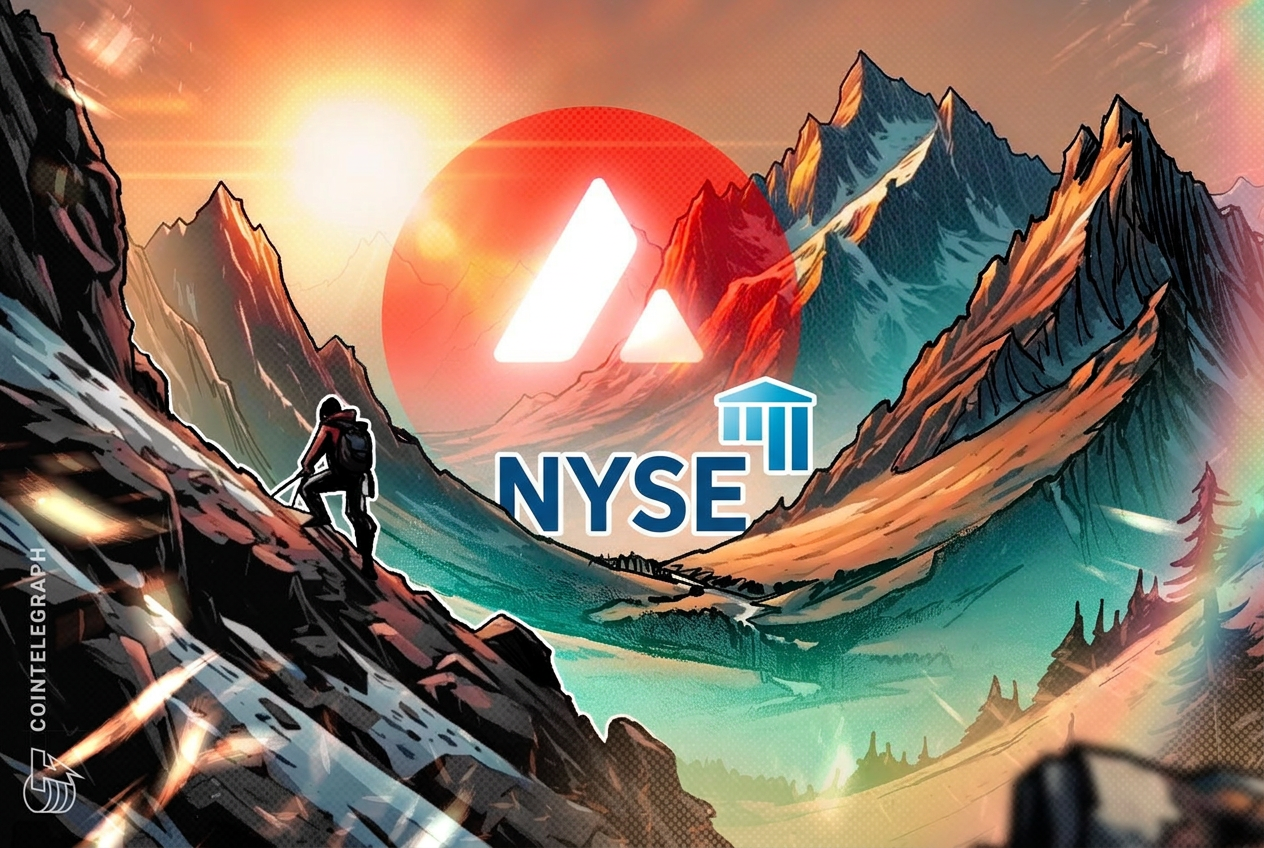
The New York Stock Exchange has selected the Avalanche blockchain to power its upcoming tokenized stock trading platform, a move that sent AVAX token prices up by as much as 10%. This initiative is part of a broader Wall Street trend to leverage blockchain technology for more efficient and continuous trading of traditional assets.
Imagine stocks, which are like tiny pieces of a company you can buy, usually only trade during certain hours, like a shop that closes at 4 PM. Now, big financial companies like the NYSE want to make these stocks trade all day and night, super fast, using a special digital notebook called a blockchain. They picked a specific digital notebook called Avalanche to help them do this, which made Avalanche's own digital money, AVAX, go up in value because it's a big deal for them to be chosen by such a famous company.
Analysis
The integration of blockchain technology into traditional finance by major players like the NYSE marks a pivotal moment for the cryptocurrency ecosystem. The NYSE's decision to utilize Avalanche for its tokenized stock platform highlights a growing recognition of blockchain's potential to revolutionize market infrastructure, moving beyond speculative assets to foundational financial services. This strategic move by one of the world's largest stock exchanges could set a precedent for other financial institutions, accelerating the convergence of traditional and decentralized finance.
NYSE
The New York Stock Exchange's foray into tokenized stocks, with Avalanche as its chosen blockchain, underscores a clear strategic intent to enhance market efficiency and accessibility. Dennis Lee, head of digital issuance at NYSE, emphasized the exchange's goal to expand its equities offerings through blockchain, selecting technology based on specific job requirements. The primary drivers for this initiative are to enable faster settlement times, moving beyond the typical one-business-day settlement, and to facilitate 24/7 trading, breaking free from traditional market hours. This platform, if regulatory approval is secured, could launch before the end of 2026, signaling a tangible timeline for this significant shift.
Avalanche
Avalanche was selected by the NYSE for several key attributes that align with the demands of a high-volume trading platform. According to Dennis Lee, the chosen ledger needs to be fast, reliable, allow for controlled participation, offer predictable costs, and possess a large developer community. Avalanche reportedly meets all these criteria, making it a suitable backbone for recording and settling tokenized stock trades. Ava Labs, the developer behind Avalanche, noted that discussions with the NYSE began nearly a year prior, indicating a thorough vetting process before the final selection was made, highlighting the blockchain's robust capabilities and enterprise readiness.
Wall Street
The NYSE's move is not an isolated incident but rather part of a broader trend among major financial firms to embrace blockchain for tokenized securities. Nasdaq, for instance, announced plans to invest $100 million in Kraken's parent company, Payward, to launch its own tokenized stock platform by Q2 2027. Similarly, the Depository Trust & Clearing Corporation (DTCC) launched a service in October allowing financial firms to convert traditional securities into digital tokens, aiming to establish a foundation for institutional adoption at scale. Furthermore, other firms like Japanese fintech company Progmat and Aave Labs have already brought significant financial assets and lending services onto the Avalanche blockchain, demonstrating a diversified institutional interest in the platform's capabilities for various financial applications.
Key points
- Avalanche's AVAX token saw a significant price increase after the NYSE announced its selection of the blockchain.
- The NYSE plans to use Avalanche to settle trades on a new platform for 24/7 tokenized stock trading.
- The initiative aims to make stock trading faster and available outside traditional market hours.
- Avalanche was chosen for its speed, reliability, predictable costs, control features, and strong developer community.
- Other major financial firms like Nasdaq and DTCC are also investing in blockchain for tokenized securities, indicating a broader industry trend.
The NYSE's adoption of Avalanche could significantly boost the credibility and utility of blockchain technology in mainstream finance, potentially leading to increased institutional investment and broader acceptance of digital assets. This integration promises more efficient, faster, and 24/7 trading, benefiting investors and modernizing traditional market infrastructure.
Despite the positive news, the platform's launch is contingent on regulatory approval, which could face delays or stringent requirements, potentially pushing back the timeline or altering the scope. Furthermore, the nascent nature of tokenized securities in a regulated framework means unforeseen technical or operational challenges could arise, impacting adoption.