Barbados joins push for global panel to tackle inequality
Barbados is advocating for a new international panel to address global inequality, citing heightened geopolitical tensions, climate change, and rapid technological advances as factors widening the gap between rich and poor nations.
Intelligence analysis by Gemini 2.5 Flash
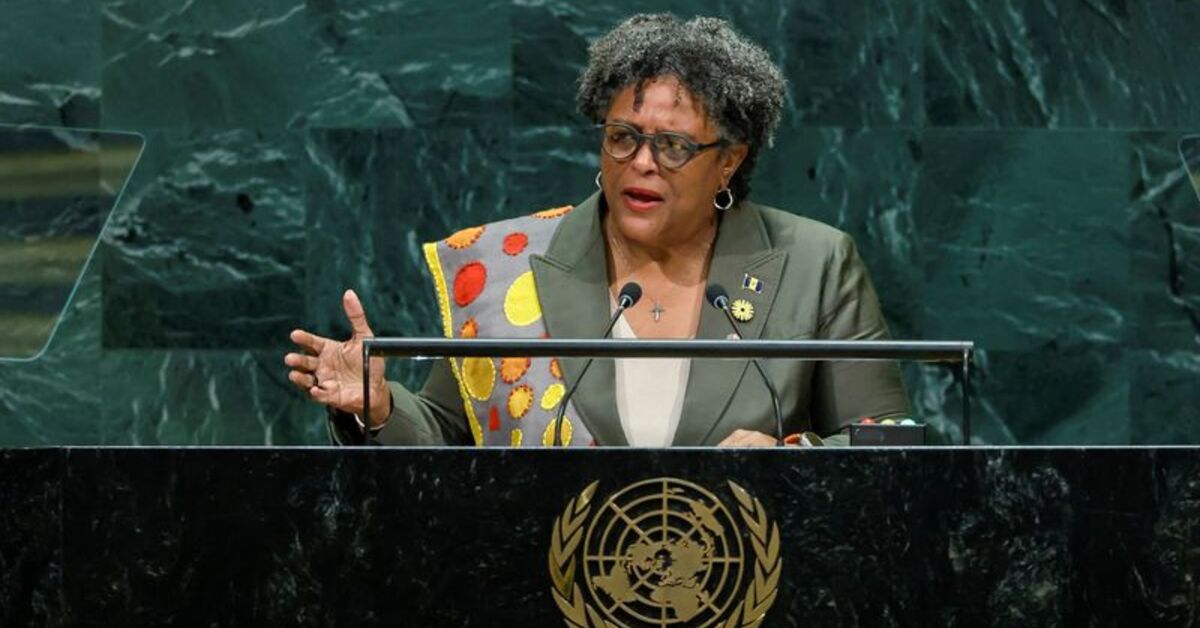
At the IMF and World Bank annual meetings in Bangkok, Barbadian Prime Minister Mia Mottley announced her country's support for establishing a UN-backed panel to tackle global inequality. This initiative, backed by over a dozen nations, aims to counter mounting debt burdens, rising costs, and the risk of developing economies being left behind by the AI boom, with a resolution sought be…
Imagine some kids have lots of toys and yummy snacks, while others have very few. This story is about a country called Barbados that wants to create a special global team, like a big club for grown-ups, to help make sure everyone around the world gets a fairer share. They think that if some countries get too rich and others stay too poor, it can cause problems like arguments and not enough jobs. They especially worry about new things like super-smart computers (AI) and changes in the weather (climate change) making this unfairness even worse, so they want to fix it before it's too late.
Analysis
Mia Mottley
Barbadian Prime Minister Mia Mottley has emerged as a prominent voice advocating for a new international mechanism to combat global inequality. Her call, made during the International Monetary Fund and World Bank annual meetings in Bangkok, underscores a growing concern among developing nations regarding the widening economic chasm. Mottley explicitly linked the issue of inequality to fundamental global challenges, stating it is crucial for ending poverty, fostering job creation, and mitigating the increasing number of conflicts worldwide.
Her perspective highlights the interconnectedness of economic disparity with broader societal and geopolitical stability. By emphasizing that the climate crisis and the rapid advancement of artificial intelligence exacerbate this urgency, Mottley frames inequality not merely as an economic problem but as a multifaceted threat to humanity's collective future. Her leadership in this initiative positions Barbados at the forefront of a movement seeking systemic solutions to global economic imbalances.
Kristalina Georgieva
Kristalina Georgieva, the chief of the International Monetary Fund (IMF), has echoed concerns about the deepening divide between advanced and developing economies. Her warnings, delivered at a separate event during the Bangkok meetings, lend significant weight to the arguments put forth by Barbados and its allies. Georgieva specifically pointed to current economic developments and the swift progress of artificial intelligence as key drivers threatening to widen this gulf.
Her analysis is particularly salient given the context of steep drops in development assistance, which further strains the capacity of poorer nations to keep pace. The IMF's chief's remarks underscore the institutional recognition of these challenges, suggesting that the proposed global panel could find a receptive audience among international financial bodies. Her insights reinforce the urgency of proactive measures to prevent further economic fragmentation.
Asmund Aukrust
Norway's Minister of International Development, Asmund Aukrust, provided further context and support for the initiative, revealing that fifteen countries have already signed on, representing a diverse group from Europe, Africa, South America, and Asia. Aukrust's comments to reporters in Bangkok highlighted the political nature of inequality, asserting that it is a product of political decisions and, therefore, amenable to political solutions. This framing empowers policymakers to address the issue through deliberate action rather than viewing it as an immutable force.
Furthermore, Aukrust drew a critical link between high levels of inequality and the vulnerability of democratic systems. This connection adds a significant dimension to the debate, suggesting that tackling economic disparities is also a matter of safeguarding governance and stability. His expectation that more countries will pledge support indicates growing international momentum behind the proposal to establish a formal panel under the United Nations General Assembly before next summer.
Key points
- Barbados is leading a group of countries advocating for a global panel to address inequality.
- The initiative aims to establish the panel through a UN General Assembly resolution before next summer.
- Factors like geopolitical tensions, climate change, AI, mounting debt, and rising costs are cited as drivers of widening inequality.
- IMF chief Kristalina Georgieva warned that AI and current economic trends threaten to deepen the divide between advanced and developing economies.
- Norway's Minister Asmund Aukrust noted that countries with high inequality often have more vulnerable democracies.
If the proposed global panel is successfully established and gains widespread international support, it could lead to more coordinated and effective strategies for reducing global inequality. This could foster greater economic stability, reduce geopolitical tensions, and ensure that technological advancements like AI benefit a broader range of nations, promoting sustainable development worldwide.
Despite the growing support, the establishment of such a panel faces significant hurdles, including potential resistance from powerful nations or a lack of consensus on specific policy interventions. Without strong political will and concrete actions, the panel could become largely symbolic, failing to meaningfully address the deepening economic divide exacerbated by global challenges like climate change and rapid technological shifts.