Beijing renews attacks on landmark South China Sea tribunal on ruling’s 10th anniversary
Beijing has again denounced a 2016 international tribunal ruling that invalidated its expansive claims in the South China Sea, with its ambassador to the Philippines calling it "thoroughly illegal" and a "thorn" in bilateral ties on its 10th anniversary.
Intelligence analysis by Gemini 2.5 Flash
On the 10th anniversary of the 2016 Hague tribunal ruling, Beijing has reiterated its rejection of the decision that invalidated its sweeping claims in the South China Sea. China's ambassador to the Philippines, Jing Quan, labeled the ruling "thoroughly illegal" and a "stumbling block" to improving relations with Manila, urging the Philippines to abandon its "illusions" and remove thi…
Imagine a big playground where some kids claim a huge area as their own, even parts that other kids use. A referee looked at the rules and said, "No, you can't claim all that." But the big kid still says, "I don't care what the referee said, it's mine!" This makes it hard for everyone to play nicely and agree on whose turn it is.
Analysis
A Decade of Disregard
The article marks the 10th anniversary of the 2016 Permanent Court of Arbitration ruling in The Hague, which largely sided with the Philippines against China's expansive claims in the South China Sea. Despite the international legal community's recognition of the ruling, Beijing has consistently rejected its legitimacy, labeling it "thoroughly illegal." This steadfast refusal to acknowledge the tribunal's decision underscores China's broader strategy of asserting its sovereignty claims through historical narratives and de facto control, rather than adherence to UNCLOS arbitration.
China's position, as articulated by Ambassador Jing Quan, frames the ruling as a "thorn" and a "lingering toxic legacy" that obstructs bilateral relations with the Philippines. This rhetoric reinforces Beijing's view that the ruling is not a matter of international law but a political maneuver designed to undermine its territorial integrity. The continued denunciation signals that China has no intention of altering its stance, even as the international community, including the United States and its allies, frequently cites the ruling to challenge Chinese actions in the disputed waters.
Diplomatic Pressure on Manila
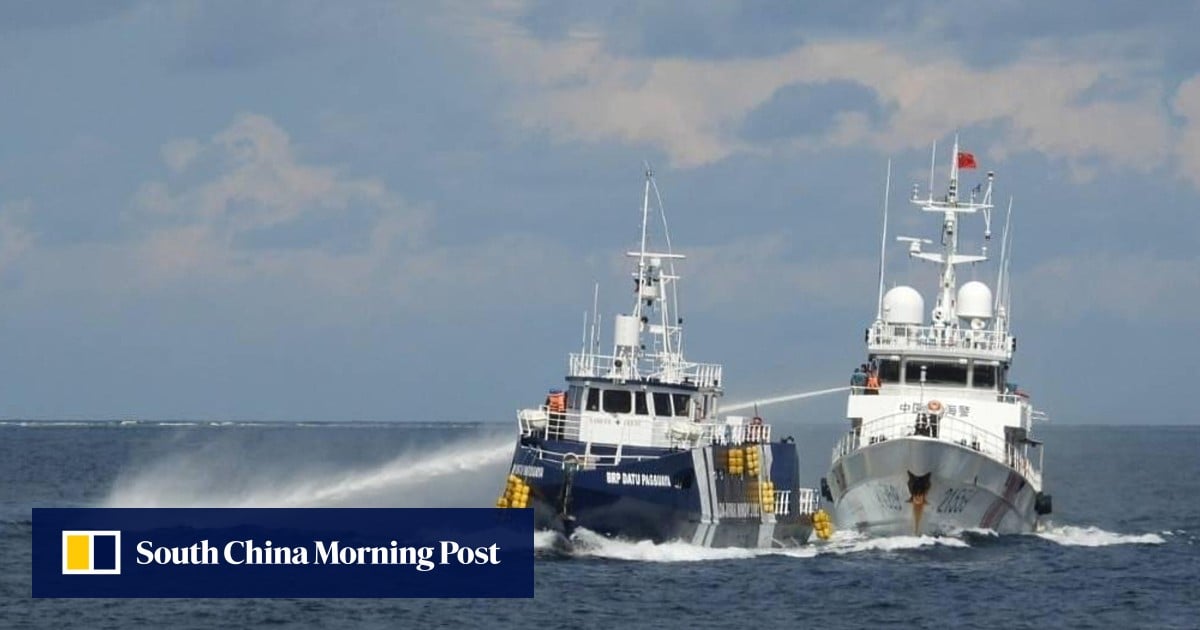
Ambassador Jing Quan's remarks, published in the Communist Party mouthpiece People's Daily, are a direct message to the Philippines. By urging Manila to "abandon illusions and remove this stumbling block," Beijing is attempting to pressure the current Philippine administration to reconsider its more assertive stance on the South China Sea dispute. This comes amidst renewed tensions, including recent confrontations between Chinese and Philippine vessels in areas like Second Thomas Shoal.
The call to clear the "toxic legacy" of the ruling suggests China desires a return to a period of less confrontational engagement, possibly reminiscent of the Duterte administration's approach. However, the current Philippine government under President Ferdinand Marcos Jr. has shown a stronger commitment to upholding its sovereign rights and international law, often aligning more closely with the United States. Beijing's renewed attacks on the ruling serve as a diplomatic tool to test Manila's resolve and potentially sow discord within its policy-making circles regarding the dispute.
Implications for Regional Stability
The ongoing dispute and China's rejection of the 2016 ruling have significant implications for regional stability and the future of international maritime law. China's expansive "nine-dash line" claims overlap with the exclusive economic zones of several Southeast Asian nations, including Vietnam, Malaysia, and Brunei, in addition to the Philippines. Beijing's refusal to abide by the tribunal's decision sets a precedent that could embolden other nations to disregard international legal mechanisms, potentially leading to increased unilateral actions and heightened tensions.
The situation also highlights the limitations of international arbitration when a powerful state chooses to ignore its outcomes. For smaller claimant states, the lack of enforcement mechanisms for such rulings means they must rely on diplomatic pressure, alliances, and their own limited naval capabilities to protect their interests. This dynamic perpetuates a cycle of confrontation and diplomatic deadlock, making a peaceful and legally binding resolution to the South China Sea disputes increasingly challenging. The 10th anniversary serves as a stark reminder of the unresolved nature of these critical geopolitical issues.
Key points
- Beijing has renewed its attack on the 2016 South China Sea tribunal ruling on its 10th anniversary.
- China's ambassador to the Philippines, Jing Quan, called the ruling "thoroughly illegal" and a "thorn" in bilateral relations.
- The ambassador urged Manila to abandon "illusions" and remove this "stumbling block" for improved ties.
- The 2016 tribunal in The Hague invalidated Beijing's expansive claims to historical and economic rights over most features in the South China Sea.
- China's sweeping claims of sovereignty in the South China Sea are disputed by the Philippines, Vietnam, Malaysia, and Brunei.
The renewed denunciation of the tribunal ruling by Beijing suggests a continued hardening of its stance, likely leading to further diplomatic friction and potential maritime confrontations with the Philippines and other claimant states. This unwavering rejection of international law could undermine regional stability and make a peaceful resolution to the South China Sea disputes increasingly difficult to achieve.