Bitcoin held up better than expected after Binance hack, Strive CEO says
Bitcoin's price decline was less severe than anticipated following the record-breaking $6.3 billion Binance hack, according to Strive CEO Matt Cole, who maintains his long-term investment thesis for the cryptocurrency.
Intelligence analysis by Gemini 2.5 Flash
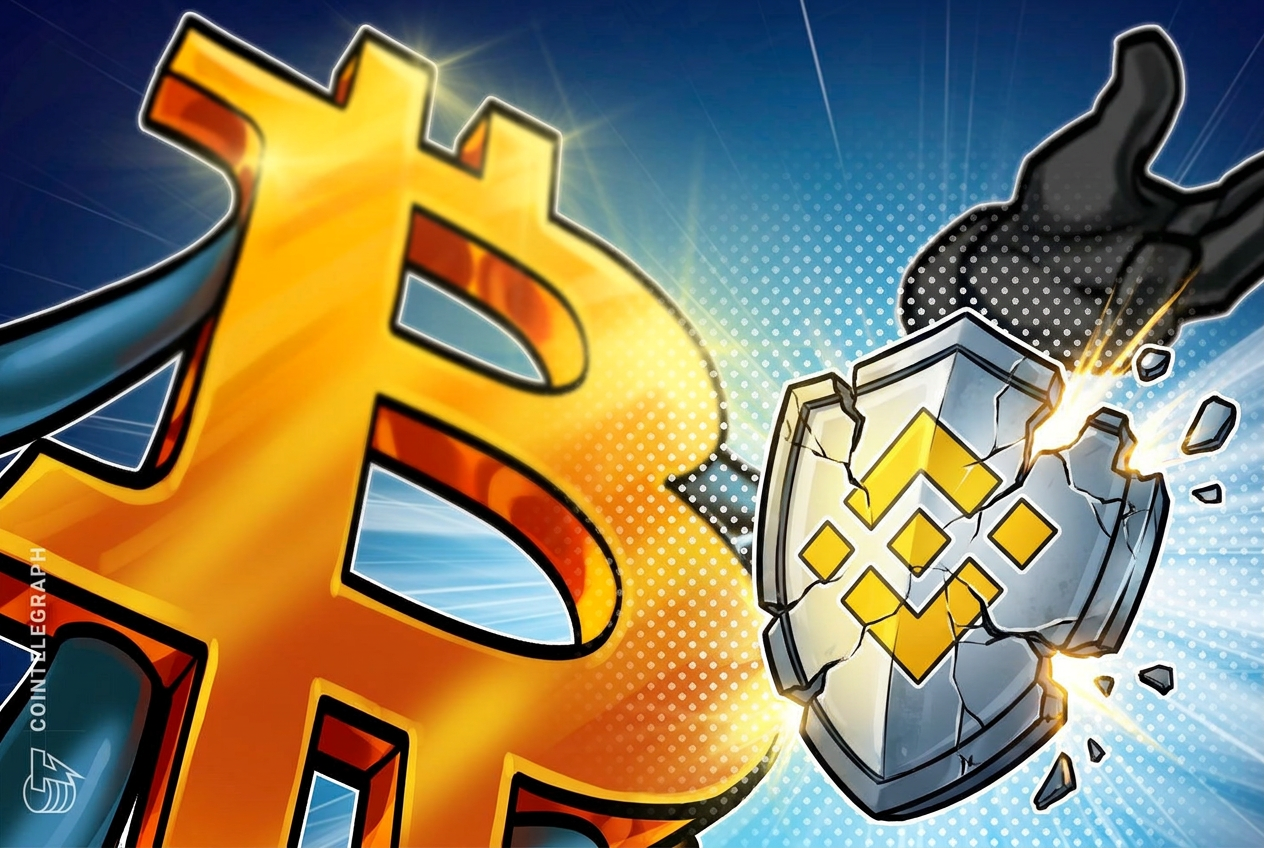
Despite the largest cryptocurrency hack in history targeting Binance, Bitcoin's value only dipped about 4%, a more resilient performance than many expected. Strive CEO Matt Cole likened the incident to a bank robbery rather than a flaw in Bitcoin's network, reaffirming his long-term conviction in the digital asset.
Imagine your piggy bank is super strong and can't be broken, but the shop where you keep some of your pocket money gets robbed. That's kind of what happened here. A big online money-trading shop called Binance had a lot of digital money stolen, but the special digital money called Bitcoin, which is like the main currency, didn't get hurt as badly as people thought. It's like the shop got robbed, but the special money itself is still safe and sound, and people still believe it's good for the future.
Analysis
The recent $6.3 billion Binance hack, identified as the largest cryptocurrency exploit on record by Glassnode, has tested the resilience of the broader crypto market, particularly Bitcoin. While such a massive security breach might typically trigger a more significant market downturn, Bitcoin's performance has been notably robust. Strive CEO Matt Cole highlighted that Bitcoin's decline was less severe than he had anticipated, falling approximately 4% from its pre-attack price. This relative stability suggests a growing maturity in the asset's market response to exchange-specific incidents, distinguishing them from fundamental network vulnerabilities. The incident underscores the ongoing security challenges faced by centralized exchanges, even as the underlying blockchain technology remains secure.
Matt Cole
Matt Cole, CEO of Strive, a company that holds Bitcoin on its balance sheet, expressed unwavering conviction in Bitcoin's long-term investment thesis despite the Binance hack. He drew a clear distinction, comparing the attack to a traditional bank robbery rather than a failure of Bitcoin's foundational network. This perspective is critical for investor sentiment, as it frames the incident as an operational security issue for a centralized entity rather than an inherent flaw in the decentralized cryptocurrency itself. Cole also characterized the current market as being in an "early spring" recovery phase, suggesting a period of gradual price increases over the next six to nine months, rather than immediate surges to new all-time highs.
Cole's assessment provides a cautiously optimistic outlook for Bitcoin's trajectory. His view that the market is in a recovery phase, coupled with Bitcoin's unexpected resilience, could instill confidence among investors. However, he also acknowledged that it is premature to definitively call a market bottom, indicating that volatility and uncertainty may still persist. This balanced perspective is important for investors navigating the post-hack environment, emphasizing the need for continued vigilance while maintaining a long-term view on Bitcoin's value proposition.
Glassnode Data
Glassnode's analysis revealed the sheer scale of the Binance breach, noting that the $6.3 billion in affected assets exceeded the combined losses from the next nine largest crypto hacks. This statistic highlights the unprecedented nature of the incident and its potential to send shockwaves through the industry. The report also pointed out a concerning trend: three of the ten largest crypto hacks have occurred since the beginning of 2025, all targeting exchanges. This pattern underscores persistent vulnerabilities within centralized exchange infrastructure, despite advancements in security measures.
Comparing the Binance hack to previous incidents, such as the $1.5 billion Bybit exploit in February 2025, provides valuable context. Following the Bybit hack, Bitcoin saw a roughly 5% decline. The fact that Bitcoin's decline after the significantly larger Binance hack was only around 4% suggests a potential shift in market reaction or increased investor confidence in Bitcoin's fundamental value. However, the recurring nature of large-scale exchange hacks, as identified by Glassnode, serves as a stark reminder of the ongoing risks associated with holding assets on centralized platforms and the critical importance of robust security protocols.
Key points
- Bitcoin's price declined by approximately 4% after the $6.3 billion Binance hack, performing better than expected.
- Strive CEO Matt Cole maintains his long-term investment thesis for Bitcoin, comparing the hack to a bank robbery rather than a network failure.
- The Binance hack is the largest cryptocurrency exploit on record, exceeding the combined losses of the next nine largest hacks.
- Three of the ten largest crypto hacks have occurred since early 2025, all targeting exchanges, indicating ongoing security challenges.
- Cole describes the market as being in an 'early spring' recovery phase, expecting gradual price increases over the next 6-9 months.
Bitcoin's unexpected resilience after the record-breaking Binance hack suggests a maturing market that can differentiate between exchange-specific security failures and the underlying network's integrity. This could bolster investor confidence in Bitcoin's long-term viability and its role as a robust digital asset, even amidst significant industry challenges.
The sheer scale of the Binance hack, coupled with Glassnode's data showing a trend of large exchange exploits, highlights persistent security vulnerabilities within centralized crypto platforms. This ongoing risk could deter new institutional investment and lead to increased regulatory scrutiny, potentially hindering the broader adoption and growth of the cryptocurrency market.