Bitcoin slips under $63,000 despite Iran deal hopes as Coldcard losses rattle market
Major cryptocurrencies, including Bitcoin and Ether, fell despite improving macro conditions, as a widening exploit of Coldcard hardware wallets drained nearly $89 million from thousands of addresses.
Intelligence analysis by Gemini 2.5 Flash
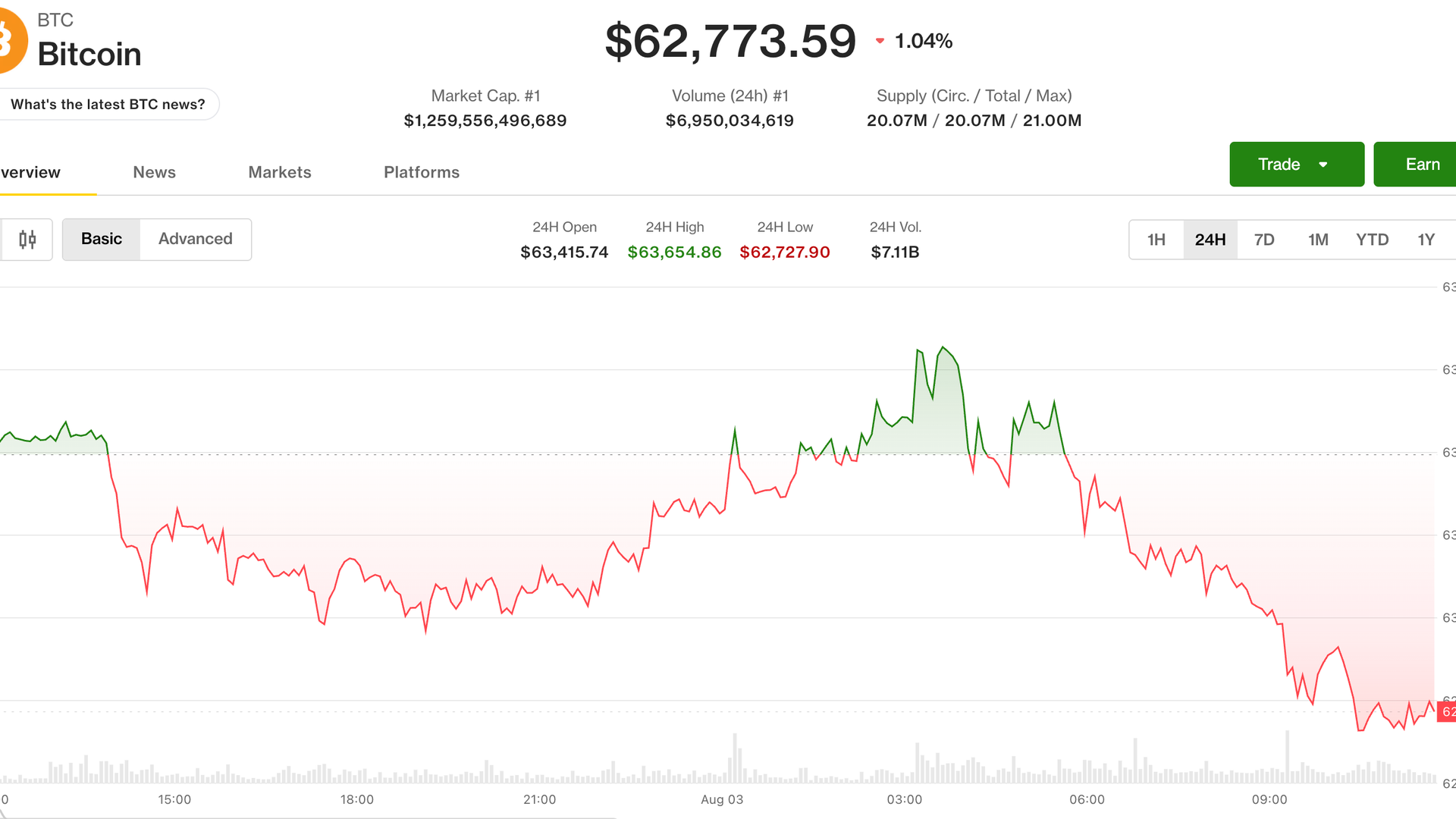
Crypto markets experienced a notable downturn, with Bitcoin and Ether declining, even as global economic indicators improved due to fresh U.S.-Iran talks easing inflation fears. This divergence suggests that market-specific security concerns, particularly a significant exploit targeting Coldcard hardware wallets, are currently outweighing broader economic tailwinds for digital assets.
Imagine you have your special collection of shiny coins in a super-safe piggy bank, but then some of those piggy banks start having tiny cracks, and some coins go missing! Even though the grown-ups are saying the world outside is getting better and things like gas prices are going down (which usually makes people happy and want to buy more shiny coins), your special coins are still losing value because everyone is worried about those cracked piggy banks. It shows that sometimes, even good news outside can't fix a problem happening right inside your own coin collection.
Analysis
The Coldcard Exploit's Spreading Impact
The cryptocurrency market is currently grappling with the fallout from a significant exploit targeting Coldcard hardware wallets, which has resulted in observed losses nearing $89 million. This widespread attack has affected approximately 4,585 addresses across three distinct waves, indicating a persistent and evolving threat. The initial wave on July 30 saw 1,083 bitcoin drained from 1,196 addresses, while subsequent waves, though impacting more wallets, yielded smaller average hauls per address, suggesting the attacker is systematically sweeping balances, from large to smaller holdings.
This ongoing security breach has severely rattled investor confidence, particularly concerning the safety of cold storage solutions, which are typically considered among the most secure methods for holding digital assets. The sheer scale of the losses and the number of affected addresses underscore a significant vulnerability that has yet to be contained. The market's reaction, with investors reportedly sending bitcoin back to exchanges, indicates a shift away from self-custody in the immediate aftermath of the exploit, prioritizing liquidity and perceived exchange-level security over the risks associated with compromised hardware.
Crypto's Divergence from Macro Tailwinds
Adding to the market's complexity, Bitcoin and Ether's decline occurred despite a generally positive macro-economic environment. Fresh talks between the U.S. and Iran sparked hopes for a deal that could reopen the Strait of Hormuz, leading to a notable drop in Brent crude futures and a rally in Treasuries as inflation fears eased. Historically, such conditions—falling oil prices, lower Treasury yields, and rising stock futures—tend to provide a lift to risk assets like cryptocurrencies. However, this time, Bitcoin and other major cryptocurrencies failed to catch a bid, indicating that the internal market pressures from the Coldcard exploit are overriding external economic stimuli.
This disconnect is a crucial observation for analysts, as it suggests that the crypto market's current trajectory is less influenced by traditional financial market dynamics and more by its own unique challenges, particularly security incidents. The failure to capitalize on favorable macro conditions underscores the severity of the hardware wallet exploit and its psychological impact on traders. It highlights a period where internal vulnerabilities are dictating market sentiment more powerfully than broader economic optimism.
Investor Behavior and Future Watchpoints
The market's reaction to these dual forces—positive macro news and severe internal security breaches—reveals interesting shifts in investor behavior. Notably, Ether funds saw small inflows on Friday, while Bitcoin funds experienced outflows, an unusual split given Bitcoin's typical role as the market's primary directional driver. This divergence could suggest a flight to perceived safety within the crypto ecosystem or a re-evaluation of asset allocations in light of Bitcoin's specific vulnerabilities.
Looking ahead, traders are closely monitoring whether Bitcoin can maintain its position above the $62,000 mark, especially as the Iran talks progress. A successful deal that further lowers oil prices could offer cryptocurrencies a second opportunity to respond positively to improving macro conditions. However, if Bitcoin continues to ignore such tailwinds, it would strongly confirm that the primary drag on the market is indeed originating from within the crypto space, specifically from the ongoing security concerns surrounding hardware wallets, rather than from external economic factors.
Key points
- Bitcoin slipped under $63,000 and Ether fell to $1,858 despite positive macro news.
- A widening exploit of Coldcard hardware wallets has drained nearly $89 million (1,367 BTC) from 4,585 addresses.
- The crypto market's decline diverged from falling oil prices, lower Treasury yields, and rising stock futures, which typically boost crypto.
- The average haul per exploited address has decreased with each wave, suggesting the attacker is sweeping smaller balances.
- Ether funds saw small inflows while Bitcoin funds experienced outflows, an unusual split in market dynamics.
Should the U.S.-Iran talks lead to a successful deal, further easing inflation fears and lowering oil prices, it could provide a second chance for cryptocurrencies to rally. This improved macro environment might allow the market to overcome the current security-related drag, potentially boosting investor confidence and prices.
The ongoing Coldcard exploit, which has already caused significant losses, continues to undermine confidence in hardware wallet security. If Bitcoin fails to respond positively to improving macro conditions, it would confirm that internal market vulnerabilities are a dominant negative force, potentially leading to further price declines and a prolonged period of investor caution.