Canada retaliates as trade war with US escalates
Canada Prime Minister Mark Carney announced retaliatory tariffs on the United States after walking away from a 'bad deal' on trade in a deepening rift between the longtime allies.
Intelligence analysis by Llama
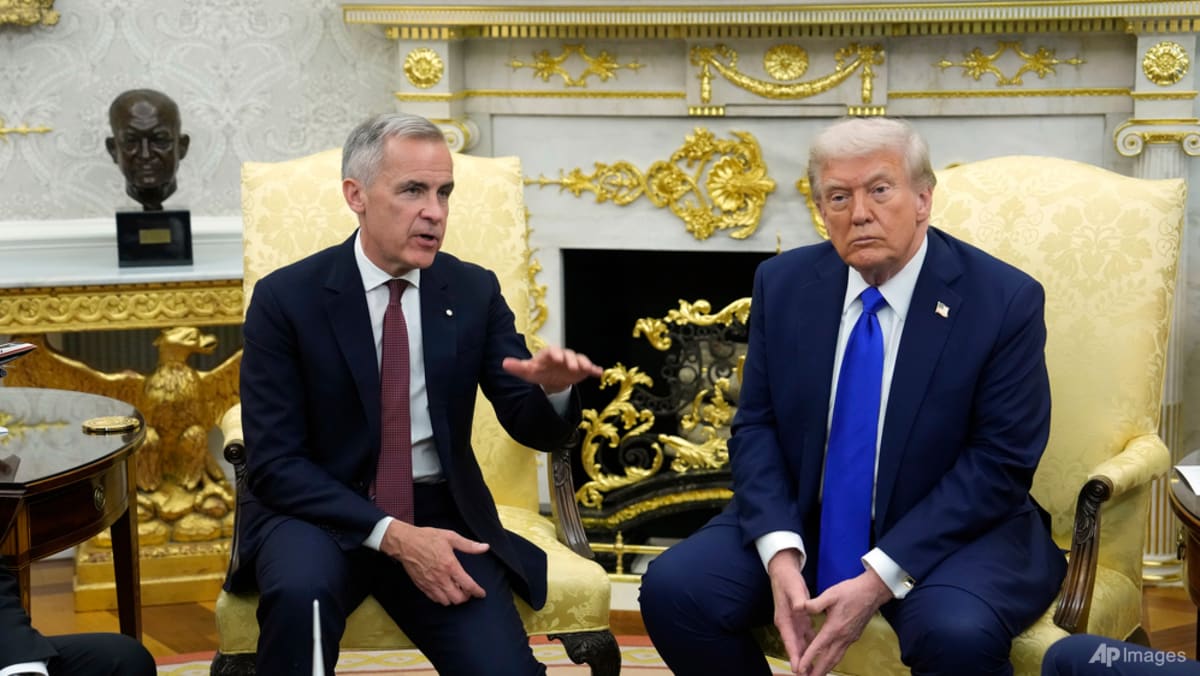
Canada has imposed retaliatory tariffs on the US in response to the US tariffs on autos, steel, and aluminium, which have battered the country's economy and strained the trade relationship.
Imagine you're playing a game with your friend, and your friend keeps taking your toys without asking. You might get upset and take their toys back as a way to show them that it's not fair. That's kind of what's happening between Canada and the US. The US has been taking some of Canada's toys (in this case, tariffs on autos, steel, and aluminium), and Canada is taking some of the US's toys back as a way to show them that it's not fair.
Analysis
Trade War Escalation
The trade war between Canada and the US has escalated with Canada imposing retaliatory tariffs on the US. This move comes after the US imposed tariffs on autos, steel, and aluminium, which have had a significant impact on Canada's economy. The US tariffs have led to job losses and strained the trade relationship between the two countries.
Canadian Retaliation
Canada's Prime Minister Mark Carney announced the retaliatory tariffs, stating that the US had proposed new terms that were 'uneconomic, unfair, and undermined the net benefits for Canada'. He also stated that the US had made unacceptable 'threats' to the French language and 'Quebec culture'.
US Response
The US has responded to Canada's retaliatory tariffs by saying that Canada wants the benefits of being a state without being one. US President Donald Trump has also stated that the US will not give in to Canada's demands and will move forward with measures that respond to Canadian retaliation.
Implications
The escalating trade war between Canada and the US has significant implications for the global economy and trade relationships. The US tariffs on autos, steel, and aluminium have had a significant impact on Canada's economy, and the retaliatory tariffs imposed by Canada will likely have a similar impact on the US economy.
Key points
- Canada has imposed retaliatory tariffs on the US in response to the US tariffs on autos, steel, and aluminium.
- The US tariffs have had a significant impact on Canada's economy, leading to job losses and straining the trade relationship.
- The escalating trade war between Canada and the US has significant implications for the global economy and trade relationships.
- The US has responded to Canada's retaliatory tariffs by saying that Canada wants the benefits of being a state without being one.
- The US will move forward with measures that respond to Canadian retaliation.
If the trade war between Canada and the US escalates, it could lead to a decrease in trade between the two countries, which could have a negative impact on the global economy. However, if the two countries can come to an agreement and resolve their differences, it could lead to an increase in trade and a positive impact on the global economy.
The escalating trade war between Canada and the US could lead to a decrease in trade between the two countries, which could have a negative impact on the global economy. It could also lead to job losses and strain the trade relationship between the two countries.