Canadian dollar dips after US-Canada talks collapse into trade war; oil prices fall ahead of US sanctions on Iran – business live
The Canadian dollar fell after US-Canada trade talks collapsed, leading to a trade war with reciprocal tariffs, while oil prices declined ahead of new US sanctions on Iran.
Intelligence analysis by Gemini 2.5 Flash
Trade negotiations between the US and Canada failed, resulting in the US imposing 50% tariffs on Canadian goods, which Canada immediately retaliated against. This escalating trade conflict, coupled with falling oil prices due to impending US sanctions on Iran, is raising concerns about global economic stability, inflation, and national debt ahead of the Jackson Hole summit.
Imagine two friends, the US and Canada, usually play nicely, but now they're having a big fight over toys and snacks. The US put a special tax on Canadian toys like fishing rods, and Canada got mad and put a tax on US snacks like steel. This makes everything more expensive for everyone. At the same time, the price of oil, which is like fuel for cars and planes, is also going down because of problems in another part of the world. All these fights and changes make grown-ups worried about how much things will cost and if everyone will have enough money.
Analysis
The recent collapse of trade negotiations between the United States and Canada marks a significant escalation in global trade tensions, with immediate economic repercussions. The US imposed 50% tariffs on $20bn worth of Canadian goods, including fishing rods and hockey sticks, prompting Canada to retaliate with its own levies on US steel and electronics. This tit-for-tat approach is expected to act as a tax on American consumers, who will likely bear the brunt of increased costs as tariffs are passed through supply chains.
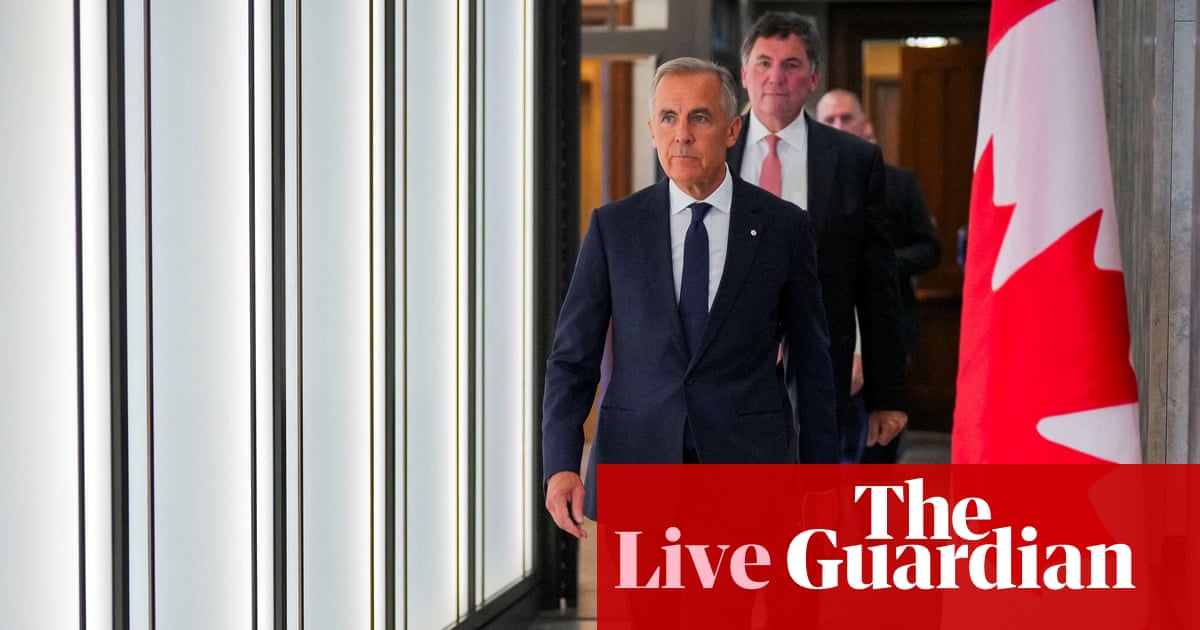
Mark Carney
Canada's Prime Minister, Mark Carney, publicly stated his rejection of the US demands, asserting that they would have undermined Canada's sovereignty. He described the US actions as an 'attack' and vowed to match US tariffs 'dollar for dollar,' signaling a firm stance against what he perceived as unreasonable last-minute conditions. This defiant position underscores the depth of the disagreement and the unlikelihood of a swift resolution to the burgeoning trade war.
Carney's decision to suspend talks on August 22, despite earlier claims from the US administration of an imminent deal, highlights the fundamental differences in negotiating positions. The US had initially announced tariffs on July 20, citing Canada's alleged discrimination against American businesses, particularly regarding bans on US alcohol sales in several Canadian provinces. The breakdown of these talks, therefore, represents a failure to bridge these long-standing trade grievances.
Susannah Streeter
Susannah Streeter, chief investment strategist at the Wealth Club, provided a critical assessment of the situation, noting that the US administration's actions contradict expectations of bolstering international relationships. She emphasized that while the immediate inflationary impact of these specific tariffs might be contained, the cumulative effect of tariffs across multiple trading partners, combined with higher energy prices from Middle East conflict, is a growing concern. This 'toxic combination' of slower growth and rising prices poses a significant challenge to economic stability.
Streeter also highlighted the ineffectiveness of tariffs in addressing the US national debt, which has recently breached $40 trillion and is projected to reach $2.1 trillion this year. She explained that the chaotic tariff regime has been plagued by legal challenges and mass refunds, failing to generate substantial government revenue. Instead, tariffs risk acting as a drag on growth, potentially leading to weaker tax revenues and exacerbating the debt problem rather than alleviating it.
Jackson Hole
The escalating trade war and its economic implications are set to be a major talking point for central bankers gathering at the key Jackson Hole summit later this week. The deepening concerns about US economic policy, mounting debt, and inflationary pressures will undoubtedly weigh on their discussions. Investors will be closely watching for insights from Fed chair Kevin Warsh regarding the future direction of interest rates in this highly complex economic and monetary environment.
The confluence of trade disputes, geopolitical tensions in the Middle East affecting energy prices, and persistent inflationary pressures creates a challenging landscape for monetary policy. Central bankers face the difficult task of navigating these headwinds, with the risk that aggressive rate hikes to combat inflation could further stifle growth, while inaction could allow price pressures to become entrenched. The Jackson Hole summit will therefore be a crucial forum for assessing these risks and coordinating potential responses.
Key points
- US-Canada trade talks collapsed, leading to a trade war with the US imposing 50% tariffs on Canadian goods and Canada retaliating.
- The Canadian dollar dipped following the breakdown of negotiations, while oil prices fell ahead of new US sanctions on Iran.
- Economists warn that tariffs act as a tax on consumers, contributing to inflation and potentially slowing economic growth.
- The US national debt has breached $40 trillion, with the deficit projected to hit $2.1 trillion this year, despite claims that tariffs would generate revenue.
- The escalating trade tensions and economic concerns will be a key focus for central bankers at the upcoming Jackson Hole summit.
The collapse of trade talks risks a prolonged trade war, leading to higher consumer prices due to tariffs, slower economic growth, and increased national debt for the US. This 'toxic combination' could exacerbate inflationary pressures and complicate central bank efforts to maintain economic stability.