Clashes break out as hundreds of thousands protest in France
Protests against the cost of living and police violence turned violent in France, with clashes erupting between police and demonstrators in Paris and other cities. Hundreds of thousands marched nationwide.
Intelligence analysis by Gemini 2.5 Flash Lite
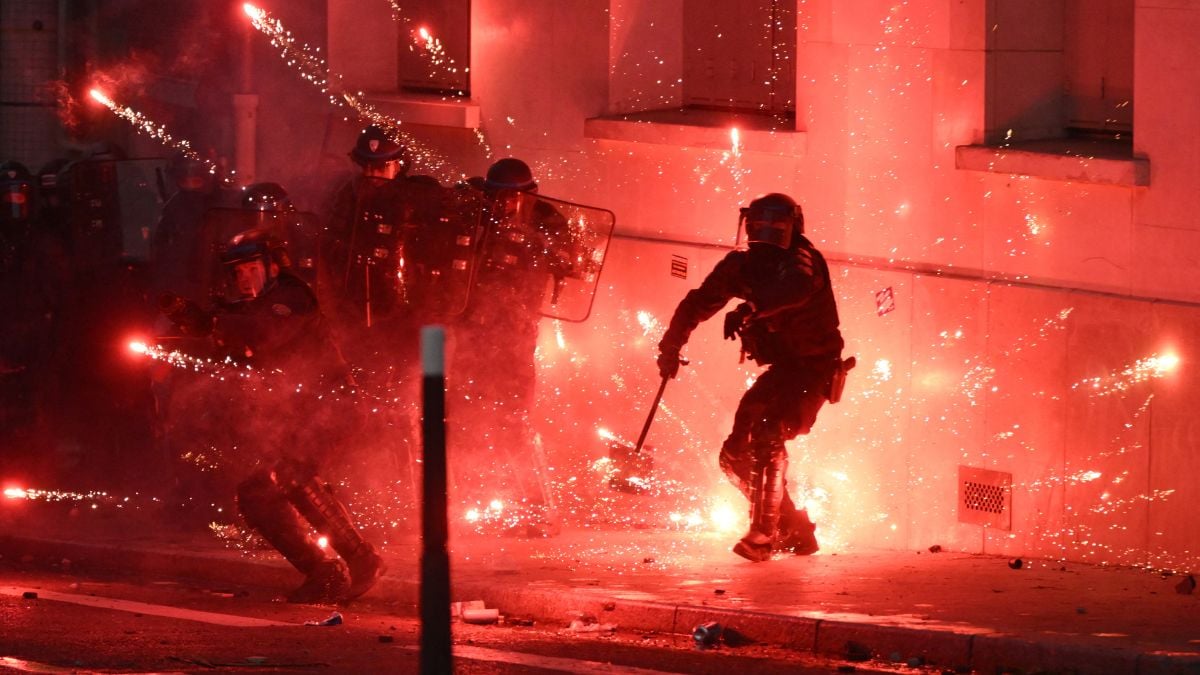
Nationwide protests in France, initially focused on living costs and police brutality, escalated with clashes in Paris and other cities. While many demonstrations were peaceful, a segment of protesters engaged in violence, leading to police responses including tear gas. The protests occur amid a tense political climate ahead of presidential elections.
Imagine many people in France are unhappy because things are getting expensive and they feel the police are being too tough. So, they decided to march and protest, some even dressed up for Halloween! While most were peaceful, a few got angry and started throwing things, so the police had to use tear gas to calm things down.
Analysis
Protests and Police Response
The demonstrations across France, fueled by rising living costs and perceived police brutality, saw significant participation with authorities estimating around 320,000 people nationwide, while youth organizations claimed nearly half a million. While many marches proceeded peacefully, particularly in Paris where participants donned Halloween costumes, tensions flared in several locations. In Paris, a contingent of masked individuals reportedly used hammers to dislodge paving stones and hurled them at police, who responded with tear gas and baton charges. The police prefecture described a "hard core of several hundred rioters" as being responsible for projectile attacks, including Molotov cocktails, necessitating police action to restore order. Similar scenes of projectile throwing and tear gas deployment occurred in Lyon, and Toulouse saw police use water cannons against an unauthorized youth protest.
Political Climate and Election Looming
These protests are unfolding against a backdrop of a highly charged political environment, with presidential elections less than six months away. Far-right leader Marine Le Pen is currently leading in opinion polls, adding a layer of urgency and complexity to the government's response. The protest movement, a coalition of "Yellow Vest" activists, trade unions, and students, initially centered on economic issues like the cost of living and educational conditions. However, it has broadened its scope to include demands for greater protection of civil liberties and the right to protest, particularly after a recent security crackdown resulted in serious injuries to some demonstrators. The government, facing economic challenges including a potential recession and high debt, has limited room for maneuver in appeasing protesters through increased spending.
Student Mobilization and Economic Constraints
Student organizations have vowed to escalate their actions, with plans for blockades of universities and high schools starting the following week, leading up to a larger demonstration called by workers and trade unions on November 5. This indicates a sustained mobilization effort beyond the initial Halloween protests. The economic constraints faced by the French government are significant; with the eurozone's second-largest economy teetering on the brink of recession and under pressure to manage its debt, significant fiscal concessions are unlikely. This situation creates a challenging dynamic for President Macron's administration, balancing the need to address public discontent with fiscal responsibility and political stability ahead of the crucial elections.
Key points
- Hundreds of thousands protested across France against the cost of living and police violence.
- Clashes between protesters and police occurred in Paris, Lyon, and Toulouse, involving tear gas and projectiles.
- The protests are occurring in a tense political climate ahead of presidential elections, with far-right leader Marine Le Pen leading in polls.
- Student groups plan further blockades of schools and universities, indicating sustained mobilization.
- The French government faces limited fiscal options to appease protesters due to economic challenges.
The widespread protests could pressure the French government to address the cost of living crisis and police conduct more effectively. Increased public engagement might lead to policy changes that better protect civil liberties and ensure fairer economic conditions for citizens.
The escalation of violence during protests could lead to a harsher government crackdown, further eroding civil liberties and potentially leading to more injuries. The ongoing unrest and economic pressures could destabilize the political climate ahead of the presidential elections.
