Coffee in 58 seconds: Inside Hi-Dolphin’s global robot cafe push
Chinese company Hi-Dolphin is rapidly expanding its Cofe+ robot cafes globally, offering automated coffee preparation with customized latte art in under a minute at significantly reduced operational costs.
Intelligence analysis by Gemini 2.5 Flash
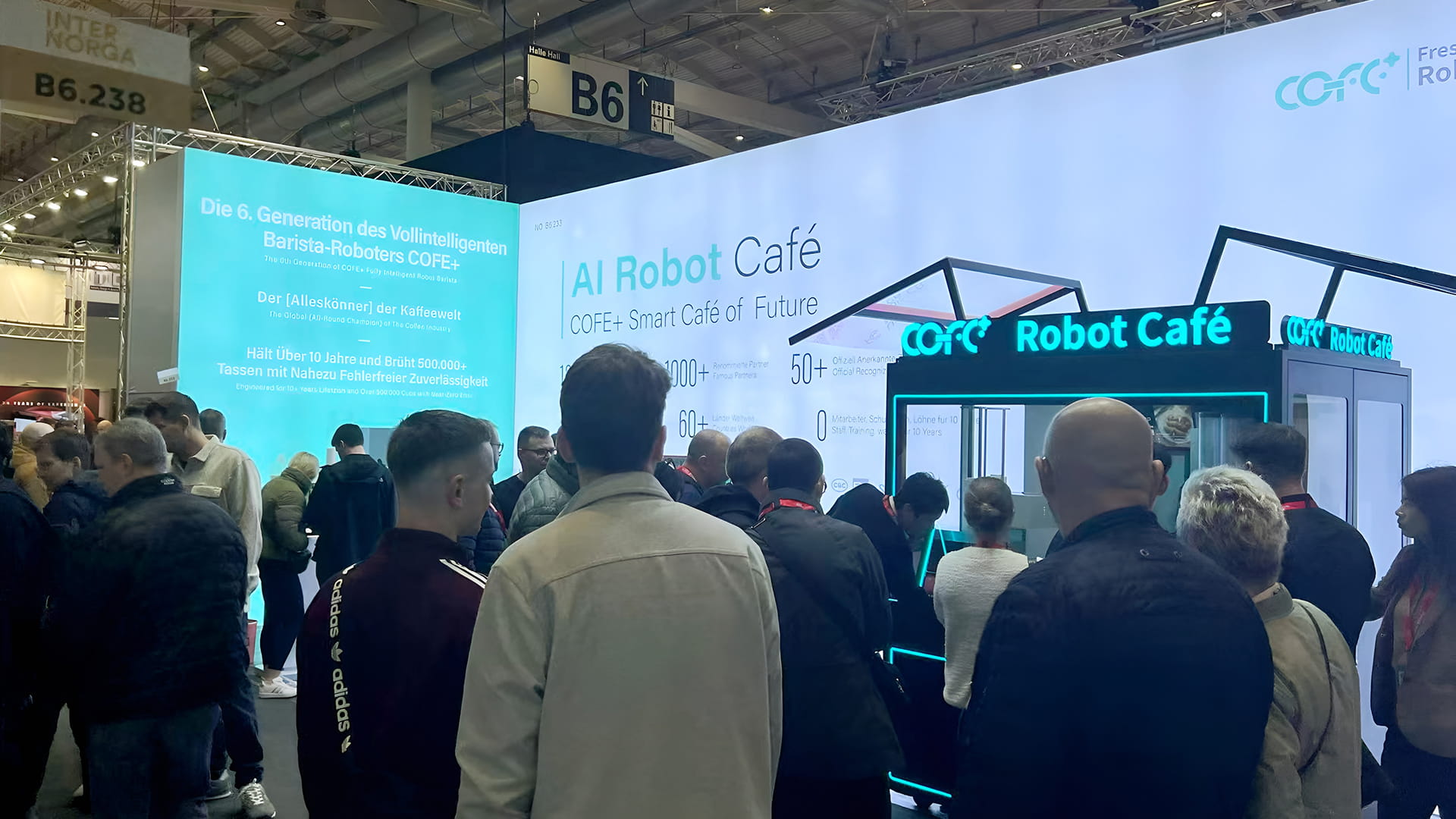
Hi-Dolphin is disrupting the traditional cafe industry by deploying advanced robotic baristas that can produce high-quality coffee and intricate latte art efficiently. Their Cofe+ system aims to cut operational expenses by up to 70%, addressing rising labor and rent costs, and has already achieved widespread international deployment.
Imagine a super smart robot that can make you a fancy coffee, complete with cool pictures on top, in less than a minute! This Chinese company, Hi-Dolphin, built these robots called Cofe+ to help coffee shops save money on rent and people, making it easier to get a quick, tasty drink almost anywhere.
Analysis
Hi-Dolphin's Vision
Founded in 2018, Hi-Dolphin embarked on a mission to revolutionize the coffee industry by addressing its inherent operational inefficiencies through advanced robotics. The company's initial development in 2017 was driven by a fundamental question: how could technology best serve the needs of the coffee sector? This led to the creation of the Cofe+ robot, a product that has undergone eight significant iterations over eight years, demonstrating a commitment to continuous improvement and adaptation.
Hi-Dolphin's core value proposition centers on cost reduction. The company asserts that its robotic cafes can be established for approximately 70% less than the investment required for a conventional coffee shop. This significant saving primarily targets the major expenses of rent, labor, and renovation costs, which typically constitute 60-70% of a traditional cafe's total expenditure. The global deployment of nearly 4,000 Cofe+ units, including at prestigious locations like Harvard University, Google's headquarters, and major international airports, underscores the practical appeal and scalability of their automated solution.
The Cofe+ Innovation
The Cofe+ robot is a sophisticated piece of engineering, standing nearly two meters tall and 1.5 meters wide, capable of producing a customized coffee, complete with latte art, in just 58 seconds. This rapid production capability is a key differentiator, offering efficiency that human baristas often struggle to match consistently. The robot's ability to replicate intricate latte art, a skill typically requiring extensive human training and prone to high turnover, is particularly noteworthy.
The technological breakthrough behind Cofe+'s latte art lies in its application of fluid dynamics modeling. Instead of relying solely on precise mechanical movements, the robot calculates how milk foam flows, spreads, and builds on espresso, translating artistic designs into measurable physical variables. This allows an algorithm to work backward in real-time from an uploaded image or text, controlling milk flow to reproduce virtually any design on the coffee's surface. The latest, seventh-generation Cofe+ has also refined grinding and extraction settings, with professional judges rating its coffee taste on par with human coffee masters, indicating a strong focus on quality alongside automation.
Han Feizi's Strategic Moat
Han Feizi, co-founder of Hi-Dolphin, articulated the company's strategic approach, emphasizing that their entry into robotics was not about finding a use case for robots, but rather about solving a clear need within the coffee industry itself. His analysis of major chains like Starbucks and Luckin Coffee revealed the disproportionate impact of rent, labor, and renovation amortization on total costs, which continue to escalate. This economic rationale formed the bedrock of Hi-Dolphin's development.
A critical challenge faced by Hi-Dolphin was the lack of a ready-made supply chain for automated coffee components. Traditional coffee preparation relied heavily on manual processes, meaning specialized equipment for tasks like automatic lid-fitting or precise syrup dispensing simply didn't exist. Han Feizi highlighted the "extremely painful" but ultimately strategic decision to design and manufacture components in-house. This intensive effort resulted in over 120 patents, 1,200 pieces of technical know-how, and 2,800 sets of process parameters, creating a significant competitive "moat" that protects their innovation and market position.
Key points
- Hi-Dolphin's Cofe+ robot cafe produces coffee, including latte art, in 58 seconds.
- The system reduces cafe setup and operational costs by approximately 70% compared to traditional stores.
- Cofe+ robots are deployed at nearly 4,000 locations globally, including universities, hospitals, and airports.
- The company developed its own components and holds over 120 patents, creating a competitive "moat."
- The robot uses fluid dynamics modeling to achieve precise latte art and has been rated highly by professional judges for taste.
Hi-Dolphin's success could lead to more accessible and affordable high-quality coffee globally, particularly in locations where traditional cafes are impractical or too expensive. The company's innovative approach to automation and fluid dynamics could also inspire further advancements in robotics for other service industries.
The widespread adoption of robot cafes like Cofe+ could lead to job displacement for baristas and other cafe staff, raising concerns about the future of employment in the service sector. Additionally, initial customer adoption might be slow in cultures valuing human interaction in coffee service.