Decathlon, social enterprise unveil upcycled bag made from camping tents to store BCRS cans, bottles
Decathlon and social enterprise Commenhers have unveiled the Return Right Carrier, a waterproof bag made from upcycled camping tents, designed to help people store drink cans and bottles for Singapore's Beverage Container Return Scheme (BCRS). The prototype, showcased at …
Intelligence analysis by Gemini 2.5 Flash
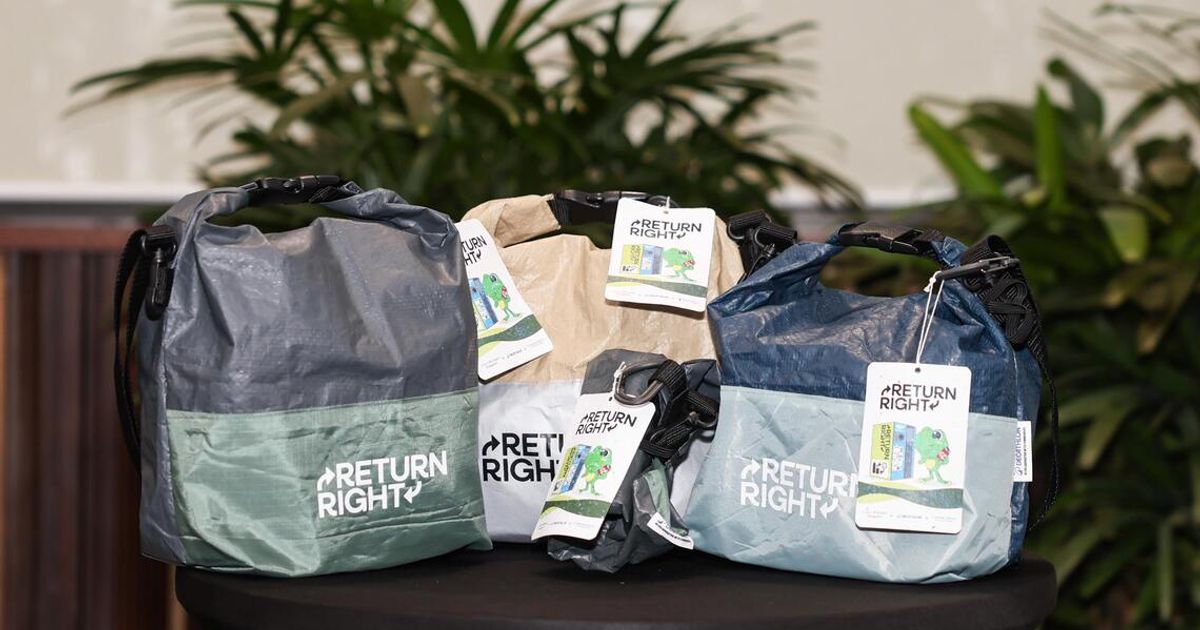
A new upcycled bag, the Return Right Carrier, has been developed by Decathlon and Commenhers to make it easier for Singaporeans to participate in the Beverage Container Return Scheme (BCRS) by providing a convenient way to store recyclables. This initiative was highlighted during Clean and Green Singapore Day, alongside broader discussions on the nation's sustainability efforts under …
Imagine you have a special bag made from old camping tents, like a superhero cape for your empty drink cans and bottles! Decathlon and a group called Commenhers made it so you can easily carry your recyclables to a special machine that gives you a little money back. It helps keep our island clean and makes sure we don't waste things, just like how Singapore wants to be super green by 2030 by using less energy and water.
Analysis
Return Right Carrier
The Return Right Carrier represents a tangible step towards fostering a circular economy within Singapore, leveraging discarded materials for a new, functional purpose. Developed through a collaboration between sporting goods giant Decathlon and local social enterprise Commenhers, this waterproof bag is crafted from upcycled sporting materials, specifically old camping tents and groundsheets. Its design incorporates practical features such as elastic bands to keep cans and bottles upright, preventing spills and making the collection process more manageable for consumers.
The initial production run of 50 bags is currently undergoing trials by the teams involved, with a potential retail launch in Decathlon stores slated for 2027. This phased approach allows for feedback and refinement, ensuring the product effectively meets user needs. Commenhers co-founder Nuryanee Anisah Mohamed Noor has expressed interest in exploring other upcycled materials, such as kayaks and air mattresses, for future prototypes, indicating a commitment to continuous innovation in sustainable product development. The core objective is to create a simple, memorable tool that encourages consistent community participation in recycling efforts.
Beverage Container Return Scheme
The introduction of the Return Right Carrier comes at a crucial time for Singapore's Beverage Container Return Scheme (BCRS), which was rolled out in April. While the BCRS aims to boost recycling rates, it has encountered several operational challenges since its inception. These 'teething issues' include reports of faulty machines and instances of misuse, such as individuals attempting to return ineligible containers by scanning a single eligible item. The National Environment Agency has already issued warnings against such misuse, underscoring the need for both technological reliability and public adherence to the scheme's guidelines.
The new upcycled bag directly addresses some of the practical hurdles faced by consumers, making it easier to collect and transport eligible containers to BCRS machines. By providing a dedicated, convenient, and spill-proof solution, the Return Right Carrier could help mitigate some of the friction points that might deter public participation. This initiative demonstrates how private-public partnerships and social enterprises can contribute to overcoming implementation challenges in national environmental policies, fostering greater public engagement and compliance with recycling mandates.
Singapore Green Plan 2030
The unveiling of the Return Right Carrier at Clean and Green Singapore Day also served as a platform to highlight Singapore's broader sustainability agenda, particularly the Singapore Green Plan 2030. Health Minister Ong Ye Kung, speaking at the event, emphasized the urgency of global climate action, noting that current indications suggest the world is unlikely to meet the 1.5 degrees Celsius warming limit. He acknowledged Singapore's vulnerability to rising temperatures and sea levels, reinforcing the critical importance of the Green Plan, launched in 2021, as the nation's comprehensive response to develop more sustainably.
Minister Ong detailed significant progress under the plan, citing the conversion of all public buses to cleaner energy models, over 90% of new car registrations being electric or hybrid, and a target for almost all vehicles to be low-emission by 2040. Furthermore, the healthcare sector has made strides in decarbonisation and recycling, achieving notable reductions in energy and water consumption, and waste disposal per person. While acknowledging Singapore's small size limits its direct impact on global climate change, Ong expressed hope that the successful implementation of the Green Plan could serve as a 'reference point' for other countries, thereby making a difference on a larger scale through exemplary policy and action.
Key points
- Decathlon and Commenhers unveiled the Return Right Carrier, a waterproof bag made from upcycled camping tents, to store drink cans and bottles for recycling.
- The bag aims to encourage participation in Singapore's Beverage Container Return Scheme (BCRS), which has faced issues like faulty machines and misuse.
- Fifty prototype bags are currently being trialled, with potential retail availability in Decathlon stores by 2027.
- The initiative was highlighted at Clean and Green Singapore Day, alongside updates on the Singapore Green Plan 2030.
- Health Minister Ong Ye Kung noted Singapore's progress in sustainability, including cleaner public transport and reduced energy/water use in healthcare, hoping it serves as a global reference point.
The Return Right Carrier could significantly boost public participation in Singapore's Beverage Container Return Scheme by offering a practical and convenient solution for collecting recyclables. This initiative, coupled with the broader progress under the Singapore Green Plan 2030, suggests a positive trajectory for the nation's sustainability goals, potentially inspiring other countries to adopt similar innovative approaches.
Despite the innovative bag, the BCRS still faces challenges like faulty machines and misuse, which could hinder the scheme's overall effectiveness if not fully resolved. Furthermore, Minister Ong's acknowledgment that global climate goals are unlikely to be met highlights the immense scale of the environmental crisis, suggesting that even Singapore's robust efforts may only offer a limited impact without broader international cooperation.