Despite US sanctions on Xinjiang cotton, China’s textile industry weathers the storm
The US government added 43 Chinese companies to an import blacklist over allegations of forced labor in Xinjiang, but the local textile industry remains calm and confident, having diversified its exports and weathered previous sanctions.
Intelligence analysis by Llama
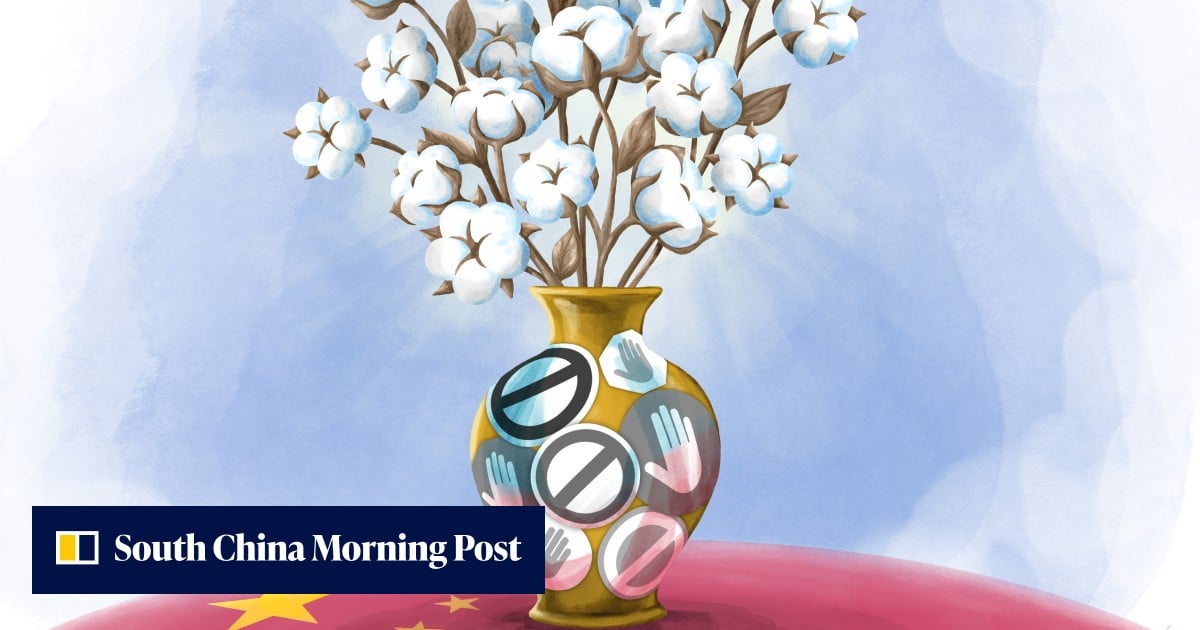
The US sanctions on Xinjiang cotton have had a limited impact on China's textile industry, which has diversified its exports and is now booming, with high processing rates and expansion across the supply chain.
China's textile industry is doing well despite US sanctions on Xinjiang cotton. The industry has diversified its exports and is now booming, with many companies expanding their scale and processing rates remaining high.
Analysis
Xinjiang's Cotton Industry: A Resilient Force Amidst US Sanctions
The recent addition of 43 Chinese companies to the US import blacklist over allegations of forced labor in Xinjiang has sparked little concern among local textile industry players. This calm reaction is a far cry from the panic triggered four years ago, when Xinjiang cotton became a geopolitical flashpoint between Washington and Beijing. Back then, the industry was on the brink of collapse, with falling trading prices and lost downstream buyers due to the Uygur Forced Labour Prevention Act (UFLPA). However, the industry has since diversified its exports and is now booming, with high processing rates and expansion across the entire cotton textile supply chain.
The local processing rates of cotton products are 'remarkably high' – around 30 to 40 per cent – and development across the entire cotton textile supply chain is booming, according to a cotton-ginning mill owner in southern Xinjiang. 'From spinning and weaving to printing and dyeing, companies are steadily expanding their scale,' he said. This change in attitude might also be a snapshot for a broader change in the global political landscape. After significant export diversification efforts and a shift in the balance of power between China and the US – especially since last year's sweeping trade war – Chinese industries seem to be reacting to US sanctions with greater resilience and confidence.
The US sanctions have had a limited impact on China's textile industry, which has diversified its exports and is now booming. The industry's resilience in the face of US sanctions highlights the country's growing economic strength and its ability to adapt to changing global circumstances. As the global political landscape continues to shift, it remains to be seen how China's textile industry will respond to future challenges and opportunities.
Key points
- The US government added 43 Chinese companies to an import blacklist over allegations of forced labor in Xinjiang.
- The local textile industry remains calm and confident, having diversified its exports and weathered previous sanctions.
- The industry's resilience in the face of US sanctions highlights China's growing economic strength and its ability to adapt to changing global circumstances.
If the US sanctions on Xinjiang cotton continue to have a limited impact, China's textile industry may continue to thrive, with potential for further growth and expansion across the supply chain.
However, if the US sanctions are tightened or new trade barriers are imposed, China's textile industry may face significant challenges, potentially leading to a decline in exports and industry growth.