DRC: Between Tshisekedi's Referendum and Kabila's Rebellion, the C64 Seeks Its Place
The C64 opposition coalition in the Democratic Republic of Congo is attempting to forge a third path amidst the political polarization driven by President Tshisekedi's proposed referendum and Joseph Kabila's new opposition front.
Intelligence analysis by Gemini 2.5 Flash
The DRC's political scene is deeply divided, with President Félix Tshisekedi pushing for a referendum seen by the opposition as a bid for a third term, and former President Joseph Kabila leading a new opposition movement. Caught between these two powerful camps, the C64 coalition is struggling to establish itself as a viable alternative, planning a meeting in Rome and a European tour …
Imagine two big kids on a playground, Félix and Joseph, who both want to be the leader, but they have very different ideas about the rules. Félix wants to change a rule so he can stay leader longer, and Joseph just started a new team to stop him. Now, there's a third group, C64, who doesn't like either of their plans and is trying to find a fair way for everyone to play. They're even traveling to other playgrounds to get help, but it's tough because the other two are so strong.
Analysis
The Democratic Republic of Congo's political landscape is currently marked by an intense polarization, with the C64 opposition coalition attempting to navigate a complex path between two dominant forces. On one side stands President Félix Tshisekedi, whose administration is pushing for a referendum bill. This initiative is widely perceived by the opposition as a strategic maneuver to amend the Constitution, potentially paving the way for Tshisekedi to seek a controversial third term in office. This move has ignited significant apprehension among political observers and opposition groups, who view it as a threat to democratic norms and constitutional integrity. The proposed referendum is a central point of contention, fueling the current political deadlock and raising questions about the future of governance in the DRC.
Félix Tshisekedi
President Félix Tshisekedi's camp is actively advocating for a new law concerning the organization of a referendum. This legislative push is at the heart of the current political crisis, as it is interpreted by his opponents as a direct attempt to facilitate constitutional changes. Such changes could enable the incumbent president to bypass term limits and pursue an additional mandate, a prospect that has historically led to instability in other African nations.
This strategy by Tshisekedi has effectively polarized the political environment, forcing various factions to take clear stances for or against the proposed constitutional alterations. The focus on this referendum has overshadowed other national priorities, creating a singular point of contention that defines much of the current political discourse and opposition mobilization.
Joseph Kabila
Adding another layer of complexity to this already volatile environment is the re-emergence of former President Joseph Kabila. On October 12, Kabila took the helm of the newly formed Front for the Refoundation of the Nation (FRN), signaling his intent to actively challenge the current political trajectory. His return to a prominent opposition role further entrenches the two-sided political struggle, creating a formidable counter-balance to Tshisekedi's camp.
The formation of the FRN underscores the deep divisions within the Congolese political elite and suggests a protracted period of political maneuvering and contestation. This development complicates the C64's efforts to present a unified alternative, as it now contends with a powerful, established figure leading a distinct opposition faction, further fragmenting the anti-Tshisekedi forces.
C64
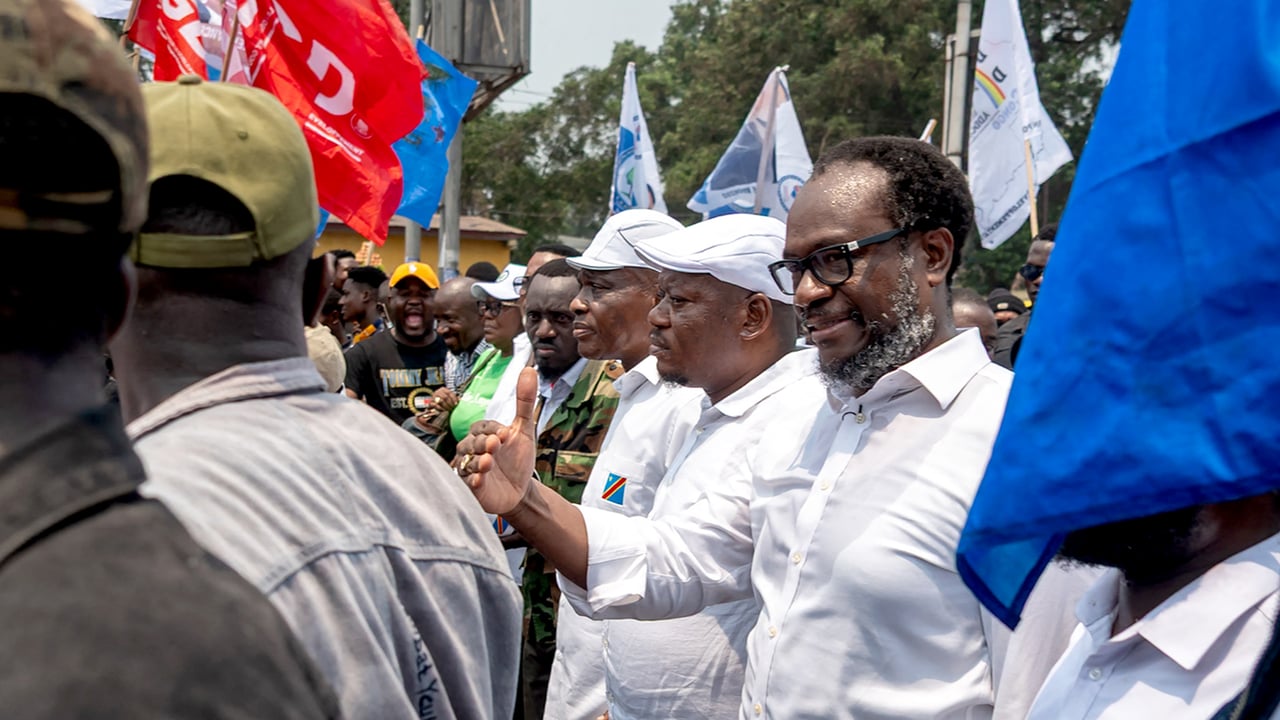
Amidst this highly polarized environment, the C64 coalition is striving to carve out a "third way," explicitly rejecting both Tshisekedi's perceived constitutional overreach and Kabila's re-entry into the opposition leadership. The coalition's leaders are scheduled to meet in Rome on October 25, marking their first joint gathering before embarking on a broader European tour.
This international outreach aims to garner support and legitimacy for their alternative vision, emphasizing a commitment to democratic principles and a rejection of what they see as self-serving political agendas. However, the C64 faces significant challenges, having previously struggled to mobilize widespread popular support, as evidenced by the limited engagement in their September 15 protest in Kinshasa. Their capacity to impose a meaningful power dynamic against the entrenched positions of Tshisekedi and Kabila remains a critical question, highlighting the uphill battle they face in shaping the DRC's political future.
Key points
- The DRC's political scene is highly polarized between President Tshisekedi's camp and Joseph Kabila's new opposition front.
- Tshisekedi is proposing a referendum bill, which the opposition views as a move towards a third presidential term.
- Former President Joseph Kabila has launched the Front for the Refoundation of the Nation (FRN) to oppose Tshisekedi.
- The C64 opposition coalition is attempting to establish a 'third way,' rejecting both dominant camps.
- C64 leaders are scheduled to meet in Rome on October 25, followed by a European tour, to seek support for their alternative vision.
- The C64 has faced challenges in mobilizing popular support and imposing a significant power dynamic against the established forces.
The C64's efforts to establish a 'third way' could lead to a more inclusive political dialogue, potentially fostering a consensus that respects constitutional limits and prevents further polarization. Their planned European tour might garner international support, pressuring all parties towards a peaceful and democratic resolution.
The deep polarization between Tshisekedi's and Kabila's camps, coupled with the C64's limited capacity to impose a power dynamic, could lead to prolonged political instability and constitutional deadlock. This could result in increased social unrest and a weakening of democratic institutions if a viable middle ground is not found.