Elon Musk suggests US government was behind Starlink restrictions in Ukraine – Europe live
Elon Musk has suggested the US government, specifically the Trump administration, was behind restrictions on Starlink satellite technology used by Ukraine's military, leading to Ukrainian President Zelenskyy feeling 'betrayed'. The situation highlights Europe's dependency…
Intelligence analysis by Gemini 2.5 Flash
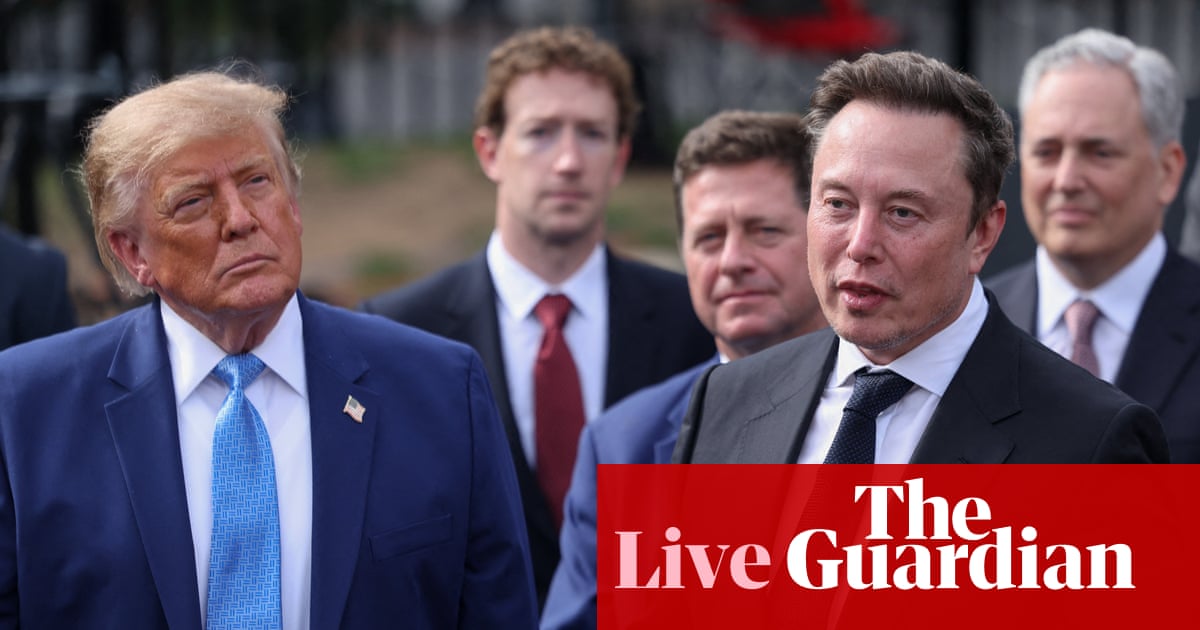
Billionaire Elon Musk claimed that the US government controls Starshield systems and dictates any usage limits, implying the Trump administration restricted Starlink for Ukraine's military. This comes as Ukrainian President Zelenskyy expressed feelings of betrayal over US decisions, raising concerns about the future of critical support and underscoring Europe's reliance on American de…
Imagine Ukraine is playing a big game of tag, and they use special walkie-talkies called Starlink to talk to each other and see where the 'it' person is. Now, the person who made the walkie-talkies, Elon Musk, says that the grown-ups in the US government told him to make some of the walkie-talkies slower or not work as well. Ukraine's leader, Zelenskyy, feels sad and a bit mad because he thought the US was his best friend helping him win the game. This makes it harder for Ukraine, and other countries in Europe realize they need to make their own walkie-talkies so they don't always have to rely on someone else.
Analysis
The ongoing conflict in Ukraine has brought to the forefront the critical role of advanced technology in modern warfare, particularly satellite communication systems like Starlink. Elon Musk's recent statements, made on X, have introduced a new layer of complexity by suggesting that the US government, rather than SpaceX, is responsible for the restrictions placed on Starlink's military-grade counterpart, Starshield, in Ukraine. This assertion directly implicates the Trump administration in decisions that Kyiv views as detrimental to its defensive efforts, potentially exacerbating an already tense geopolitical landscape.
Elon Musk
Elon Musk's public comments have drawn a clear distinction between Starlink, which he describes as a commercial service for civilian or defensive use, and Starshield, which he states is owned and controlled by the US government. According to Musk, any limitations on Starshield's speed or usage are determined by the US military and ultimately by the President. This clarification, if accurate, shifts the responsibility for the restrictions from SpaceX to the US political leadership, specifically the Trump administration, which was in power at the time of the alleged decisions. Musk's intervention adds a controversial element to the narrative, suggesting that the private company is merely executing government directives rather than making independent choices regarding the service's availability to Ukraine.
Musk further escalated the situation by appearing to suggest that Ukrainian President Volodymyr Zelenskyy should step down, stating it's "time to go." This direct challenge to a wartime leader's legitimacy, coming from a prominent tech figure whose company provides vital services, could be seen as an attempt to influence political outcomes. The implications of such statements are significant, as they could undermine international support for Ukraine and create further divisions among allies. The billionaire's outspoken nature continues to make him a central, albeit controversial, figure in global geopolitical discussions, particularly concerning the intersection of technology, business, and statecraft.
Volodymyr Zelenskyy
Ukrainian President Volodymyr Zelenskyy has openly expressed his feelings of "betrayal" by the US, particularly regarding decisions made by Donald Trump. His concerns stem from perceived restrictions on Starlink access and threats of limited intelligence sharing, which he articulated in interviews. Zelenskyy's public statements underscore the profound impact these developments have on Ukraine's morale and its ability to conduct defensive operations effectively. The potential loss of a "strong partner" like the US, especially during a critical phase of the conflict, represents a significant blow to Ukraine's strategic position and its long-term security.
The Ukrainian leader's worries are not merely rhetorical; they reflect tangible challenges on the ground, including rising civilian casualties. Restrictions on vital communication and intelligence systems directly impede Ukraine's military capabilities, making it harder to defend against Russian aggression. Zelenskyy's appeals highlight the urgent need for consistent and reliable international support, particularly from its most powerful allies. The perceived wavering of US commitment, whether due to political shifts or specific policy decisions, creates uncertainty and vulnerability for Ukraine, forcing it to re-evaluate its defense strategies and seek alternative solutions.
Europe
The unfolding situation with Starlink restrictions and the broader US-Ukraine relationship has starkly highlighted Europe's technological dependency on the United States. While European countries have voiced strong support for Ukraine, they currently lack ready-made alternatives for critical low-orbit satellite communications and space-based infrared sensing systems, which are vital for early missile warnings. This reliance on US systems, particularly SpaceX's Starlink and the Space-Based Infrared System, exposes a strategic vulnerability for both Ukraine and the wider European continent, especially in times of crisis.
EU leaders are meeting in Brussels to discuss internal matters, with Ukraine expected to be a key topic. However, the ongoing crisis in US-Ukraine relations risks overshadowing these discussions, potentially diverting focus from other pressing European issues. The Dutch Prime Minister, Rob Jetten, emphasized the need for European countries to "step up our game" financially, militarily, and non-militarily to support Ukraine, acknowledging that many are "lagging behind." This call to action underscores the recognition within Europe that greater self-sufficiency in defense technology and a more unified approach to supporting Ukraine are imperative to safeguard European values and security interests, reducing reliance on external powers.
Key points
- Elon Musk suggested the US government, specifically the Trump administration, was behind restrictions on Starshield, the military-grade Starlink system used by Ukraine.
- Ukrainian President Zelenskyy expressed feeling 'betrayed' by US decisions, including threats of limited intelligence sharing, and worried about losing a strong partner.
- Musk also publicly suggested Zelenskyy should leave his post, adding to the controversy.
- The situation highlights Europe's significant dependency on US technology for critical satellite communications and early missile warning systems.
- EU leaders are meeting in Brussels, with Ukraine's crisis expected to be a key discussion point amidst calls for Europe to increase its support.
The situation could prompt European leaders to accelerate efforts in developing their own independent satellite communication and early-warning systems, reducing reliance on US technology. Increased awareness of this dependency might also galvanize EU members to enhance financial and military support for Ukraine, fostering greater European unity and strategic autonomy.
The alleged US government restrictions on Starlink and President Zelenskyy's feeling of betrayal could severely strain US-Ukraine relations, potentially weakening Ukraine's defense capabilities and morale. This friction risks emboldening Russia and could lead to a more fragmented international response to the conflict, further prolonging the war and increasing casualties.
Market signals
- Eutelsat Shares in European satellite operator Eutelsat soared following news of Ukraine’s difficulties with Starshield, fueled by investor bets on European alternatives.
AI-generated analysis of potential market relevance. Not financial advice.