Eugène Ionesco’s ‘The Lesson’ on stage at Mehregan Theater
Eugène Ionesco's classic one-act play, 'The Lesson,' is currently being staged at Mehregan Theater in Tehran, directed by Ali Najimi. The production features Amir Saeed Afshar, Ensieh Shafiee, and Mahboubeh Zarkesh.
Intelligence analysis by Gemini 2.5 Flash
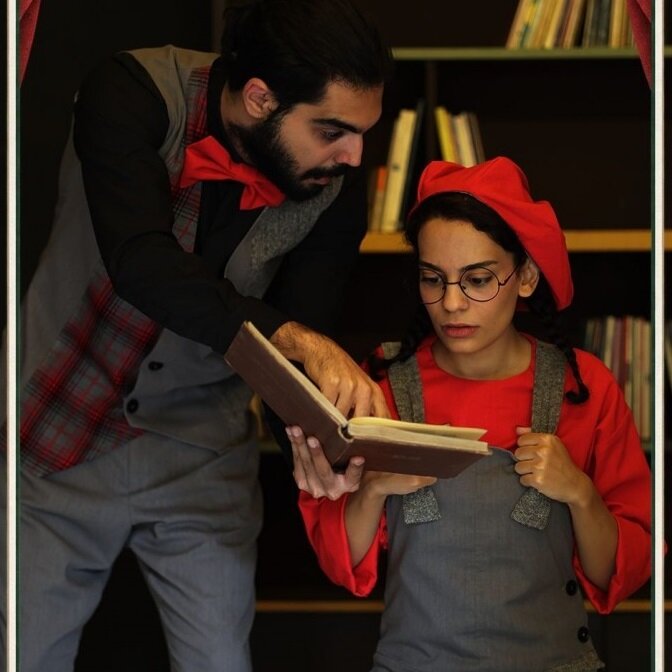
The Mehregan Theater in Tehran is hosting 'The Lesson,' a significant work of the 'Theater of the Absurd' by French-Romanian playwright Eugène Ionesco. The play, which premiered in 1951, explores themes of escalating absurdity and violence between a professor and his pupil, concluding its run on November 21.
A strange teacher gives a lesson to a young student, but the class quickly turns nonsensical and scary. The teacher gets angrier, and the student becomes sicker, leading to a shocking end. It's a play that shows how absurd and dangerous things can become when logic disappears, like a confusing dream turning into a bad one.
Analysis
Mehregan Theater
Mehregan Theater in Tehran is currently hosting a significant international theatrical production, 'The Lesson,' by the renowned French-Romanian playwright Eugène Ionesco. This engagement underscores the vibrant cultural scene within Iran, demonstrating a willingness to present works that challenge conventional narratives and explore deeper philosophical questions.
The theater's decision to stage a play from the 'Theater of the Absurd' indicates a commitment to artistic diversity and intellectual discourse. Such productions offer Iranian audiences an opportunity to engage with avant-garde movements that have shaped global theater, fostering a connection with broader artistic currents. The run, scheduled until November 21, provides a limited window for this cultural experience.
Eugène Ionesco
Eugène Ionesco, a pivotal figure in 20th-century French avant-garde theater, is celebrated for his contributions to the 'Theater of the Absurd.' Born in 1909, he primarily wrote in French and revolutionized dramatic ideas and techniques, notably with his 'anti-play,' 'The Bald Soprano,' which helped define the genre.
Ionesco's works, influenced by philosopher Albert Camus, delve into concepts of absurdism and surrealism, challenging audience expectations and conventional logic. His profound impact on theater was recognized through numerous accolades, including his election to the Académie française in 1970, the 1970 Austrian State Prize for European Literature, and the 1973 Jerusalem Prize, solidifying his legacy as a master of modern drama.
The Lesson
'The Lesson' is a one-act play that unfolds in a small French flat, depicting a seemingly innocuous tutoring session between a Professor and his young Pupil. As the lesson progresses, it descends into increasing absurdity and nonsensical dialogue, with the Professor's anger escalating and the Pupil's health deteriorating, culminating in her murder.
A particularly controversial aspect of Ionesco's original text involves the Maid handing the Professor a swastika armband at the play's conclusion, instructing him to wear it to avoid questions about his numerous murders, citing it as 'good politics.' Many productions have historically omitted this detail, fearing audience shock or believing it narrows the play's universal message. However, scholars argue that this deletion 'defangs' the play, obscuring Ionesco's critical commentary on authoritarianism and the dangers of unquestioning obedience, thereby diminishing its profound political and social implications.
Key points
- Eugène Ionesco's 'The Lesson' is being staged at Mehregan Theater in Tehran.
- The play is directed by Ali Najimi and features Amir Saeed Afshar, Ensieh Shafiee, and Mahboubeh Zarkesh.
- First performed in 1951, 'The Lesson' is a key work of the 'Theater of the Absurd'.
- The plot involves a professor who murders his pupil during an increasingly nonsensical lesson.
- The original text includes a controversial ending with a swastika armband, often omitted in productions, which scholars argue obscures Ionesco's political message.
- The play will run until November 21 at the Mehregan Theater.
The staging of a classic avant-garde play like 'The Lesson' in Tehran signals a vibrant and open cultural scene in Iran, fostering artistic expression and intellectual engagement with international theatrical traditions. It provides an opportunity for local audiences to experience a significant work of the 'Theater of the Absurd' and for Iranian artists to interpret complex themes.
The play's controversial themes, particularly the deleted swastika armband detail, could potentially spark debate or criticism regarding artistic interpretation and censorship, especially if the production deviates significantly from Ionesco's original intent. This might lead to discussions about the boundaries of artistic freedom within the local cultural context.