Europe in the Era of Monster Blazes. Firefighter: 'Thousands of Hectares on Fire, Like in North America'
Europe is experiencing unprecedented wildfires, with thousands of hectares burning across France, Spain, and Portugal, mirroring the scale typically seen in North America.
Intelligence analysis by Gemini 2.5 Flash
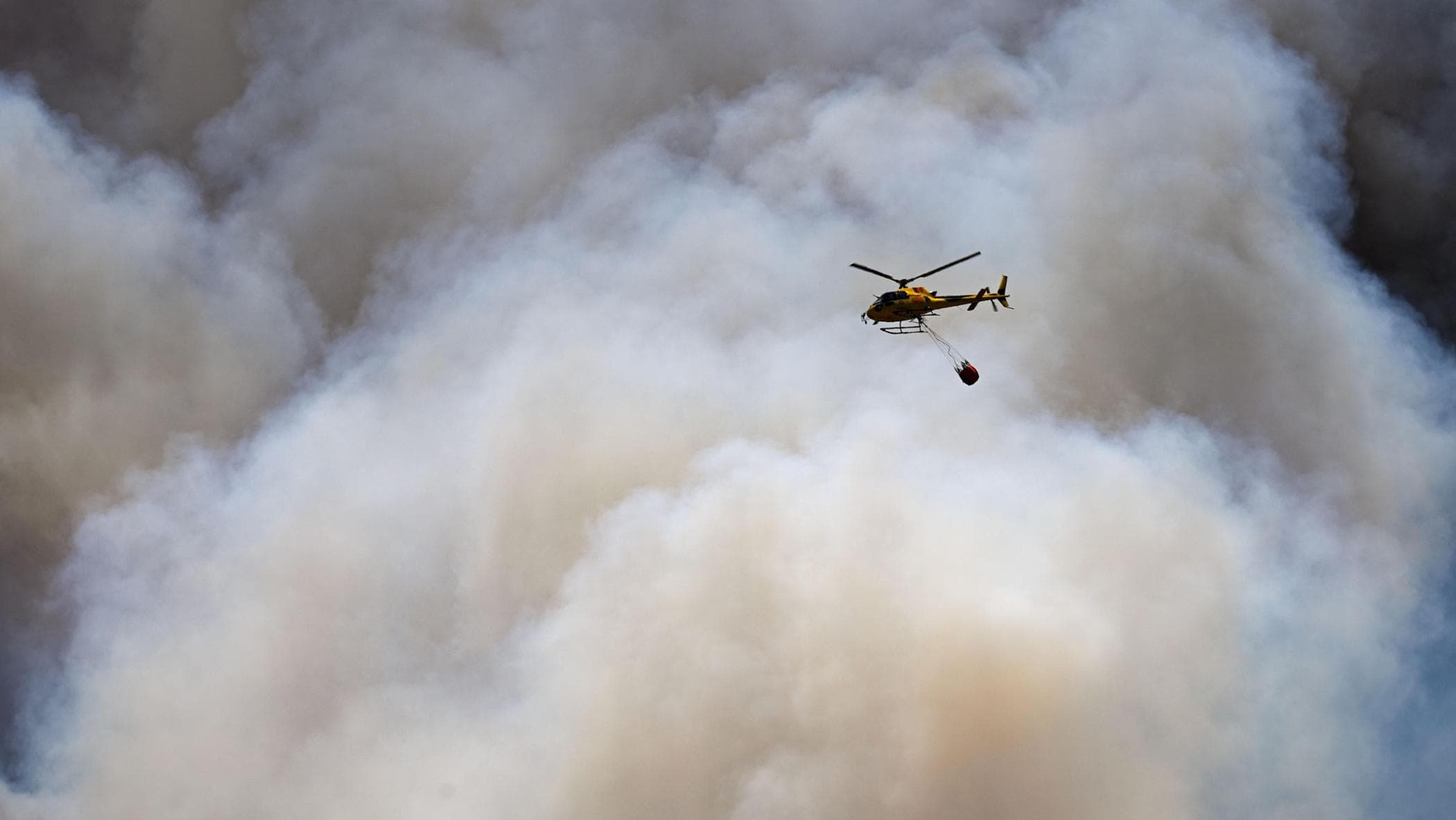
Firefighters across Europe are confronting 'monster' blazes of a magnitude previously unseen in the Mediterranean region, forcing them to adopt new strategies and collaborate internationally. The intense heat, prolonged drought, and dry vegetation are creating conditions that make these fires extremely difficult to control, leading to significant destruction and loss of life.
Imagine a really hot summer where it hasn't rained for ages, making all the plants super dry, like crunchy potato chips. Now, imagine a tiny spark turning into a giant fire that spreads super fast, like a race car, and is so big and hot that even firefighters can't get close. This is happening all over Europe, burning huge areas of land, just like the big fires you sometimes hear about in places like America. Countries are trying to help each other, but it's a really tough fight because the weather is making everything so dry and hot.
Analysis
Europe's Unprecedented Wildfire Crisis
Europe is grappling with a wildfire season of alarming intensity, characterized by blazes that are consuming thousands of hectares at a scale previously associated with North America. Matteo Baralis, an engineer and director with the Piedmont Fire Brigade, currently deployed near Marseille, France, notes that these 'unusual conditions for the Mediterranean' are leading to fires that are 'importing' a level of destruction typically seen across the Atlantic. Countries like France have already seen 25,000 hectares burn this year, double the area lost by the same date in 2025, while Spain has suffered a devastating fire claiming at least twelve lives and incinerating 3,200 hectares. In Portugal, 12,000 hectares were consumed in just three days, painting a grim picture of the continent's vulnerability.
Adapting to a New Scale of Blazes
The sheer size and intensity of these 'monster' fires are forcing European firefighting services to fundamentally rethink their strategies. Baralis explains that beyond a certain dimension, a fire becomes impossible to fight directly, necessitating a tactical retreat to establish and reinforce defensive 'red lines' by removing vegetation. Firefighters are now studying examples from North America in their refresher courses, indicating a shift in operational paradigms. The fires' self-sustaining nature, driven by rising hot air and incoming fresh oxygen, creates temperatures too extreme for direct human intervention, and the resulting turbulence makes aerial operations perilous. This new reality demands sophisticated coordination, leveraging satellite data from Copernicus in Brussels and integrating it with weather forecasts to anticipate the fire's rapid advance, which can reach speeds of 6-7 kilometers per hour.
Collaborative Response and Looming Challenges
In response to this escalating crisis, Europe has activated a robust civil protection strategy that involves the programmed deployment of international firefighting teams. The Piedmont Fire Brigade, for instance, has sent a column of 11 vehicles and 25 personnel to France, working alongside Greek and Romanian teams, with French, Estonian, and Austrian firefighters expected to assist in Sardinia later in the summer. This collaborative effort is crucial, yet the underlying environmental factors present a formidable challenge. Weeks of intense heat, prolonged drought, and extremely dry soil and vegetation create ideal conditions for ignition and rapid spread. Baralis warns that these conditions, typically seen in mid-August, are occurring much earlier in the season, suggesting that 'the worst is yet to come' and indicating a long and perilous summer ahead for Europe.
Key points
- Europe is experiencing wildfires of unprecedented scale, comparable to those typically seen in North America, with thousands of hectares burning.
- France, Spain, and Portugal have been severely affected, with significant land loss and casualties, including 12 deaths in Spain.
- Firefighters are adopting new strategies, including retreating to establish defensive lines, as direct combat becomes impossible for large blazes.
- The European Civil Protection strategy facilitates international cooperation, deploying firefighting teams across borders to assist affected countries.
- Intense heat, prolonged drought, and dry vegetation are creating extremely dangerous conditions, with the peak of the fire season still anticipated.
The implementation of a coordinated European civil protection strategy, involving the cross-border deployment of firefighting teams and shared intelligence from sources like Copernicus satellites, demonstrates a proactive and collaborative approach to tackling the crisis. This cooperation could lead to more efficient resource allocation and a stronger collective defense against future extreme weather events.
The article warns that current conditions, typically seen in mid-August, are occurring much earlier, and 'the worst is yet to come,' suggesting a prolonged and potentially more destructive wildfire season. The unprecedented scale and intensity of these fires, coupled with their rapid spread, indicate that existing resources and strategies may be overwhelmed, leading to further loss of life, property, and environmental damage.