FBI arrests California woman accused of spying on Taiwan leader’s family for China
The FBI arrested Wanying Zhang, a California real estate agent, for allegedly spying on Taiwan's President Lai Ching-te's family for the Chinese government. She was apprehended at Los Angeles International Airport while preparing to fly to China.
Intelligence analysis by Gemini 2.5 Flash Lite
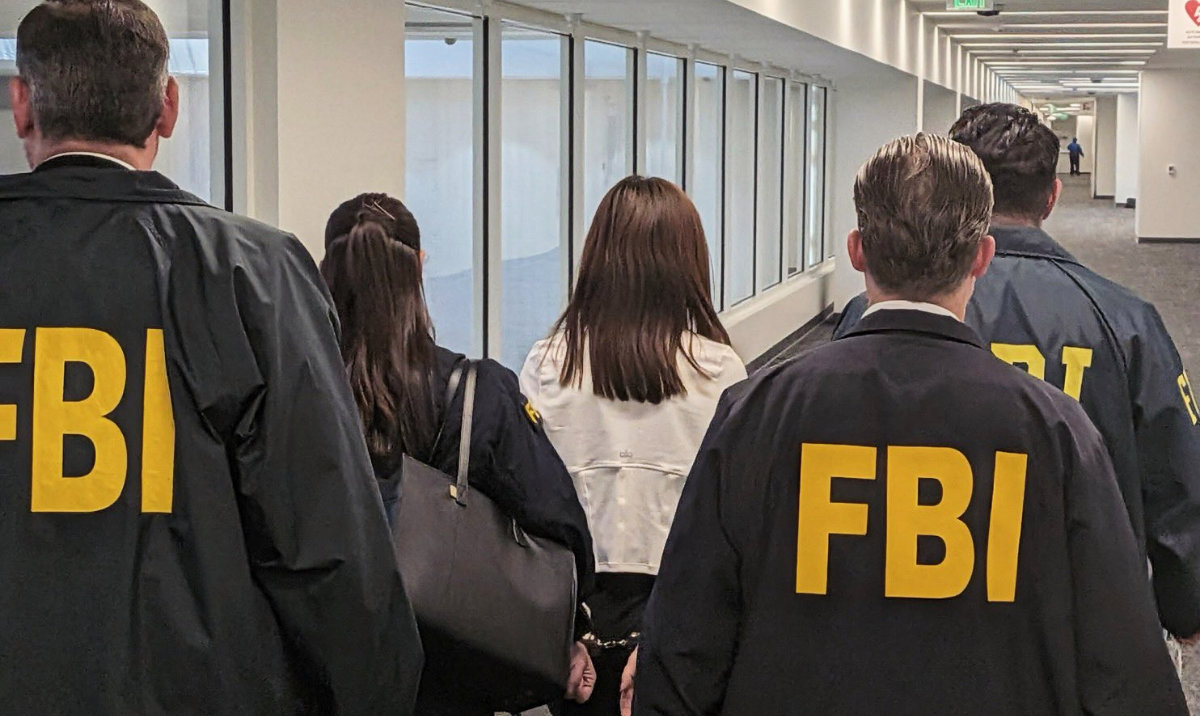
A California real estate agent, Wanying Zhang, has been arrested by the FBI on charges of acting as an unregistered agent for China. She is accused of surveilling the family of Taiwan's President Lai Ching-te in the US, sending photos and vehicle information to Chinese officials, a case that escalates US-China tensions over Taiwan.
Imagine someone is secretly taking pictures and notes about a leader's family in another country, like a spy. The FBI caught a woman in the US who they say was doing this for China, spying on the family of Taiwan's leader. This is like a secret mission that could cause big problems between countries.
Analysis
Wanying Zhang
Wanying Zhang, a 34-year-old naturalized US citizen and licensed real estate agent from Irvine, California, stands accused of acting as an unregistered agent for the Chinese government. Her arrest at Los Angeles International Airport as she was preparing to depart for China marks a significant development in US efforts to counter foreign influence operations. Federal officials allege that Zhang conducted surveillance on the family of Taiwan's President Lai Ching-te, specifically targeting his son, Ting-Yu Lai, who resides in the Seattle area. This surveillance reportedly included filming the target and their family from a vehicle and collecting photographic and license plate information for their vehicles.
China's Transnational Repression
The case is framed by Taiwan's Presidential Office as a "classic case of transnational repression," a practice condemned by spokesperson Karen Kuo as a "barbaric act" that disregards human rights and national sovereignty. The alleged surveillance, which took place in September 2025, aimed to gather intelligence that could be used as "leverage" over Taiwan's president, particularly in the context of potential conflict. The FBI's affidavit notes Zhang's alleged affiliation with the University of International Relations in Beijing, described as closely linked to China's intelligence apparatus, and her continued contact with Chinese government officials since her graduation around 2014.
US-China Relations and Taiwan
This arrest occurs at a particularly sensitive juncture in US-China relations, with Taiwan consistently at the center of their military and diplomatic rivalry. Beijing views Taiwan as a breakaway province, while Taiwan, under President Lai Ching-te, asserts its distinct identity and democratic governance. The Justice Department has been actively prosecuting cases against alleged Chinese agents operating on American soil, often focusing on efforts to harass dissidents and sway public opinion. The alleged actions of Zhang underscore the lengths to which Beijing may go to exert influence and gather intelligence on individuals and entities connected to Taiwan, further complicating the already tense geopolitical landscape.
Key points
- The FBI arrested Wanying Zhang in Los Angeles, accusing her of spying for China.
- Zhang allegedly surveilled the family of Taiwan's President Lai Ching-te in the US.
- She is accused of sending photos and vehicle information to Chinese government officials.
- Taiwan condemned the alleged acts as "transnational repression" and a violation of sovereignty.
- The case occurs amid heightened US-China tensions over Taiwan's status.
The successful apprehension of Wanying Zhang by the FBI demonstrates the effectiveness of US counterintelligence efforts in identifying and neutralizing foreign agents. This action could deter future espionage attempts against Taiwanese officials and their families within the United States, thereby enhancing the security of individuals associated with democratic governments.
This incident highlights the persistent threat of Chinese espionage on US soil and the potential for Beijing to leverage intelligence gathered for political or military advantage. The case could further inflame tensions between the US and China, potentially leading to retaliatory actions or increased diplomatic friction.