FIFA’s private equity push opens new front in decades-old power-struggle with Europe
FIFA plans to create a $20 billion subsidiary for the World Cup, offering private equity stakes to reshape global soccer's commercial landscape and challenge Europe's financial dominance. This move, condemned by UEFA, aims to democratize the sport by providing significant…
Intelligence analysis by Gemini 2.5 Flash
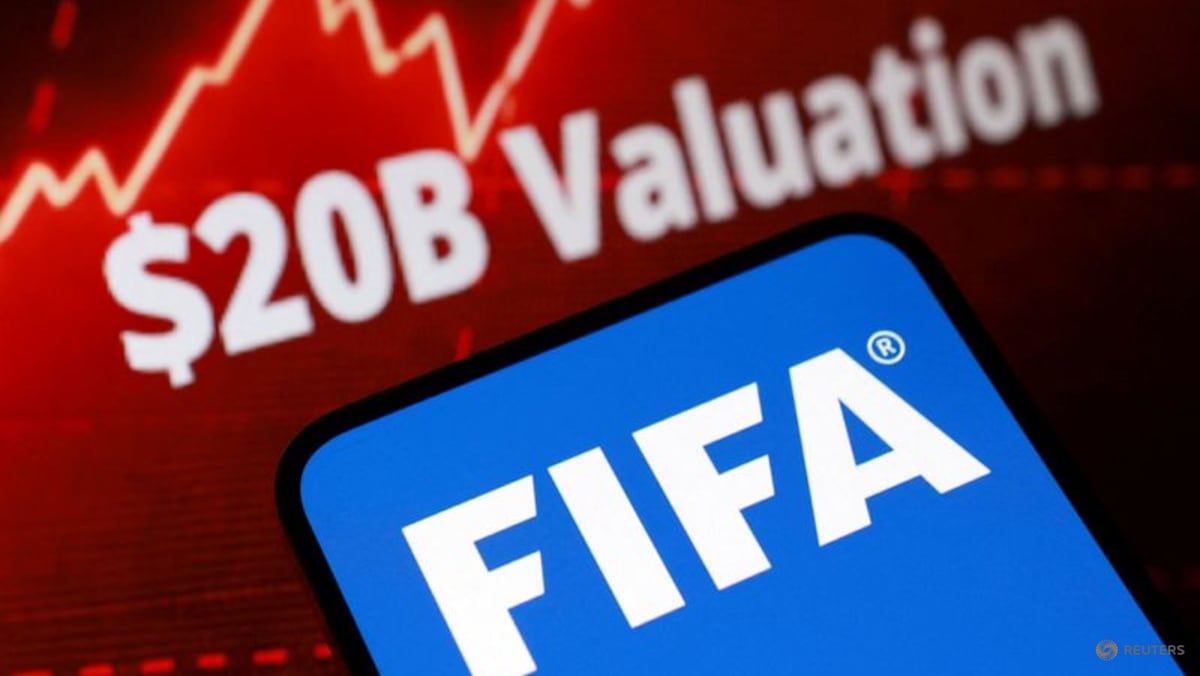
FIFA President Gianni Infantino is pushing to create a $20 billion subsidiary for the World Cup, inviting private equity investment. This initiative is framed as a way to distribute wealth more broadly across global football, particularly benefiting smaller nations, but it has ignited a fierce power struggle with UEFA and European football, who view it as a commercialization of the sp…
Imagine FIFA, the boss of world soccer, wants to make the biggest soccer tournament, the World Cup, even bigger and richer. They're inviting big money investors to help, promising to share the new wealth with smaller soccer countries. But the rich European soccer clubs, who already make tons of money, are worried this plan will change the game too much and take away their power, like a big kid not wanting to share his toys.
Analysis
The $20 Billion Commercial Gambit
FIFA, under President Gianni Infantino, is embarking on a dramatic strategy to reshape the financial landscape of global soccer. The core of this plan involves establishing a $20 billion subsidiary dedicated to managing the World Cup and other FIFA events. This new entity would then offer stakes of up to 20 percent to external private equity investors, a move Infantino frames as a push for global "democratisation" within the sport.
The proposed structure is designed to broaden access to football's substantial financial largesse, particularly for smaller and emerging soccer nations. These member associations are being offered a significant sweetener: $20 million in immediate funding for special projects, with further grants of $20 million or more in subsequent four-year cycles. For many nations heavily reliant on FIFA for their income, this represents a substantial and appealing financial injection, potentially shifting allegiances and influence within the global football hierarchy.
Europe's Financial Hegemony
Despite FIFA generating billions from broadcasting rights and sponsorships, with projections to exceed its $13 billion target for the recent four-year cycle, these figures are dwarfed by the immense wealth generated by European football. UEFA, the governing body for European football, reported €4.4 billion ($5 billion) in revenue from its elite club competitions in the 2024/25 season alone. Across the continent, football competitions collectively generated over €40 billion in the same period, with the "Big Five" leagues (Premier League, Bundesliga, LaLiga, Serie A, and Ligue 1) accounting for more than half of that sum.
This stark disparity highlights FIFA's long-standing ambition to shift football's financial center of gravity away from Europe. Historically, Europe has not only dominated the governing body's membership but also exerted significant control over the World Cup, FIFA's most prized asset. The current private equity push is a direct challenge to this entrenched financial dominance, aiming to redistribute wealth and influence more broadly across FIFA's global membership.
A Recurring Power Play
Infantino's current initiative is not an isolated event but rather the latest chapter in a decades-old power struggle. Former FIFA president João Havelange successfully campaigned to expand the World Cup, granting greater influence to Africa, Asia, and Latin America through a political coalition of smaller nations. His successor, Sepp Blatter, continued this legacy, and Infantino has further boosted the World Cup's size, expanding it to 48 nations this year from 32, with discussions even for a 64-team tournament in 2030.
This drive to commercialize FIFA assets and bring in external investment has faced resistance before. A previous plan by Infantino in 2018 for an expanded Club World Cup, backed by a SoftBank-led consortium, never materialized due to fierce backlash from UEFA. The current proposal, therefore, represents a renewed and more aggressive attempt by FIFA to assert its commercial independence and redistribute power, once again setting it on a collision course with the powerful European football establishment.
Key points
- FIFA plans a $20 billion subsidiary for the World Cup, offering up to 20% stakes to private equity investors.
- The initiative aims to "democratise" football by providing significant immediate and recurring funding to smaller member associations.
- UEFA has condemned the move, viewing it as selling the "soul" of the game and intensifying a long-standing power struggle with Europe.
- European football currently generates significantly more revenue than FIFA's events, fueling FIFA's desire to shift the sport's financial gravity.
- This is not FIFA President Gianni Infantino's first attempt to commercialize assets, following a failed Club World Cup expansion plan in 2018.
If successful, FIFA's private equity push could significantly boost funding for smaller football associations globally, fostering development and infrastructure in emerging soccer nations. This "democratisation" could lead to a more equitable distribution of the sport's vast wealth, potentially elevating the quality and reach of football worldwide.
The move risks further commercializing the "soul" of football, as UEFA warns, potentially prioritizing profit over the sport's traditional values and fan experience. It could also intensify the power struggle between FIFA and European football, leading to further fragmentation or disputes over control and revenue.