French centre left must wage ‘existential battle’ to prevent far right winning presidency
Raphaël Glucksmann, the social democrat candidate for France's 2027 presidential election, has called for an "existential battle" to prevent the far right from winning, warning of a "brutal" campaign.
Intelligence analysis by Gemini 2.5 Flash Lite
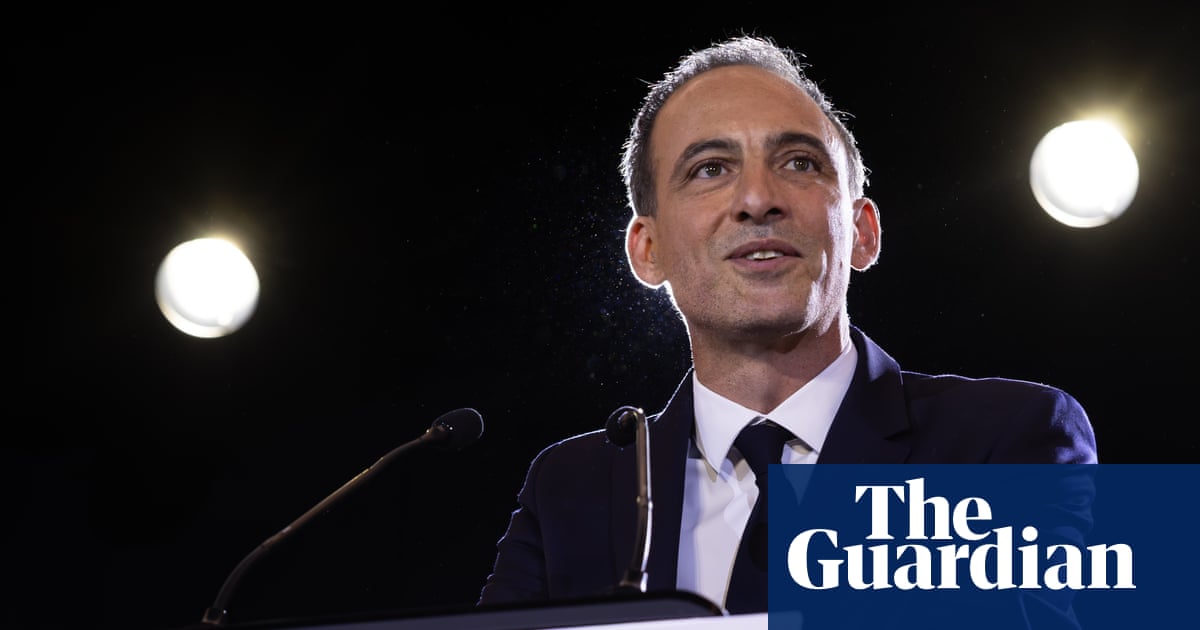
MEP Raphaël Glucksmann, chosen as the social democrat candidate for the 2027 French presidential election, has urged the centre-left to unite for an "existential battle" against the far right, warning that the upcoming campaign will be unprecedentedly "brutal."
Imagine France is having a big election soon, and the far-right party is very popular. A politician named Raphaël Glucksmann wants to lead the centre-left group to fight hard against them. He says it's a super important fight, like a "battle for survival," because the far-right might win if they don't try their best.
Analysis
Raphaël Glucksmann
Raphaël Glucksmann's emergence as the social democrat candidate for the 2027 French presidential election marks a significant moment for the fractured centre-left. Having secured the nomination through a Socialist party primary, Glucksmann, an essayist and intellectual known for his pro-Europe and pro-Ukraine stance, faces the daunting task of uniting a disparate political landscape. His candidacy is notable as it represents the first time the Socialist party, which has suffered consecutive defeats, will not field its own candidate since its founding in 1969. Glucksmann, polling between 9% and 14%, trails both Marine Le Pen's far-right and potentially Édouard Philippe on the centre-right, and crucially, Jean-Luc Mélenchon of the radical left.
Glucksmann's strategy appears to be one of reclaiming lost ground by re-emphasizing social democratic pride and a form of "radicality" focused on environmental policy. He positions himself as distinct from traditional career politicians, leveraging his background as an intellectual and campaigner on international issues, including work on the aftermath of the Rwandan genocide and advising the former Georgian president Mikheil Saakashvili. However, he faces accusations from the left of being too centrist and from opponents of being an out-of-touch "Paris intellectual." His partner, Léa Salamé, a prominent news presenter, has stepped down from her role to avoid conflicts of interest during his campaign.
The Far Right
The central challenge for Glucksmann and the broader centre-left is the formidable presence of the far right, represented by Marine Le Pen, who currently leads in the polls. Glucksmann's rhetoric of an "existential battle" underscores the perceived threat of the far right reaching the presidency, a prospect he deems "unbearable" if the centre-left lacks belief in victory. The article suggests that the far right is "at the gates of power," indicating a significant shift in the French political landscape. Glucksmann's call to "rid our hearts of the spirit of defeat" is a direct appeal to galvanize a base that has seen its political influence wane significantly in recent elections.
The political climate described is one of high stakes, with the 2027 campaign anticipated to be "brutal and like no other we have ever experienced." This suggests a campaign likely to be characterized by intense polarization and a struggle for the political center. Glucksmann's own polling numbers, while significant for a primary winner, place him in a challenging position relative to the frontrunners, necessitating a substantial surge in support to overcome the current deficit.
Centre-Left Divisions
The French centre-left is depicted as substantially behind not only the far right but also the radical left, particularly Jean-Luc Mélenchon's La France Insoumise. Mélenchon's party boycotted the Socialist primary, highlighting the deep divisions within the left-wing spectrum. Glucksmann's refusal to work with Mélenchon further complicates efforts to forge a united front against the far right. This fragmentation is a key vulnerability, as it dilutes the potential vote share for any single centre-left candidate.
Glucksmann's task includes winning back voters who have defected to Emmanuel Macron's centrist bloc, a difficult feat given his own perceived centrist leanings by some on the left. The article also touches upon Macron's presidency, with Glucksmann criticizing the outgoing president for "wasted 10 years" on climate action. The struggle for the working class, which Glucksmann admits the social democratic left has lost, is a critical battleground. Regaining this demographic, while simultaneously appealing to a broader electorate and navigating internal party politics, presents a complex strategic challenge for his campaign.
Key points
- Raphaël Glucksmann has been selected as the social democrat candidate for the 2027 French presidential election.
- He has called for an "existential battle" to prevent the far right, led by Marine Le Pen, from winning the presidency.
- Glucksmann acknowledges the centre-left is currently trailing the far right and the radical left in polls.
- His candidacy marks the first time the Socialist party will not field its own presidential candidate since 1969.
- The campaign is expected to be "brutal" and "like no other we have ever experienced."
If Glucksmann can successfully unite the fragmented centre-left and rally voters around a compelling vision for social democracy, he could potentially stem the rise of the far right and offer a viable alternative in the 2027 presidential election. His focus on issues like environmental policy and a pro-Europe stance might resonate with voters seeking a progressive direction.
The centre-left faces significant headwinds, including deep internal divisions, Glucksmann's relatively low polling numbers compared to frontrunners, and the strong appeal of the far right. Failure to overcome these challenges could lead to a further erosion of centre-left influence and a victory for the far right in the 2027 presidential election.