From metalworker to Brazil's president: Lula da Silva's rise
Luiz Inácio Lula da Silva achieved a historic re-election as Brazil's president, defying a 1989 precedent by winning the runoff after trailing in the first round. His victory marks a remarkable return to power, crowning a career that began as a metalworker.
Intelligence analysis by Gemini 2.5 Flash
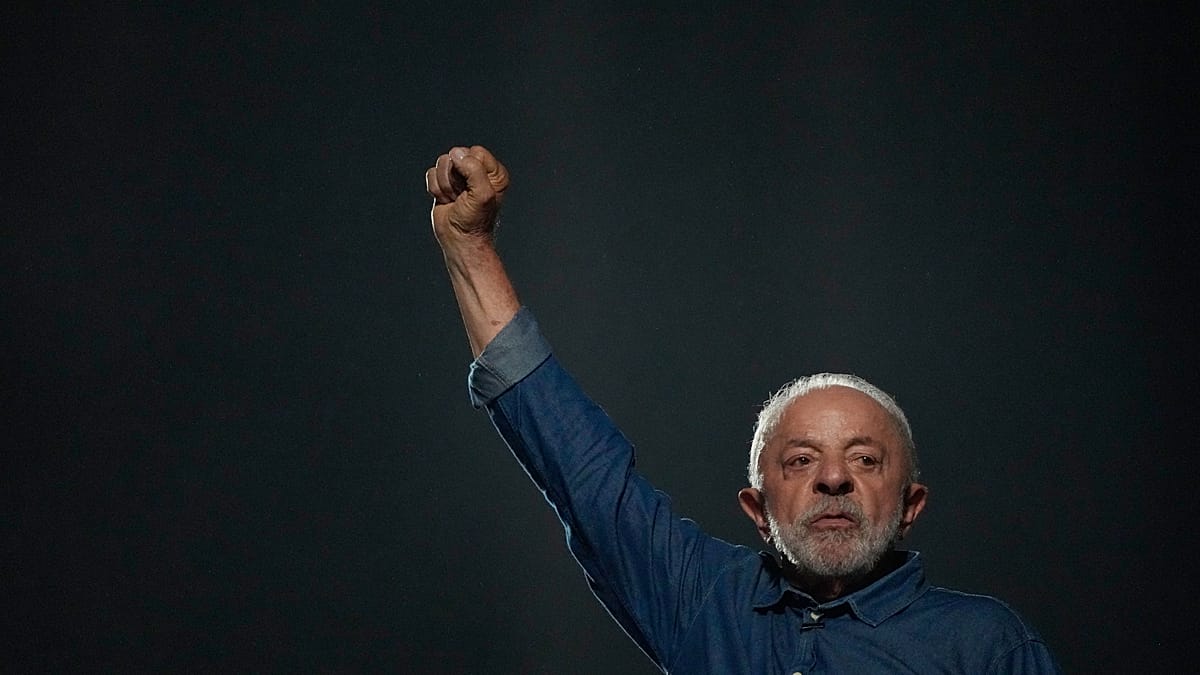
Lula da Silva secured his fourth presidential term, making a significant comeback after losing the initial round, a feat not seen since Brazil's return to direct presidential elections in 1989. His journey from a humble background to a four-time elected president highlights his enduring political resilience and popular appeal.
Imagine a super determined soccer player who lost the first half of a big game but then came back to win in the second half, even though no one had done that in a long time! That's kind of like what Lula did in Brazil. He started as a metalworker, like someone who builds things in a factory, and worked his way up to become president four times. He promised to make Brazil better for everyone, especially by helping people who are hungry or poor, and he wants countries to work together instead of fighting.
Analysis
1989 Precedent Overturned
Lula da Silva's recent re-election to Brazil's presidency represents a significant political achievement, particularly because he defied a long-standing electoral precedent. Since Brazil reintroduced direct presidential elections and the two-round system in 1989, no candidate who finished behind in the first round had ever managed to win the second. Lula's victory, therefore, is not just a personal triumph but a historical anomaly in modern Brazilian politics.
This comeback underscores his unique political appeal and ability to mobilize voters, even when facing an initial deficit. His previous attempt in 1989 saw him finish 13.3 points behind Fernando Collor de Mello, a gap he couldn't close. This time, however, he successfully rallied support, demonstrating a renewed political vigor and strategic effectiveness that allowed him to overcome the unfavorable historical trend.
Garanhuns to São Paulo
Luiz Inácio Lula da Silva's early life is a testament to his humble origins and the struggles faced by many Brazilians. Born on October 27, 1945, in Garanhuns, Pernambuco, as the seventh child of illiterate farmer parents, his family moved to São Paulo when he was just seven. His childhood involved various odd jobs, including street vendor, shoeshine boy, and dye-shop assistant, before he began a technical course in metalworking at 14.
It was in metalworking that Lula found his calling, not just as a worker but as a trade unionist. He rose to prominence leading metalworkers' strikes in the São Paulo region between 1978 and 1980, during Brazil's military dictatorship. These strikes were pivotal, laying the groundwork for the founding of the Workers' Party (PT) in 1980, with Lula as its central figure. His experience as a manual worker and union leader profoundly shaped his political identity and platform.
Bolsa Família and Multilateralism
Lula's first two terms as president, from 2002 to 2010, were marked by significant social policy initiatives aimed at combating poverty and illiteracy. Programs like "Bolsa Família," introduced in 2003, and the "Zero Hunger" program, are frequently cited by his supporters as key to transforming Brazil into a more prosperous and equal nation. These policies were credited with a substantial reduction in undernourishment, leading Brazil to exit the United Nations' Hunger Map by 2014 under his successor, Dilma Rousseff.
Beyond domestic policy, Lula has consistently advocated for multilateralism and diplomacy on the international stage. He champions an international order where decisions are not solely dictated by major powers, emphasizing reconciliation and peace over conflict. His speech to the 81st United Nations General Assembly in 2026 highlighted his belief that "War is not the continuation of politics by other means. It is the total failure of politics," reflecting a commitment to global cooperation that aligns with many European foreign policy objectives. However, his career has also been shadowed by corruption scandals, such as the "Car Wash" investigation, which temporarily curtailed his political trajectory.
Key points
- Lula da Silva won his fourth presidential term, making a historic comeback after trailing in the first round, a feat unprecedented since 1989.
- He began his career as a metalworker and rose through trade unionism to become a prominent political figure and founder of the Workers' Party (PT).
- His previous presidencies were marked by significant social programs like "Bolsa Família" and "Zero Hunger," which reduced poverty and illiteracy.
- Lula advocates for multilateralism, diplomacy, and an international order not dominated by major powers, emphasizing peace over conflict.
- His political career has also been impacted by corruption scandals, including the "Car Wash" investigation.
Lula's promise to deliver "the best term any president has ever served" suggests a renewed focus on national development and social welfare, potentially leading to further reductions in poverty and hunger. His commitment to multilateralism and diplomacy could also foster stronger international relations and a more peaceful global order, benefiting Brazil and its partners.
The article mentions past corruption scandals, such as the "Car Wash" investigation, which could resurface as a challenge during his new term. These issues could potentially undermine public trust and hinder his administration's ability to implement its ambitious social and economic agenda effectively.