Gaza's bicycle couriers refuse to stop despite danger and pittance pay
Despite extreme danger, destroyed roads, and meager earnings, hundreds of bicycle couriers continue to deliver goods across Gaza, filling a critical gap left by fuel shortages and infrastructure damage.
Intelligence analysis by Gemini 2.5 Flash
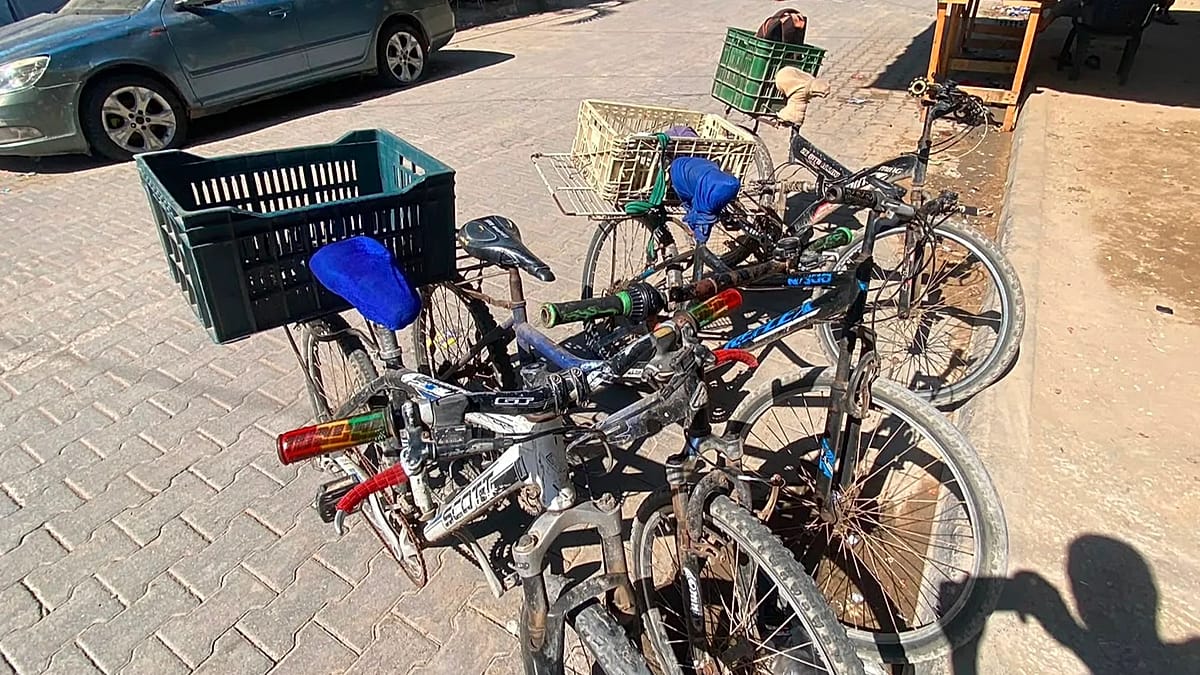
Gaza's delivery sector has been forced onto bicycles due to the destruction of 74% of the road network and severe fuel shortages. Couriers face immense physical strain, constant repair costs that often exceed their daily pay, and the ever-present threat of bombardment, yet they persist to provide essential services and earn a livelihood.
Imagine your town's roads were all broken, and there was no gas for cars. People in Gaza who deliver packages now have to use bicycles, riding through piles of broken buildings. It's super dangerous because of fighting, and their bikes break all the time. Fixing a flat tire can cost almost all the money they make in a day! But they keep going because it's one of the only ways to get food and supplies around, and it helps them earn a tiny bit of money.
Analysis
The ongoing conflict in Gaza has fundamentally reshaped daily life, forcing innovative yet perilous adaptations for essential services. The reliance on bicycle couriers underscores the catastrophic breakdown of conventional transport infrastructure and the desperate measures individuals take to survive and sustain their communities.
Barq delivery company
Tareq Abu Zekri's Barq delivery company exemplifies the resilience and necessity of these services. Launched during a ceasefire in January 2025, Barq quickly expanded, attracting 109 applications within a day and a half, many from university graduates with no other employment options. The company now employs over 50 workers across three branches, facilitating the movement of goods between areas and completing local deliveries for shops, tents, and homes. This initiative, while providing a vital income source, also highlights the dire economic landscape where such dangerous work is one of the few available opportunities.
74% of Gaza's road network
The physical environment in Gaza presents formidable challenges. A joint assessment by the World Bank, European Union, and United Nations in April 2026 revealed that approximately 74% of Gaza's road network, totaling about 4,500 kilometers, has been destroyed, with an additional 13% partially damaged. This extensive damage, estimated at $3.21 billion for the transport sector, makes motorized transport largely impossible and cycling incredibly arduous. Couriers like Mohammed Abu Amra report that trips once taking 10 minutes by motorbike now take 30 minutes or more by bicycle, navigating rubble, heat, and rain. The constant need for repairs, costing up to 40 shekels for a single puncture out of a 50-shekel daily earning, leaves workers with a pittance, often resorting to 'patchwork on top of patchwork' using salvaged parts.
Raed Adel Mohammed Alyan
The human cost of this work is devastatingly high. On August 29, delivery worker Raed Adel Mohammed Alyan was killed alongside Abdel Fattah Abu Al-Eesh when a strike hit an electric bike in Tel al-Hawa. Jamil Al-Yazji, director of Hamama delivery company, reported that between 40 and 50 of his bicycle couriers have been killed in the Israel-Hamas war, yet around 400 continue to work. Abu Zekri also recounted workers being wounded or narrowly escaping shelling. Despite these immense dangers and losses, companies continue to hire, driven by the dual necessity of providing income and maintaining a semblance of service. The workers' plea for basic supplies like pedals, frames, and tires underscores the profound lack of resources and the urgent need for humanitarian aid to support even these most basic, life-sustaining activities.
Key points
- Hundreds of bicycle couriers continue to operate in Gaza despite extreme danger and meager pay.
- Fuel shortages and the destruction of 74% of Gaza's road network have made motorized transport impossible.
- Couriers face immense physical strain, high repair costs that often exceed daily earnings, and the constant threat of bombardment.
- Delivery companies like Barq provide vital employment, attracting university graduates with few other options.
- At least 40-50 bicycle couriers from one company alone have been killed in the Israel-Hamas war.
The continued operation of bicycle delivery services, despite overwhelming challenges, demonstrates remarkable human resilience and provides a crucial lifeline for communities to access goods and for individuals to earn an income in a devastated region. This persistence, however difficult, prevents a complete collapse of essential local commerce and connectivity.
The high death toll among couriers, the prohibitive costs of repairs, and the ongoing destruction of infrastructure suggest an unsustainable situation. Without significant improvements in safety and access to resources, these vital, albeit rudimentary, services risk complete collapse, exacerbating the humanitarian crisis.