Google Backtracks on Tying AI to Search for Schools After Backlash
Google has partially reversed a controversial policy that would have forced K-12 schools to adopt its AI features to retain access to Google Search, following significant backlash.
Intelligence analysis by Gemini 2.5 Flash
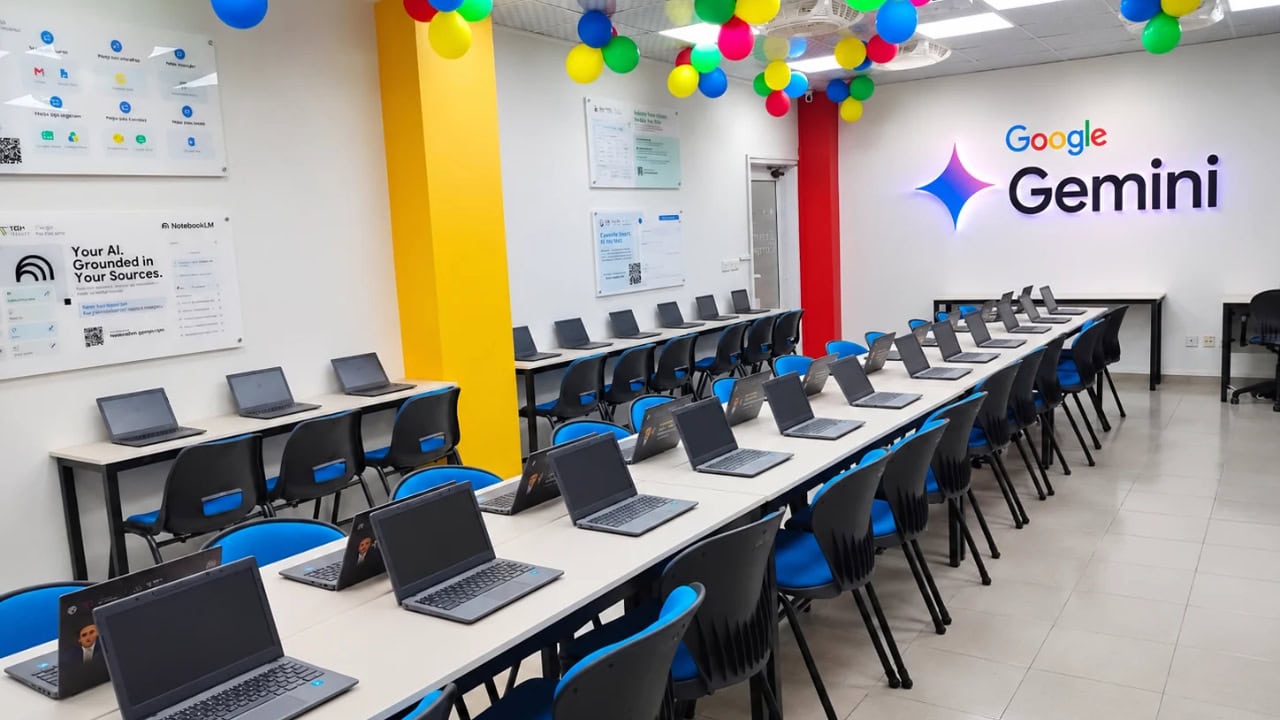
Initially, Google announced that schools rejecting its AI tools like Gemini would lose Google Search access for K-12 student accounts. After immediate criticism, the company clarified that schools can keep Search without enabling Gemini products, but a significant catch remains: AI Overviews and AI Mode within Search cannot be disabled.
Imagine Google Search is like a super helpful library for school. Google wanted to add a new smart helper, like a robot librarian named Gemini, to answer questions. At first, they said if your school didn't want the robot librarian, you couldn't use the regular library either! But after many grown-ups complained, Google said, "Okay, you can still use the regular library without the robot librarian." The tricky part is, even if you don't get the robot librarian, the regular library now has little smart summaries at the top of every search, and you can't turn those off.
Analysis
Google's recent policy adjustment regarding AI integration in its educational services for K-12 schools marks a significant moment in the evolving discourse around artificial intelligence in learning environments. The initial announcement, which effectively bundled access to essential Google Search with the adoption of new AI features like Gemini, sparked widespread concern among educators and policymakers. This move was perceived by many as leveraging Google's dominant position in the education technology sector, where many schools, including those potentially in Pakistan, rely heavily on Google Workspace for daily operations. The company's subsequent clarification, while addressing some immediate concerns, still leaves a critical aspect of AI integration unaddressed, forcing schools to contend with AI-powered features even if they desire a traditional search experience.
Chris Phillips
Google's Vice President of Education, Chris Phillips, initially framed the integration of Search and AI as deeply intertwined, suggesting that schools opting out of AI features would consequently lose access to Google Search entirely. This stance created an all-or-nothing dilemma for educational institutions, many of which are already navigating complex decisions about technology adoption and student data privacy. The company's stated intention was to offer schools more control over student use of AI services by making them opt-in, yet the initial framing contradicted this by making Search contingent on AI adoption. This perceived coercion quickly drew the ire of various stakeholders, highlighting the delicate balance Google must maintain between innovation and user autonomy, especially in sensitive sectors like education.
Zohran Mamdani
The immediate and sharp criticism following Google's initial announcement was exemplified by figures like New York City Mayor Zohran Mamdani, who had recently implemented his own moratorium on student AI use. This public outcry underscored a broader sentiment among education advocates who accused Google of exploiting its market dominance to push AI tools into classrooms. The backlash was not merely about the technology itself but about the perceived lack of choice and the potential for a tech giant to dictate educational policy through its essential services. Google's rapid response, clarifying on X (formerly Twitter) that schools could enable Search independently of Gemini products, was a direct consequence of this intense pressure, demonstrating the power of collective advocacy in influencing corporate policy.
AI Overviews
Despite Google's partial backtrack, a significant catch remains firmly in place: schools enabling Google Search for their K-12 students cannot disable AI Overviews or AI Mode within Search. This means that even if schools choose not to activate Gemini or other explicit AI tools, their students will still encounter AI-generated summaries and guided learning features atop search results. This ongoing, non-optional integration of AI into a fundamental educational tool raises new questions about pedagogical control and the nature of information consumption in schools. While Google frames these features as beneficial for learning, offering step-by-step guidance, the inability to opt out means schools cannot provide a purely traditional search experience, potentially impacting how educators design assignments and how students engage with information, a concern echoed by districts like LAUSD and New York City, which have imposed their own generative AI bans.
Key points
- Google initially announced that K-12 schools rejecting its AI features would lose access to Google Search.
- The policy, set to begin in early 2027, applied to student accounts within Google Workspace for Education.
- Following swift backlash, Google clarified that schools can enable Search independently without activating Gemini products.
- A significant catch remains: schools cannot disable AI Overviews or AI Mode within Google Search.
- The controversy highlights concerns about market dominance and control over AI integration in education.
Google's partial reversal demonstrates responsiveness to educator feedback, offering schools more direct control over specific AI tools like Gemini. This could lead to a more thoughtful and phased integration of AI in education, allowing institutions to adapt at their own pace and prioritize student well-being.
Despite the backtrack, schools still cannot fully opt out of AI-powered features within Google Search, such as AI Overviews. This means educational institutions lack complete autonomy over the learning tools provided to students, potentially forcing them to accept AI integrations they might not fully endorse or understand.