Greater gliders not as great at gliding as thought – but still look like magic carpets, experts say
Australian researchers have discovered that greater gliders, Australia's largest gliding marsupial, are not as great at gliding as previously thought. They soar across an average distance of 19 metres, far shorter than the 100 metres suggested in an 85-year-old study.
Intelligence analysis by Llama
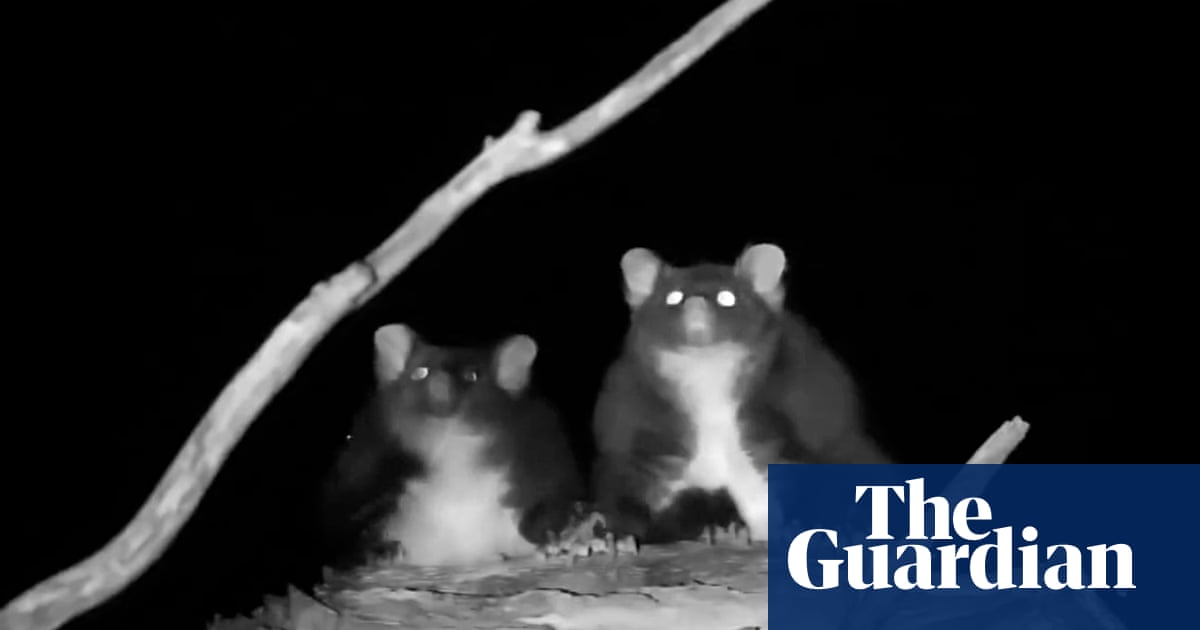
A new study has found that greater gliders, a type of gliding marsupial, do not travel as far as previously thought. The researchers used infrared binoculars, lasers, and tape measures to track the animals' flights, finding that they average 19 metres in distance, rather than the 100 metres suggested in an earlier study.
Greater gliders are a type of animal that can fly through the air using a special membrane. They jump off trees and soar through the air, but they don't travel as far as people thought. They average about 19 metres in distance, which is much shorter than the 100 metres suggested in an earlier study.
Analysis
A Surprising Reality: Greater Gliders' Gliding Abilities Challenged
The study, published in Australian Mammalogy, has shed new light on the gliding abilities of greater gliders. Contrary to previous assumptions, the researchers found that these animals do not travel as far as thought. The longest flight captured in the study was just under 50 metres, a far cry from the 100 metres suggested in an 85-year-old study.
The study's lead author, Dr Ana Gracanin, a conservation biologist at the Australian National University, explained that the term 'greater' refers to the animal's large body size, rather than the distance they traverse. The researchers used a combination of infrared binoculars, lasers, and tape measures to track the animals' flights, collecting data on launch and landing heights, horizontal distance, and glide angle.
The findings have significant implications for the conservation of greater gliders, which are endangered and rely on tree cover to travel and forage for food. Gaps created by logging or infrastructure development could stymie their movement, making conservation efforts more challenging.
The Science Behind Greater Gliders' Gliding
Greater gliders use a membrane stretching from their elbows to their ankles to stay aloft. They get to the top of a tree, launch, spread out their elbows, tuck their paws under their chin, and soar through the air. Taller trees might allow for longer glides, but it is questionable whether the animals could regularly achieve distances of 100 metres, as reported in a 1941 paper.
The Practical Implications of the Study
The study's findings have practical implications for conserving the species. Dr Benjamin Wagner, an expert in greater glider habitats at the University of Melbourne, said that the results mean that disturbances to their habitat or habitat loss might be more severe than thought. In fragmented or less dense forests, there would be more gaps to cross, making it more challenging for the animals to travel and forage for food.
The Future of Greater Glider Conservation
The study's findings highlight the need for more research into the conservation of greater gliders. The animals are endangered and rely on tree cover to travel and forage for food. Gaps created by logging or infrastructure development could stymie their movement, making conservation efforts more challenging. Further research is needed to understand the impact of habitat loss and fragmentation on greater glider populations and to develop effective conservation strategies.
Key points
- Greater gliders do not travel as far as previously thought, averaging 19 metres in distance.
- The study's findings have significant implications for the conservation of the species.
- The animals rely on tree cover to travel and forage for food, making habitat loss and fragmentation a major challenge.
- Further research is needed to understand the impact of habitat loss and fragmentation on greater glider populations.
The study's findings could lead to more effective conservation strategies for greater gliders. By understanding the animals' gliding abilities and the impact of habitat loss and fragmentation, conservationists can develop targeted efforts to protect the species and their habitats.
The study's findings highlight the challenges facing greater glider conservation. The animals are endangered and rely on tree cover to travel and forage for food. Gaps created by logging or infrastructure development could stymie their movement, making conservation efforts more challenging.

