Housing Foundation announces allocation of 70,000 rural land plots to applicants
Iran's Housing Foundation has allocated over 70,000 rural land plots under the Seventh Development Plan and initiated construction for 105,000 units under the "Home of Hope" plan for disadvantaged groups.
Intelligence analysis by Gemini 2.5 Flash
The Housing Foundation of the Islamic Revolution is actively working to provide housing for rural residents and disadvantaged groups across Iran, allocating land plots and launching a major construction initiative, despite facing some legal and land acquisition challenges.
Imagine the government wants to help families in the countryside get their own homes. They're giving out small pieces of land, like building blocks, to over 70,000 families. They also have a special plan called "Home of Hope" to build 200,000 houses for families who don't have much money, and they've already started building half of them! Sometimes it's tricky to find enough land or get all the rules sorted, but they're working hard to make sure more families can have a place to live.
Analysis
70,300 Land Plots
The Housing Foundation of the Islamic Revolution has made significant strides in fulfilling its mandate under Iran's Seventh Development Plan, announcing the allocation of 70,300 land plots in villages. This effort is part of a broader strategy to provide accessible housing, with information on an additional 320,000 units already uploaded to the relevant system, indicating a substantial pipeline of future projects.
However, the process of land provision is not without its hurdles. The Foundation acknowledges facing restrictions in some villages where natural resources do not offer sufficient land. To overcome this, agreements with private landowners are necessary, a process that has encountered legal ambiguities with a directive drafted by the Foundation being suspended by the Court of Administrative Justice. Resolving these legal issues is critical for the continued expansion of land allocation efforts.
Home of Hope Plan
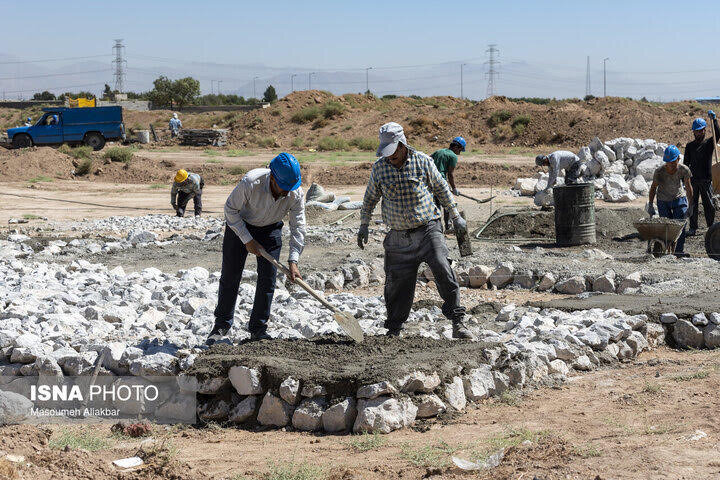
The "Home of Hope" plan represents a major government initiative aimed at constructing 200,000 residential units specifically for disadvantaged groups. As of the latest report, executive operations have commenced for approximately 105,000 of these units, demonstrating considerable progress in the plan's implementation. Eligibility for this program requires applicants to be from disadvantaged backgrounds and not to have previously utilized government housing facilities, ensuring the aid reaches its intended beneficiaries.
Crucially, the Ministry of Transport and Urban Development is tasked with providing the necessary land in existing and new cities, which is then allocated to eligible applicants free of charge. A key feature of the "Home of Hope" plan is the direct participation of applicants in the construction process, a departure from more centralized projects. This approach aims to empower beneficiaries and potentially streamline the building process, with the Housing Foundation overseeing permits and executive stages.
400 Million Toman Grant
Further bolstering support for vulnerable populations, the Housing Foundation has outlined specific financial assistance for households covered by support institutions. Eligible applicants affiliated with the Imam Khomeini Relief Committee or the State Welfare Organization are set to receive a substantial 400 million Toman non-repayable grant for housing construction. This significant financial aid underscores the government's commitment to ensuring housing security for its most vulnerable citizens.
Agreements have already been formalized with both the Relief Committee and the State Welfare Organization to facilitate the distribution of these grants. For the current year, these agreements encompass the provision of housing for 52,000 units in total, with 44,000 units specifically designated under the agreement with the Relief Committee. This targeted financial support is expected to accelerate housing construction for those most in need, complementing the broader land allocation and construction initiatives.
Key points
- The Housing Foundation has allocated 70,300 rural land plots under the Seventh Development Plan.
- Information for 320,000 additional units has been uploaded to the relevant system.
- The "Home of Hope" plan aims to build 200,000 residential units for disadvantaged groups, with 105,000 units already under construction.
- Eligible applicants for "Home of Hope" must not have previously used government housing facilities and receive land free of charge.
- Households covered by the Imam Khomeini Relief Committee or State Welfare Organization are eligible for a 400 million Toman non-repayable housing grant.
The successful implementation of these housing initiatives could significantly improve living standards for rural populations and disadvantaged groups, fostering greater social equity and stability. Resolving legal ambiguities around land acquisition would accelerate the provision of housing, allowing more families to benefit from government support and direct participation in construction.
Ongoing legal ambiguities regarding land acquisition could slow down or even halt the allocation of necessary plots, delaying housing projects. If the "Home of Hope" plan faces unforeseen challenges in construction or funding, it might not meet its targets, leaving many disadvantaged families without the promised housing.