How Britain’s railways are struggling in the heat – and can they be fixed?
Britain's railway network is facing significant challenges due to record heatwaves, leading to track buckling, soil shrinkage, and recent derailments that have caused injuries and widespread disruptions.
Intelligence analysis by Gemini 2.5 Flash
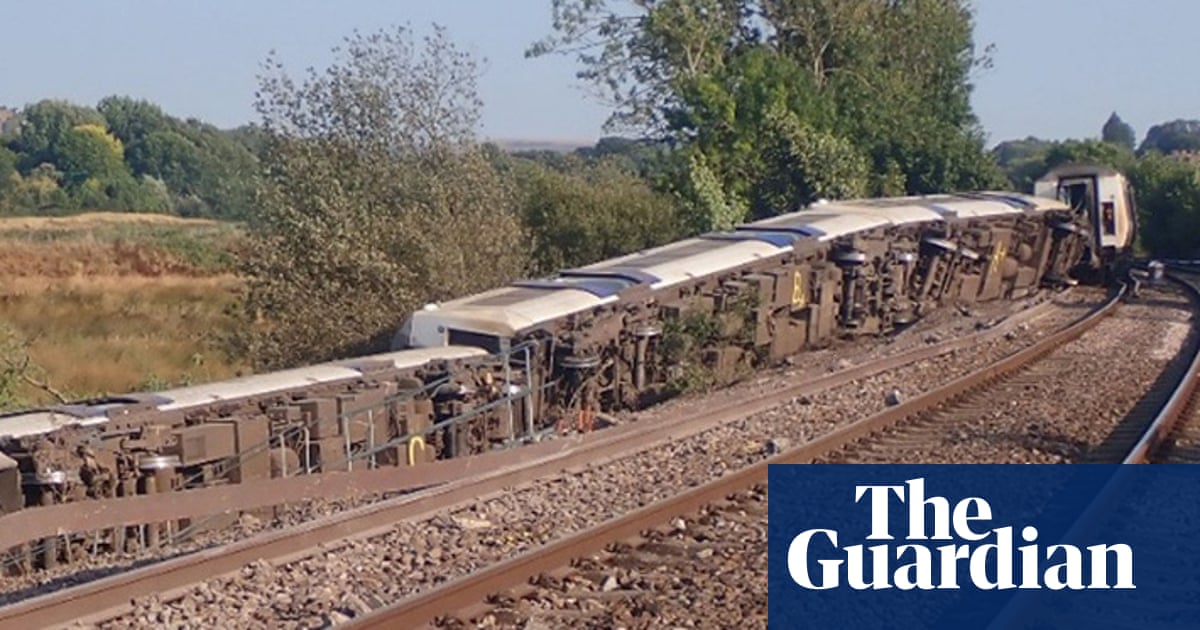
The UK's rail infrastructure, largely built for a cooler, wetter climate, is struggling to cope with increasingly hot and dry summers. This leads to steel tracks expanding and buckling, and the underlying soil shrinking, compromising stability and causing costly cancellations and safety incidents.
Imagine a long metal ruler that gets really hot in the sun. It starts to bend and wobble because it's trying to get bigger but has nowhere to go. That's what's happening to train tracks in Britain when it gets super hot, making them unsafe for trains. The tracks and the ground they sit on weren't built for this much heat, so engineers are trying to find ways to make them stronger and cooler.
Analysis
Lewes, East Sussex
Recent incidents, such as the derailment near Lewes, East Sussex, which injured 30 people, and another near Wickford, Essex, underscore the immediate and severe consequences of Britain's railways struggling with extreme heat. These events, occurring during one of the hottest and driest summers on record, highlight the vulnerability of the network to climatic shifts. The incidents have prompted Network Rail to acknowledge the "exceptional challenges" faced by the railway system.
The core issue stems from the physical properties of steel tracks, which expand significantly when heated. While modern tracks are continuously welded, this design offers little room for movement, leading to immense compressive stresses that can cause the track to buckle. This phenomenon is exacerbated by the drying and shrinking of the soil and ballast beneath the tracks, which act as the foundation, further destabilizing the railway system under the weight of passing trains.
27C
Currently, British rails are pre-stressed to avoid compression until the air temperature exceeds 27C, a figure chosen to balance the risks of buckling in summer and breaking under tension in winter. However, with rails recorded at temperatures as high as 51C, significantly above the 46C threshold for safe operation (equivalent to 30C air temperature), this design parameter is proving insufficient. Other countries, particularly those with consistently hotter climates like parts of Australia, the US, and southern Europe, set their stress-free air temperatures much higher, sometimes exceeding 35C, reflecting their different climatic conditions.
The challenge for the UK lies in its wide temperature range, making it impractical and costly to simply raise the stress-free temperature without increasing the risk of winter breakages. The post-2022 taskforce suggested raising the stress-free temperature to 30C on modern, well-supported tracks, but this remains a complex decision. Alternative solutions, such as laying track on solid concrete slabs, offer greater stability but come at a cost four times higher than standard ballasted track, making widespread implementation economically challenging.
1800s
A significant portion of Britain's railway infrastructure, including embankments and tunnels, dates back to the 1800s, when the network was first established. This historical legacy means that much of the foundational engineering was designed for a climate vastly different from today's, making it inherently less resilient to current extreme weather patterns. While tracks and stations have seen continuous updates, these older, underlying structures present a fundamental challenge to modernizing the network's climate resilience.
Addressing these deep-seated vulnerabilities requires a multi-faceted approach. Simple measures like painting tracks white to reduce heat absorption, which can lower rail temperatures by 5-10C, are already in use. However, more systemic changes, such as potentially varying the stress-free temperature across different regions of the UK or investing in more robust track foundations, are under discussion. The increasing frequency of record-breaking summers, with all five of the UK's warmest since 2000, underscores the urgency of these adaptations as climate change makes such conditions the new normal.
Key points
- Britain's railways are experiencing heat-related problems, including derailments, due to record hot and dry summers.
- Steel tracks expand and buckle under high temperatures, while dry soil beneath tracks can shrink, compromising stability.
- The current 'stress-free' temperature for UK rails (27C) is proving insufficient for extreme heat conditions.
- Solutions include painting tracks white, potentially raising the stress-free temperature, and costly slab track installation.
- Much of the network's underlying infrastructure dates back to the 1800s, making it less resilient to modern climate extremes.
The article highlights ongoing discussions and existing measures, such as painting tracks white and considering a higher stress-free temperature for rails, which offer practical steps towards adapting the network. Continued investment in these solutions and advanced monitoring could significantly improve the railway's resilience to future heatwaves.
The high cost of comprehensive upgrades, such as replacing ballasted track with concrete slabs, combined with the increasing frequency and intensity of heatwaves, poses a significant financial and logistical burden. Balancing summer heat resilience with winter cold vulnerability presents a complex engineering challenge that could lead to ongoing disruptions and safety concerns.