Hybrid Cars Face 25% Additional Tax After Budget 2026-27
Hybrid cars in Pakistan are set to become significantly more expensive under Budget 2026-27, with expiring tax concessions pushing the indirect tax burden to around 25%.
Intelligence analysis by Llama
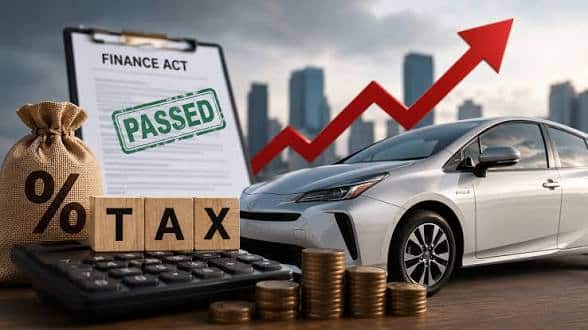
Pakistan's Budget 2026-27 ends reduced sales tax rates and exemptions on imported hybrid vehicles, raising the indirect tax burden to roughly 25% and making hybrids costlier than last fiscal year. Analysts warn the move could slow hybrid adoption.
Pakistan used to give people a discount on hybrid cars because they use less fuel. The new budget stopped that discount, so hybrid cars now cost about 25% more in extra taxes. That might make people buy smaller regular cars instead, or wait to buy any car at all.
Analysis
A Quiet Reversal of Green Incentives
Pakistan's Budget 2026-27 has quietly undone a set of tax concessions that had made hybrid vehicles a relatively attractive middle ground between conventional petrol cars and fully electric models. The Finance Act did not renew the reduced sales tax rates and other exemptions that previously applied to imported hybrids, meaning the effective indirect tax burden on these vehicles now sits at around 25%. The change is mechanical rather than dramatic — there is no new headline levy, just the non-renewal of reliefs that were already on the books. The cumulative effect, however, is a noticeable step-change in showroom prices, particularly for mid-range and premium hybrid imports.
Pricing Pressure Across the Range
The price impact is not confined to luxury hybrids. Because the tax framework applies broadly to imported hybrid vehicles, both mainstream models and upmarket offerings are expected to see on-road prices climb. Buyers who were comparing hybrid trims with small-displacement petrol cars — often the threshold decision for middle-class Pakistani consumers — now face a wider gap. The article notes that analysts believe the higher costs could slow hybrid adoption, with some buyers expected to opt for smaller conventional cars or postpone purchases altogether until the market settles.
What This Means for Pakistan's Auto Market
The shift lands at a delicate moment for Pakistan's automotive sector, where high fuel prices and intermittent currency pressure have already pushed buyers toward smaller, more efficient vehicles. Hybrids had carved out a niche as a practical alternative for consumers who could not yet afford EVs or did not have reliable access to charging infrastructure. By withdrawing tax support, the government risks shrinking that niche at exactly the time when fuel-economy incentives would be most economically rational. The decision also raises a broader question about policy consistency: if the goal is to encourage cleaner transport, the budget signal now points the other way, and the market is likely to react accordingly.
Key points
- Pakistan's Budget 2026-27 did not renew reduced sales tax rates and exemptions on imported hybrid vehicles
- The effective indirect tax burden on hybrids has risen to around 25%
- Price increases are expected across both mid-range and premium hybrid models
- Analysts say higher costs could slow hybrid adoption, with buyers shifting to smaller cars or delaying purchases
- The policy reversal comes amid high fuel prices that had previously made hybrids an attractive middle option for Pakistani consumers
If the higher tax revenue is ring-fenced for transport infrastructure or EV charging rollout, the budget could still steer the market toward cleaner mobility in the longer term. Higher hybrid prices may also accelerate the cost-curve advantage of local EV assembly, which the government has separately been promoting.
Analysts cited in the article warn that higher on-road prices could push buyers toward smaller, less efficient petrol cars, reversing recent gains in fuel economy. A slower hybrid market would also reduce competitive pressure on local assemblers to broaden their electrified lineups, locking in a more polluting vehicle stock for years to come.