I would like to rejoin EU, says Burnham, but ‘British public are the bosses’ – UK politics live
Andy Burnham, a prominent Labour figure, expressed a personal desire to see the UK rejoin the EU but emphasized that the decision rests with the British public. He also dismissed speculation about an early general election despite recent polls showing Labour with an eight…
Intelligence analysis by Gemini 2.5 Flash
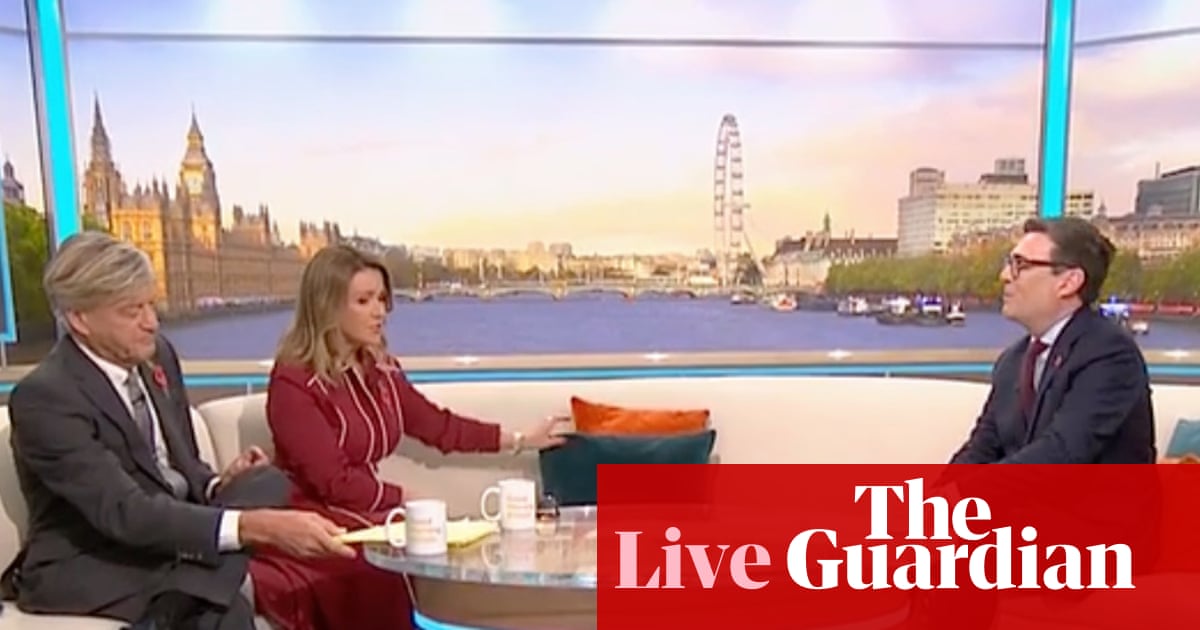
Andy Burnham, during a Good Morning Britain interview, stated his personal wish for the UK to rejoin the EU but stressed that the public's will is paramount. He also firmly denied any plans for an early election, despite two recent polls indicating a significant eight-point lead for Labour over their rivals.
Andy Burnham, a big politician, says he personally wants Britain to be friends with Europe again, like it was before. But he also says it's up to the British people, not just him. Even though some new surveys show his party is doing really well, he says he's not planning an election soon, like a kid saying they don't want to play a game even if they're winning.
Analysis
Andy Burnham's Brexit Stance
Andy Burnham, a prominent Labour figure, has articulated a nuanced position on the United Kingdom's relationship with the European Union. While personally expressing a desire to see the UK rejoin the EU "in my lifetime," he firmly stated that any such move would ultimately be dictated by the will of the British public, whom he referred to as "the bosses." This pragmatic approach aims to avoid dictating his own opinions and instead focus on what he perceives as the public's mandate. His comments suggest a strategic balancing act, acknowledging personal aspirations while emphasizing democratic accountability.
Burnham's current focus, as reiterated in his Good Morning Britain interview, is on pragmatically improving the existing post-Brexit settlement, which he believes is "not working." He proposes a renegotiation of this settlement, suggesting that rejoining the EU, which would entail accepting free movement rules, could emerge as the "best option." This stance, previously outlined at the Labour conference, is framed not as a divisive reopening of the Brexit referendum campaign, but rather as a means to "bring people together" by finding a more effective and growth-oriented relationship with the bloc.
Early Election Speculation
Despite Burnham's repeated denials of an "early" general election, recent polling data has fueled speculation within Westminster. Two polls released over the weekend, one from Ipsos and another from Opinium, both indicated a significant eight-point lead for Labour. The Ipsos poll specifically noted Labour at 32%, marking their largest lead recorded in the current parliament, with the Conservatives in second place for the first time since June 2025. Opinium's poll showed Labour at 30%, also an eight-point lead, but over Reform UK in second place, with the Conservatives at 20%.
These results have garnered considerable attention, particularly as they show a larger Labour lead compared to other recent surveys, including the Politico poll of polls which had Labour only four points ahead of Reform UK. Burnham, however, insisted during his interview that his "mind is not on that" and that "there is no election coming anytime soon." The article notes that the prospect of a right-wing vote split "almost 50/50 between the Conservatives and Reform UK" could present an "ideal backdrop for Labour" if an election were to be called in May next year, despite Burnham's public dismissal of such a timeline.
Labour Conference Context
Burnham's recent remarks on Brexit are consistent with positions he articulated at the Labour conference. During that event, he had already announced that rejoining the EU could be considered the optimal outcome of his proposed renegotiation of the Brexit settlement. This would inherently involve accepting the EU's free movement rules, a point that has drawn criticism from opposition parties and even some Labour MPs. The article highlights that this willingness to consider free movement, while presented as a "novel outrage" by some, was not a new development from Burnham.
His conference statements and subsequent interview comments underscore a consistent strategy: to acknowledge the economic challenges posed by the current Brexit arrangement and to explore all options, including a closer alignment with the EU, to foster economic growth. This approach aims to move beyond the initial referendum debate by focusing on practical solutions, even if those solutions echo pre-Brexit arrangements. The emphasis remains on a pragmatic assessment of what would best serve the British economy and public interest, rather than adhering to a rigid ideological stance.
Key points
- Andy Burnham personally desires the UK to rejoin the EU in his lifetime.
- He insists that the British public are the 'bosses' and their will must dictate any Brexit changes.
- Burnham denies an early general election is coming soon, despite speculation.
- Two recent polls (Ipsos and Opinium) show Labour with an eight-point lead.
- Burnham believes revising the Brexit settlement could 'bring people together' and improve the economy.
If Burnham's pragmatic approach to Brexit gains public support, it could lead to a more stable and economically beneficial relationship with the EU, potentially fostering national unity. His focus on "getting on with the job" might lead to effective governance and address key public concerns without immediate political upheaval.
Burnham's nuanced Brexit stance could be perceived as indecisive or opportunistic, potentially alienating both ardent Remainers and Leavers and failing to build a broad consensus. Persistent speculation about an early election, despite denials, could create political instability and distract from crucial policy work.