Iran has many capacities to counter aviation sanctions
A senior Iranian lawmaker stated that Iran possesses numerous capacities to counter US sanctions on its aviation sector, including economic, border, and political tools.
Intelligence analysis by Gemini 2.5 Flash Lite
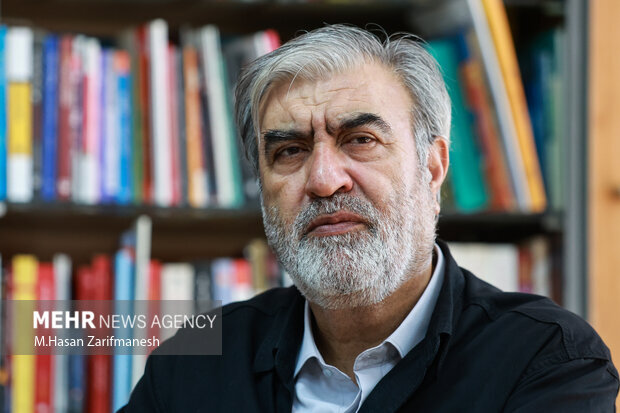
Iran's Parliament National Security and Foreign Policy Commission Chairman, Ebrahim Azizi, asserted that Iran has significant capabilities to retaliate against US aviation sanctions. He highlighted the Strait of Hormuz as a potential tool and emphasized the need for the Ministry of Foreign Affairs to actively pursue diplomatic and legal avenues to neutralize these sanctions.
Imagine Iran is like a kid whose toys are being taken away by another kid (the US). Iran's leader is saying, 'We have lots of other toys and ways to play that can make things difficult for the kids who help take our toys, like blocking their path to the playground.' They also plan to talk to grown-ups (diplomats) to get their toys back.
Analysis
Ebrahim Azizi's Assertions
Ebrahim Azizi, identified as the chairman of Iran's Parliament National Security and Foreign Policy Commission, articulated a strong stance against the aviation-related sanctions imposed by the United States. He emphasized that Iran is not without recourse, possessing a multitude of tools to counter such measures. Azizi's remarks suggest a deliberate strategy of preparedness, indicating that Iran has been developing and identifying various capacities across economic, border, and political domains, as well as at the regional level. These capabilities, he implied, are ready to be deployed with "prudence, rationality, and intelligence" at an "appropriate time," signaling a calculated approach to any potential escalation or response.
The Strait of Hormuz as Leverage
A significant point raised by Azizi was the strategic importance of the Strait of Hormuz as a potential tool for Iran to exert pressure. He specifically mentioned the possibility of blocking the passage for exports of certain goods and oil from countries that comply with the air embargo against Iran. This assertion directly links Iran's response to sanctions with its control over a critical global energy chokepoint. The implication is that any nation aligning with US sanctions could face economic repercussions through disruptions in this vital waterway, thereby raising the stakes for international cooperation against Iran's aviation sector.
Diplomatic and Legal Avenues
Beyond the overt display of strategic leverage, Azizi also underscored the importance of Iran's international legal and diplomatic capacities. He called upon the Ministry of Foreign Affairs to treat the issue with "special sensitivity" and to prioritize its agenda. This suggests a dual-track approach, where Iran intends to simultaneously explore legal challenges and diplomatic negotiations to dismantle the sanctions. The emphasis on these avenues indicates a desire to neutralize the sanctions not just through retaliatory measures but also by challenging their legitimacy and seeking international legal recourse, potentially through international bodies or bilateral engagements.
Key points
- Iran possesses significant capacities to counter US aviation sanctions, according to a senior lawmaker.
- The Strait of Hormuz is identified as a key strategic tool for potential retaliation.
- Iran plans to utilize economic, border, and political leverage against sanctioning countries.
- The Ministry of Foreign Affairs is urged to prioritize diplomatic and legal efforts to neutralize sanctions.
If Iran successfully leverages its diplomatic and legal capacities, it could lead to the lifting of aviation sanctions, allowing for greater international connectivity and trade. This could also foster a more stable regional environment by de-escalating tensions.
A failure to effectively counter the sanctions through diplomatic or retaliatory means could lead to further isolation of Iran's aviation sector, potentially impacting its economy and international relations more severely.