Is Singapore’s wealth gap the new social divide?
Mathews discusses wealth inequality and its impact on social mobility in Singapore.
Intelligence analysis by Qwen 2.5 (3B)
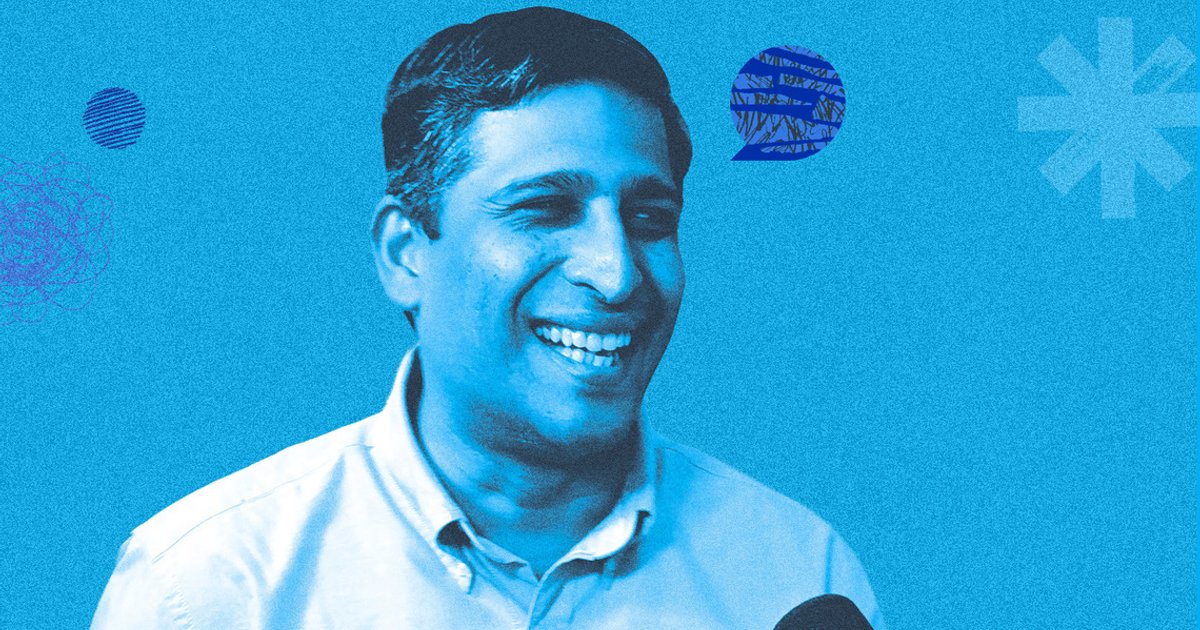
Mathews explores the growing wealth gap in Singapore and its implications for social mobility and economic stability.
Mathews talks about how having more money (wealth) helps people in Singapore, especially those with less money. Just having more money (income) isn't enough to help people who don't have much money. He also talks about how technology might change jobs and how people need to learn about money to avoid problems.
Analysis
Understanding Wealth Inequality in Singapore
The Gini Coefficient
The Ministry of Finance (MOF) reports that the wealth Gini coefficient in Singapore has risen to 0.55, indicating a significant wealth gap between the top and bottom 20% of households. This is 18 times more than the bottom 20%, whose average wealth is $293,000, compared to $5.3 million for the top 20%.
Income vs. Wealth
While income inequality has been reduced through government policies and wage initiatives, the wealth gap remains a critical issue. Mathews explains that wealth acts as a buffer against economic shocks, particularly for lower-income households. Income alone does not guarantee social mobility.
The Future of Social Mobility
AI-Driven Job Disruptions
Mathews discusses the potential impact of AI on job disruptions and the need for workers to adapt. He highlights the importance of financial literacy and the potential for a universal basic capital model to address wealth inequality.
Retail Investing and Financial Literacy
The conversation also touches on the risks of retail investing without financial literacy, which can lead to financial instability for lower-income families. Mathews suggests that a universal basic capital model could mitigate these risks.
Moving Up the Economic Ladder
Mathews questions whether traditional status symbols like car ownership are still relevant in a society with a widening wealth gap. He suggests that these symbols may be redefined by a new generation, but the underlying issue of wealth inequality remains.
Conclusion
Mathews concludes that addressing the wealth gap is crucial for maintaining social cohesion and economic stability in Singapore. He advocates for policies that promote wealth accumulation and financial literacy to bridge the gap between the rich and the poor.
Key points
- The wealth Gini coefficient in Singapore has risen to 0.55, indicating a significant wealth gap.
- Wealth acts as a buffer against economic shocks, particularly for lower-income households.
- AI-driven job disruptions and financial literacy are key issues to address in Singapore.
- A universal basic capital model could mitigate the risks of retail investing and improve social mobility.
- Traditional status symbols like car ownership might lose their meaning and relevance in a society with a widening wealth gap.
A universal basic capital model could help bridge the wealth gap and improve social mobility in Singapore.
If the wealth gap continues to grow, traditional status symbols like car ownership might lose their meaning and relevance.