Keeping critical industries moving through the energy transition
Shell discusses how businesses can reduce emissions without disrupting operations, focusing on renewable diesel for diesel applications.
Intelligence analysis by Qwen 2.5 (3B)
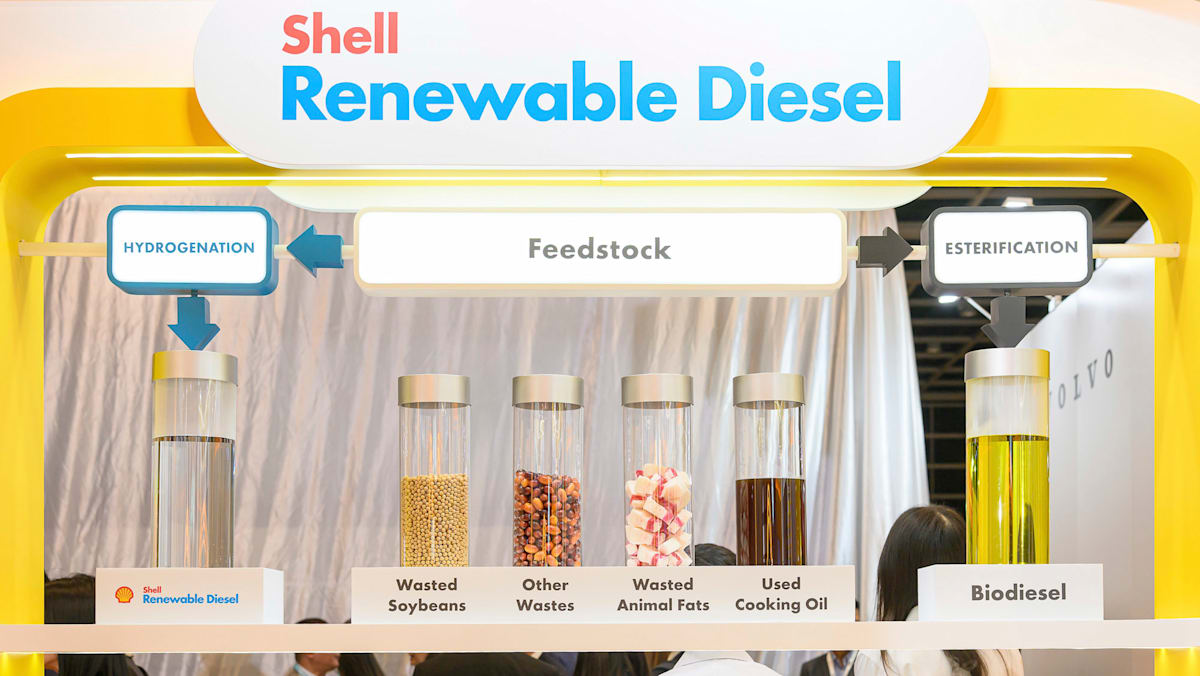
Shell explores how businesses can transition to lower-carbon operations without compromising reliability, highlighting renewable diesel as a viable option for diesel applications.
Shell says that even if you want to use less dirty fuel, you can still use the same old machines. They have a special cleaner fuel called SRD that can help reduce the dirty air you make, but you still need to use the old machines. It's like having a new toy, but you still use your old toys too.
Analysis
Shell's Approach to Decarbonization in Diesel Applications
Shell's general manager of commercial fuels, Mr. Tan Yew-Chong, emphasizes that decarbonization does not always require the wholesale replacement of existing assets. Instead, businesses can adopt lower-carbon options like Shell Renewable Diesel (SRD) to reduce emissions from existing diesel-powered equipment. This includes backup generators, fleets, and critical equipment.
Case Study: Hong Kong
In Hong Kong, SRD has been successfully used in a hospital's boiler room and a container terminal operator's diesel fleets. This demonstrates SRD's versatility across different operating environments. The fuel's characteristics, such as its low levels of sulphur and aromatics, and its ability to maintain fuel quality for extended periods, make it suitable for backup power and other applications where fuel may be stored for extended periods but needs to be ready at short notice.
Challenges and Solutions
While SRD can help reduce lifecycle carbon dioxide-equivalent emissions by up to 90% for specific diesel use, businesses must also consider emissions from existing diesel-powered assets. Shell Renewable Diesel is one option for suitable diesel applications, but other solutions like electrification, infrastructure upgrades, and new technologies are also available.
Addressing Existing Diesel Applications
For suitable diesel applications, SRD is a viable option. However, businesses must also address emissions from existing diesel-powered assets, including backup generators, fleets, and critical equipment. This requires a holistic approach that considers both long-term shifts and short-term solutions.
Conclusion
Shell's approach to decarbonization in diesel applications highlights the importance of balancing environmental goals with operational reliability. By exploring renewable diesel options like SRD, businesses can reduce emissions without compromising their ability to operate efficiently and reliably.
Key points
- Shell discusses how businesses can reduce emissions without disrupting operations
- Shell Renewable Diesel (SRD) is a viable option for diesel applications
- SRD can help reduce carbon emissions by up to 90%
- Businesses must also consider emissions from existing diesel-powered assets
- Shell's approach highlights the importance of balancing environmental goals with operational reliability
With the right solutions, businesses can reduce their carbon emissions without stopping their operations. Shell's renewable diesel can help businesses reduce their carbon emissions by up to 90%.
If businesses don't find the right solutions, they might have to replace their old machines, which could be expensive and disrupt their operations.
Market signals
- SRD Shell's renewable diesel can help reduce carbon emissions by up to 90%, making it a valuable option for businesses looking to reduce their environmental impact.
AI-generated analysis of potential market relevance. Not financial advice.