Kling AI 4.0 suggests a shift in AI video competition from visual quality to directorial control
Kling AI's latest release, Kling 4.0, introduces features that prioritize creative control, narrative continuity, and longer-form storytelling over mere visual quality in AI video generation.
Intelligence analysis by Gemini 2.5 Flash
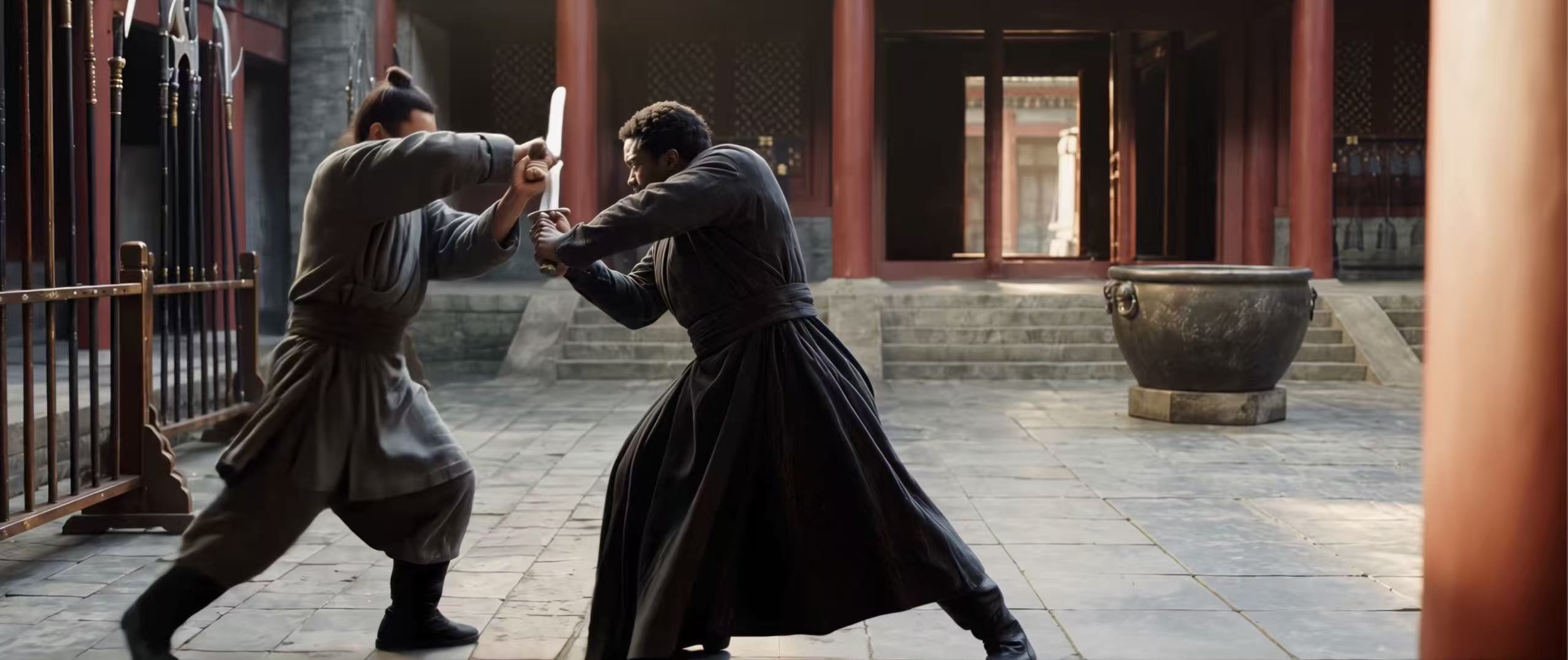
The Kling AI 4.0 update signals a strategic evolution in AI video creation, moving beyond visually impressive clips to focus on practical filmmaking challenges like consistent characters, precise camera movements, and coherent narratives, aiming to make AI a more viable tool for professional content production.
Imagine you want to make a short cartoon, but the computer keeps making your main character look different in every scene, or the camera jumps around weirdly. A new computer program called Kling 4.0 is like a super-smart director that helps you tell a story where your character always looks the same, the camera moves exactly how you want, and the whole story makes sense from start to finish, like a real movie director would do.
Analysis
The release of Kling AI 4.0 marks a significant pivot in the competitive landscape of AI video generation. Historically, the primary benchmark for AI video tools has been the visual fidelity and realism of the generated output. However, as visual quality across various models reaches a high baseline, the industry's focus is naturally shifting towards more sophisticated capabilities that cater to the practical needs of professional creators. Kling 4.0's new features directly address the challenges of maintaining consistency and control, which are paramount for producing narrative-driven content.
Kling 4.0
Kling AI 4.0 introduces several key features designed to enhance creative control and narrative continuity. The model now supports native video generation of up to 30 seconds in a single pass, a notable increase that allows for more extended, continuous action. Furthermore, it incorporates support for up to 15 multimodal reference assets, which can include images, videos, and audio, providing the AI with a richer understanding of the desired output's aesthetic and mood. The inclusion of up to 10 keyframes offers creators granular control over character states, action changes, and scene transitions, enabling a more precise definition of how a story should unfold.
These capabilities are not merely about extending duration but about empowering creators with the tools to dictate the specifics of their video. By allowing for detailed input on characters, scenes, actions, and camera movements, Kling 4.0 aims to reduce the reliance on repeated generations and manual selection, streamlining the production workflow. This represents a move towards making AI video generation a more predictable and controllable process, essential for professional applications where specific directorial intent must be realized.
Text prompts
Traditional AI video creation has largely depended on text prompts, where creators describe their desired scenes. While effective for generating individual shots, this method often falls short when attempting to control complex elements like precise camera movements, consistent character actions, or seamless scene transitions. The inherent ambiguity of text can lead to inconsistencies, especially when combining multiple shots into a longer sequence, resulting in character appearance shifts or discontinuous actions.
Kling 4.0's multimodal reference and keyframe features directly tackle these limitations. Multimodal references, which can be images, videos, or audio, help the model grasp the visual and auditory style, while keyframes allow creators to define the narrative progression at specific points. This dual approach provides a more robust mechanism for guiding the generation process, offering a level of precision that text prompts alone cannot achieve. According to a Kling AI spokesperson, these features are specifically designed to address the major challenges of creative control and narrative continuity, making it easier for creators to articulate and realize their vision.
30 seconds
While Kling 4.0's ability to generate native videos up to 30 seconds and extend existing footage is a step towards longer-form content, the article emphasizes that duration alone does not equate to a complete story. The real technical bottleneck for AI video moving into longer formats remains the stability, controllability, and narrative coherence over extended periods. As video length increases, the AI model must consistently maintain character identity, spatial relationships, action continuity, camera direction, lighting, and audio-visual synchronization.
This challenge highlights that producing a compelling, multi-part story requires more than just a series of visually impressive moments. It demands that shots connect naturally, characters behave consistently with the storyline, and the visual style remains coherent throughout the entire piece. Kling 4.0's upgrades are therefore not just about increasing video length but about providing creators with greater control over the entire video production process, ensuring that the generated content serves a broader narrative purpose. The ultimate test for AI video tools, as articulated by a Kling AI spokesperson, is not merely generating a convincing shot, but delivering the right shots, in the right sequence, with enough consistency to serve a larger story, thereby enabling AI to become a practical part of filmmaking.
Key points
- Kling AI 4.0 shifts the focus of AI video generation from visual quality to directorial control and narrative coherence.
- New features include native video generation up to 30 seconds, 15 multimodal reference assets, and 10 keyframes.
- Multimodal references and keyframes provide creators with greater control over characters, actions, and camera movements.
- The update aims to address challenges in creative control and narrative continuity, moving beyond limitations of text-only prompts.
- The industry is evolving towards prioritizing precise control and script understanding as visual quality becomes a baseline capability.
Kling 4.0's enhanced focus on directorial control and narrative consistency could significantly accelerate the adoption of AI in professional film and video production, making the creation process more predictable and efficient for complex projects like advertisements and short films.
Despite these advancements, maintaining perfect consistency and narrative coherence in very long-form AI-generated video remains a significant technical bottleneck, potentially limiting its immediate utility for feature-length productions without extensive human oversight and iterative refinement.