Microsoft is openly competing with OpenAI, Anthropic more than ever
Microsoft is openly competing with OpenAI and Anthropic by selling its own homegrown AI models, including the MAI family, on its own AI chips, Maya. CEO Satya Nadella is pitching Microsoft as an alternative to the upscale services developed by OpenAI and Anthropic, promis…
Intelligence analysis by Llama
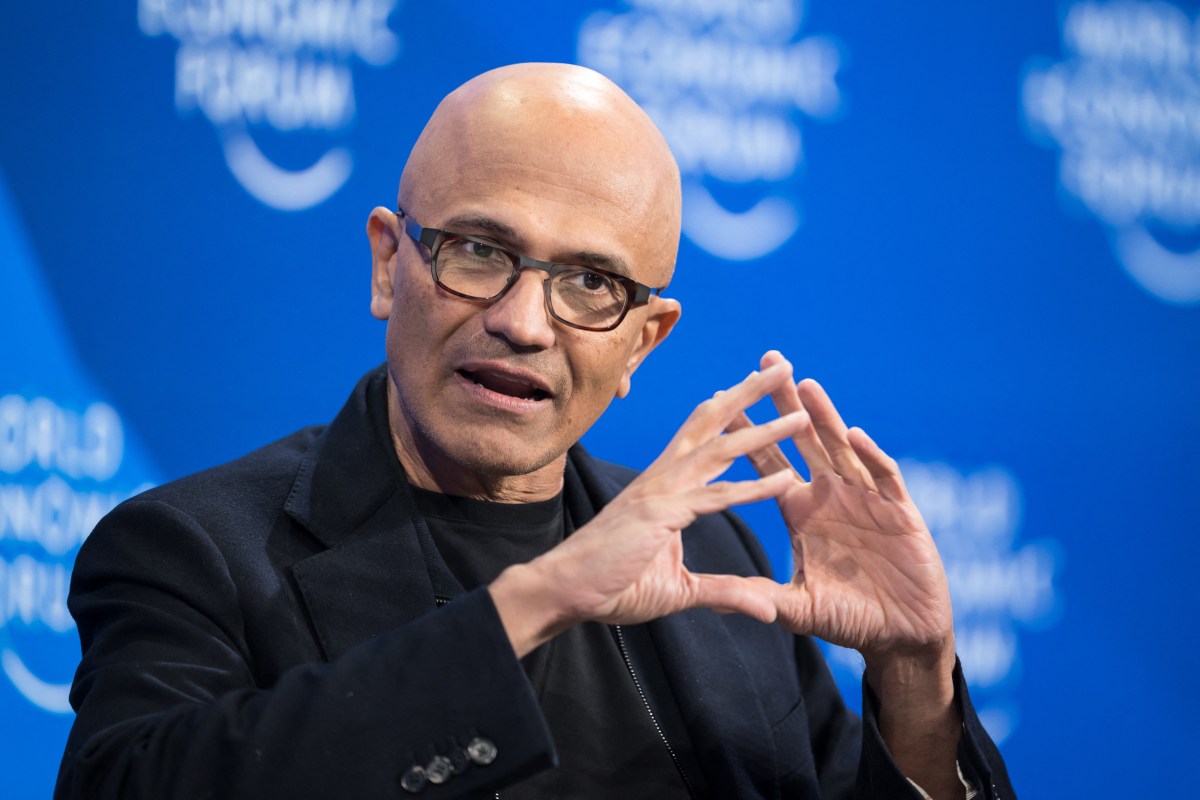
Microsoft is competing with OpenAI and Anthropic by selling its own AI models, promising lower costs and greater control for enterprises. CEO Satya Nadella is pitching Microsoft as an alternative to the upscale services developed by OpenAI and Anthropic.
Imagine you have a super smart robot that can do lots of things for you, but you're not sure if you can trust it. That's kind of like what's happening in the AI industry right now. Microsoft is trying to create its own super smart robots, called AI models, that can do lots of things for companies, but it's also trying to make sure that companies have control over their own destiny. It's like having a backup plan, just in case something goes wrong.
Analysis
A $60B Vote of Confidence
Microsoft's recent financial results, with $90 billion in revenue and net income of $35.8 billion, demonstrate the company's unique position in the AI industry. As one of the world's largest cloud providers and software-as-a-service companies, Microsoft is well-positioned to capitalize on the growing demand for AI solutions. The company's stakes in OpenAI and Anthropic, two of the biggest AI labs, also give it a significant advantage in the market.
Why Cursor?
CEO Satya Nadella is not about to let the trajectory of Anthropic and OpenAI derail Microsoft's cash cow. He has been preaching to enterprises to use multiple models and to stop relying on the frontier AI labs for the agentic harness/app layer. This is because it requires companies to share too many of their internal secrets with model makers of dubious trustworthiness. Nadella knows his customers, and he is aware of their fears about data leaks and being locked into a vendor.
The Road Ahead
Microsoft is happily selling its own homegrown models, the MAI family, on its own homegrown AI chips, Maya, and pitching them as cheaper alternatives. Nadella has made it clear that the company is accelerating its own model development, with over a dozen new models across image, voice, transcription, coding, security, including its first reasoning model, MAI thinking one. The company is also co-designing these models with its silicon, and it is seeing 40% better performance per watt when running MAI models on Maya 200. As for Mythos, Nadella pointed to Microsoft's new Mythos competitor announced earlier this week, MAI Cyber One Flash, which achieves better performance than the much larger Mythos model, but at half the cost when combined with Microsoft's multi-agent security harness.
Key points
- Microsoft is competing with OpenAI and Anthropic by selling its own AI models, promising lower costs and greater control for enterprises.
- CEO Satya Nadella is pitching Microsoft as an alternative to the upscale services developed by OpenAI and Anthropic.
- Microsoft is accelerating its own model development, with over a dozen new models across image, voice, transcription, coding, security, including its first reasoning model, MAI thinking one.
- The company is co-designing these models with its silicon, and it is seeing 40% better performance per watt when running MAI models on Maya 200.
If Microsoft's strategy plays out positively, it could lead to a more competitive and innovative AI industry, with companies having more control over their own destiny. This could also lead to more affordable and accessible AI solutions for enterprises, which could have a positive impact on the economy.
If Microsoft's strategy fails, it could lead to a less competitive and innovative AI industry, with companies relying too heavily on frontier AI labs. This could also lead to data leaks and security breaches, which could have a negative impact on the economy.