More kindergarten children to learn healthy digital habits in pre-schools under IMDA programme
Singaporean pre-schools are expanding a program by the IMDA to teach kindergarten children healthy digital habits through stories, role play, and games, aiming to build online safety skills before they own devices.
Intelligence analysis by Gemini 2.5 Flash
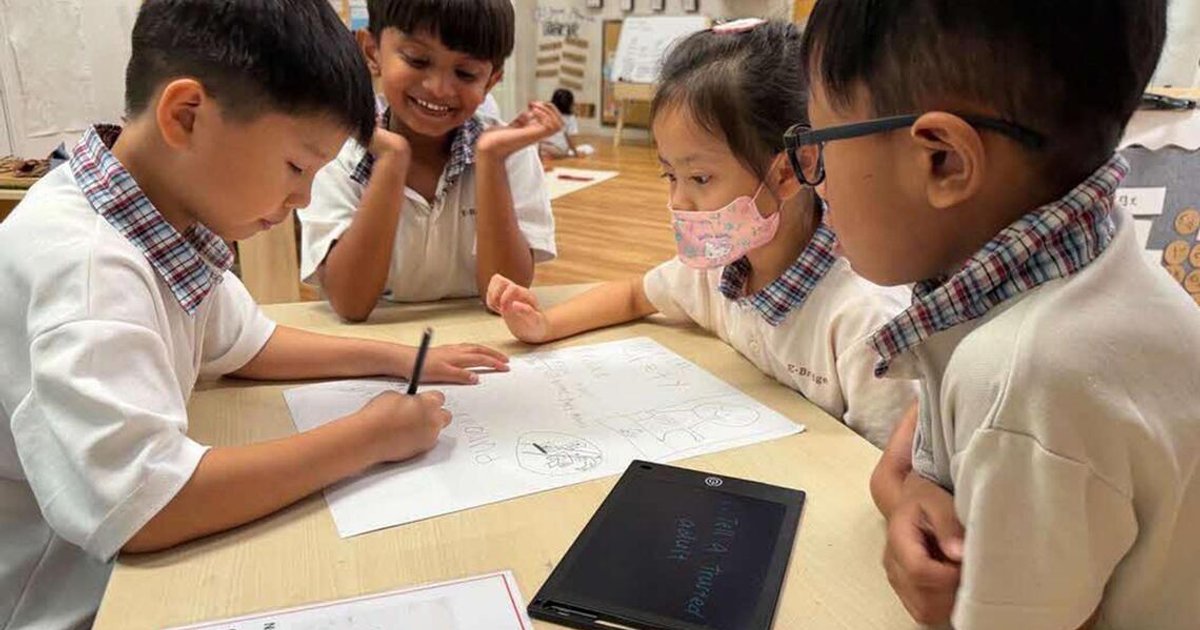
The Infocomm Media Development Authority (IMDA) is rolling out a program to thousands more K1 and K2 children in Singaporean pre-schools, following a successful pilot. The initiative focuses on teaching young children crucial online safety skills, such as setting boundaries and identifying inappropriate content, using engaging, screen-free methods to prepare them for a digital future.
Imagine learning how to cross the road safely before you even ride a bike. That's what kids in Singapore are now doing for the internet! Teachers are using fun stories, games, and pretend play to teach five-year-olds how to be smart and safe online, like knowing when something looks yucky or when to ask a grown-up for help, all before they get their own phones or tablets.
Analysis
The Infocomm Media Development Authority (IMDA) is spearheading a significant expansion of its program to instill healthy digital habits in pre-school children across Singapore. This move reflects a proactive approach by the nation to prepare its youngest citizens for an increasingly digital world, acknowledging that early intervention is key to fostering responsible online behavior.
IMDA
The Infocomm Media Development Authority (IMDA) launched this initiative as part of its broader "Screen Smart From The Start" movement, which began in May. The program's core objective is to equip children with essential digital literacy skills, such as understanding boundaries, critical thinking before acting online, reporting inappropriate content, and seeking help from trusted adults. This comprehensive approach aims to build a strong foundation for digital citizenship long before children acquire their own personal devices.
The IMDA's strategy involves partnering with the Early Childhood Development Agency (ECDA) to onboard more pre-school operators in 2027, signaling a commitment to widespread adoption. This collaboration underscores the government's recognition of the critical role pre-schools play in shaping early learning and development, extending beyond traditional academic subjects to include vital life skills for the digital age.
E-Bridge
E-Bridge Pre-School centres were among the first to pilot the IMDA program in April, involving over 100 K2 pupils. The success of this pilot has led to E-Bridge's decision to roll out the lessons across all 30 of its centres in December, reaching nearly 3,000 K1 and K2 children. This expansion demonstrates the practical applicability and positive reception of the curriculum within the pre-school environment.
Alice Tay, director for learning at E-Bridge, highlighted that the lessons teach device usage in a practical manner, akin to how teachers introduce other tools like scissors for crafts. This analogy emphasizes the program's focus on safety guidelines and purpose, rather than just usage, preparing children for the complexities of digital tools. Parents, such as Elina Er, have reported that classroom discussions have extended into family living rooms, reinforcing healthy habits like not using devices during mealtimes and encouraging children to approach adults with uncomfortable content.
Digital for Life Festival
The expansion of the IMDA program was announced by Rahayu Mahzam, Minister of State for Digital Development and Information, at the launch of the Digital for Life (DfL) festival held at VivoCity on October 24. This festival serves as a platform to promote digital skills and awareness among the public, with interactive experiences designed to engage visitors of all ages. The presence of President Tharman Shanmugaratnam, patron of the DfL movement, alongside Minister for Digital Development and Information Josephine Teo, underscored the national importance of digital literacy initiatives.
The festival's role extends beyond the announcement, offering a broader context for the pre-school program by fostering a national conversation around digital skills. By integrating the pre-school initiative within a larger public engagement event, the IMDA reinforces the idea that digital literacy is a lifelong journey, starting from the earliest years. The festival's subsequent edition at Heartbeat@Bedok further illustrates the commitment to making digital education accessible across different communities.
Key points
- IMDA is expanding a program to teach healthy digital habits to K1 and K2 children in Singaporean pre-schools.
- The program, piloted with E-Bridge Pre-School, will now reach thousands more children across E-Bridge and Skool4Kidz centres.
- Lessons focus on setting boundaries, thinking before acting, reporting inappropriate content, and seeking adult help, using screen-free methods like storytelling and role play.
- The initiative is part of IMDA's broader "Screen Smart From The Start" movement and was announced at the Digital for Life festival.
- Parents appreciate the early education, noting that lessons reinforce home rules and help children identify inappropriate online content, including AI-generated images.
This early intervention program could significantly enhance children's digital resilience, enabling them to navigate online spaces more safely and responsibly as they grow. It fosters a generation that understands digital boundaries and critical thinking, potentially reducing exposure to harmful content and promoting healthier screen habits from a young age.
The rapid pace of technological change, particularly with advancements in AI, might mean that some aspects of the curriculum could quickly become outdated, requiring constant updates. Furthermore, the program's long-term effectiveness relies heavily on consistent reinforcement at home, which may vary significantly among families, potentially creating disparities in digital literacy outcomes.