Nikkei, Yen, Hang Seng: Recovery after Nvidia shock – Asian stock markets start higher
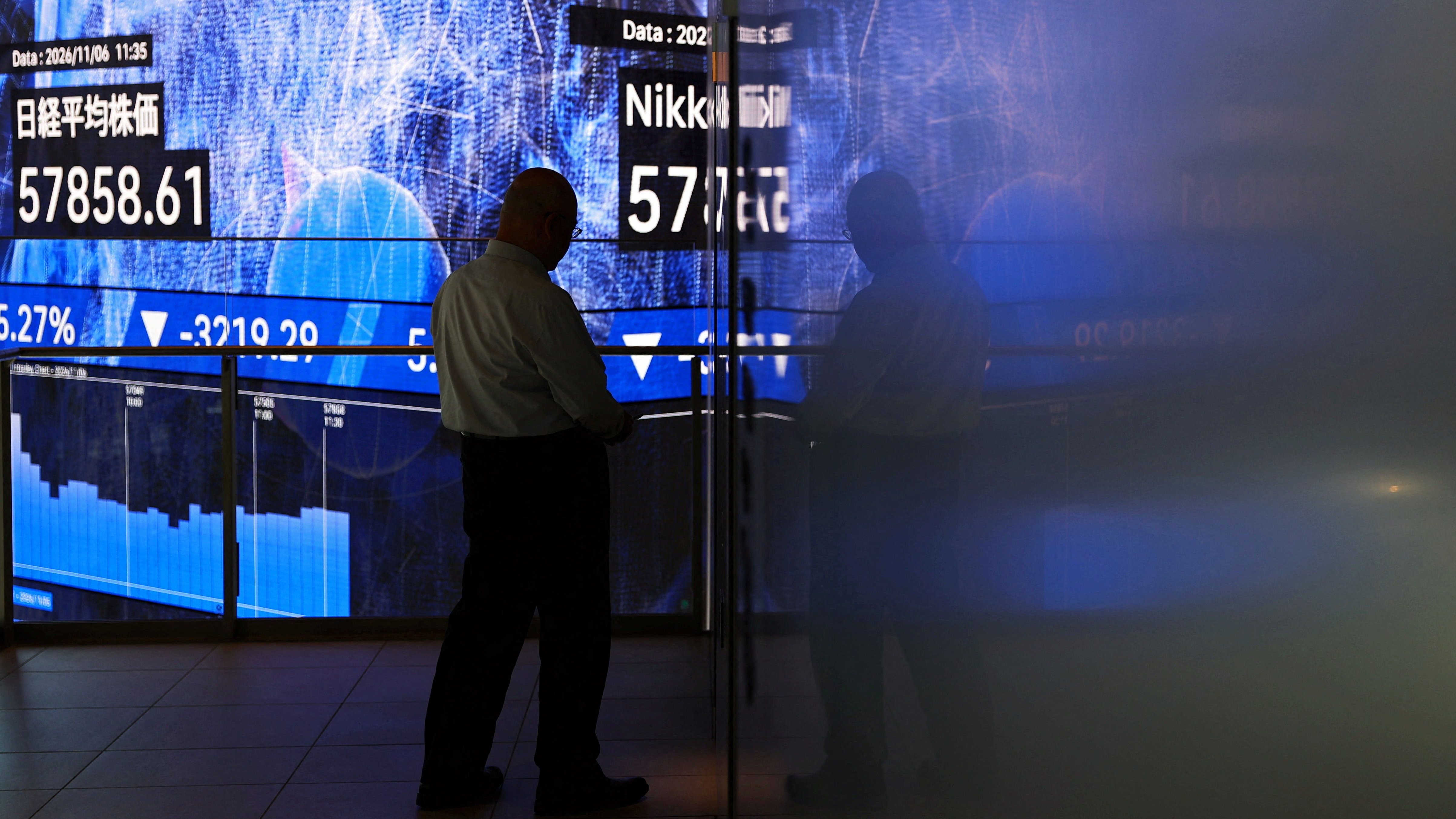
Asian stock markets stabilized on Friday after a turbulent week, with the Nikkei in Tokyo rising 0.9% and other regional indices also showing gains. The recovery follows uncertainty surrounding a key executive's departure and ahead of potential shifts in Japanese defense …
Intelligence analysis by Gemini 2.5 Flash Lite
Asian markets showed signs of recovery, with Japan's Nikkei and other regional indices posting gains. This rebound occurred amidst lingering uncertainty from a high-profile executive's departure and potential government policy shifts in Japan regarding defense spending, which could impact economic stimulus efforts.
Imagine the stock market is like a big playground. After some big news about a popular toy company (Nvidia) made everyone a bit worried, the playground started to feel shaky. But today, kids (investors) are feeling a bit better and are playing happily again, with some toy-related stocks doing especially well. Meanwhile, Japan is thinking about how much to spend on toys versus other things, which is also on everyone's mind.
Analysis
Nvidia Executive Departure
The departure of a key executive from Nvidia has sent ripples through the Asian markets, creating uncertainty regarding US export policies and access to the Chinese market. Analysts from JPMorgan noted that the executive's exit leaves a "difficult to fill vacuum," highlighting the significant role this individual played in the company's strategic positioning. This situation underscores the interconnectedness of global technology supply chains and the potential impact of leadership changes on international trade dynamics, particularly between the US and China.
The implications of this departure are particularly felt in the semiconductor and AI sectors. Despite the initial shock, Japanese semiconductor stocks like Advantest and Tokyo Electron saw gains, suggesting a resilient market or a rotation of investment within the sector. Maki Sawada, a strategist at Nomura Securities, pointed to the rise of semiconductor and AI-related stocks as a driving factor for the week's gains, indicating that investor focus may be shifting towards the underlying technological trends rather than solely on individual corporate events.
Japanese Defense Spending
Political developments in Japan are also capturing investor attention, with reports indicating the government's plan for significant cuts in defense contracts. The Finance Ministry has proposed limiting defense spending over the next five years to between 50 and 60 trillion yen, a figure considerably lower than the 80 trillion yen advocated by security policymakers. This proposed reduction is attributed to the government's commitment to tax cuts aimed at stimulating the economy.
This fiscal balancing act presents a challenge to Japan's broader strategic goal of increasing military expenditure to two percent of its gross domestic product. The tension between economic stimulus through tax cuts and the ambition to bolster defense capabilities highlights a critical policy dilemma for Prime Minister Sanae Takaichi's administration. The market will be closely monitoring how this policy unfolds, as it could influence the nation's economic trajectory and its role in regional security.
Asian Market Performance
Asian stock markets demonstrated a broad-based recovery on Friday, with the Nikkei Index in Tokyo climbing 0.9% to 61,362 points and the broader Topix adding 0.4% to 3952. In China, the Shanghai Stock Exchange saw a modest gain of 0.2%, while the CSI-300 index remained flat. The MSCI index for Asia-Pacific stocks outside Japan rose by 0.26%, and South Korea's Kospi surged by 2.35%. This performance suggests a general market stabilization across the region, with investors absorbing recent corporate and political news.
Key points
- Asian stock markets showed signs of recovery on Friday, with major indices in Japan and China posting gains.
- Uncertainty surrounding a key Nvidia executive's departure has influenced market sentiment regarding US export policies and China market access.
- Japanese semiconductor stocks performed well, indicating resilience and continued investor interest in AI-related sectors.
- Japan's government is reportedly planning significant cuts to defense spending, prioritizing tax cuts for economic stimulus.
- The proposed defense spending limits in Japan could challenge the nation's goal of increasing military expenditure.
The stabilization of Asian markets suggests that investors are regaining confidence, potentially leading to sustained growth if geopolitical and corporate uncertainties continue to recede. Positive performance in semiconductor and AI-related stocks could signal a broader technological upswing, benefiting the region's innovation-driven economy.
Lingering uncertainty from the Nvidia executive's departure could still impact US-China trade relations and access to critical technology markets. Furthermore, Japan's fiscal policy choices, balancing defense needs with economic stimulus, may create internal economic pressures or affect its strategic positioning.