No More Hormuz Dependency? Gulf States Raise $112 Billion to Build New Energy Routes
Gulf countries are undertaking a record borrowing program to finance new infrastructure projects, including oil and gas pipelines, modern ports, and energy corridors aimed at strengthening regional connectivity and export capacity.
Intelligence analysis by Llama
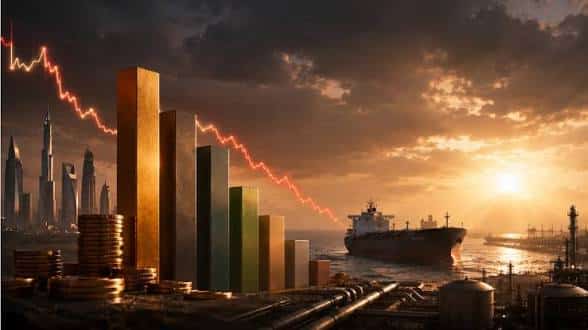
Gulf states are investing $112 billion in new infrastructure projects to reduce their dependence on the Strait of Hormuz and improve energy security, trade resilience, and economic growth.
Imagine the Gulf countries are building new roads and ports to help them transport oil and gas to other countries without relying on a single, busy route. This will make it easier for them to get their energy to the world and make their economy stronger.
Analysis
A $60B Vote of Confidence
Gulf countries are undertaking one of their largest borrowing programs in recent years, with sovereign and government-backed bond issuances reaching approximately $112 billion so far this year. This record fundraising drive is intended to finance a new wave of strategic infrastructure projects, including oil and gas pipelines, modern ports, cross-border railway networks, and energy corridors aimed at strengthening regional connectivity and export capacity.
The investment push comes as Gulf governments seek to reduce their dependence on the Strait of Hormuz, a critical maritime route through which a significant share of the world’s oil and liquefied natural gas exports passes. Rising geopolitical tensions and concerns over potential disruptions have accelerated efforts to develop alternative transport and export routes that can ensure uninterrupted energy supplies to global markets.
Why Cursor?
Beyond improving energy security, the projects are designed to enhance trade resilience, diversify logistics networks, and support long-term economic growth. Governments are also investing heavily in infrastructure that can attract foreign investment, facilitate regional commerce, and reinforce the Gulf’s position as a global energy and transportation hub.
The Road Ahead
Analysts say the record borrowing reflects a broader strategic shift toward building more resilient supply chains and export networks capable of withstanding geopolitical uncertainty. As these large-scale projects move forward, they are expected to reshape regional logistics, strengthen energy security, and reduce reliance on one of the world’s busiest and most strategically important oil chokepoints.
Key points
- Gulf countries are undertaking a record borrowing program to finance new infrastructure projects.
- The projects aim to reduce dependence on the Strait of Hormuz and improve energy security, trade resilience, and economic growth.
- The investment push reflects a broader strategic shift toward building more resilient supply chains and export networks.
If this development plays out positively, it could lead to increased trade and economic growth in the region, reduced reliance on the Strait of Hormuz, and improved energy security for global markets.
However, there are also risks associated with this development, including the potential for increased debt burden for Gulf countries, potential disruptions to global energy supplies, and the impact of geopolitical tensions on regional trade and investment.