Norway’s PM defends rare call with Putin on Ukraine despite doubts among European leaders – Europe live
The prime ministers of Norway and Finland held a 90-minute call with Russian President Vladimir Putin on Ukraine, defending the direct engagement against skepticism from other European leaders.
Intelligence analysis by Gemini 2.5 Flash
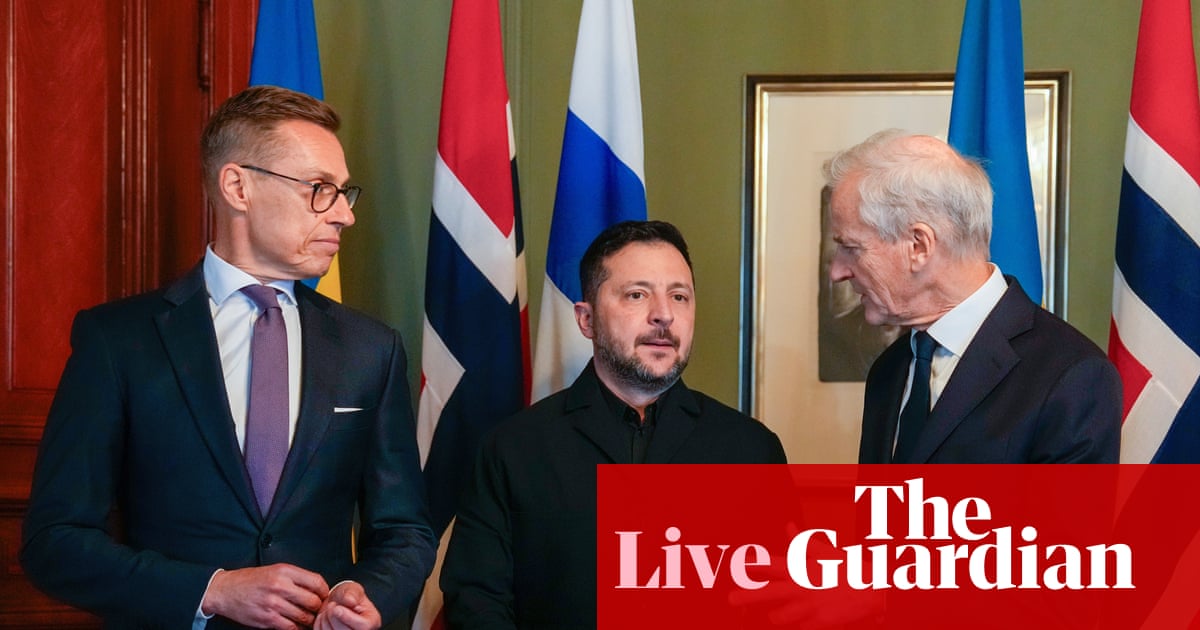
Norwegian Prime Minister Jonas Gahr Støre and Finnish President Alexander Stubb engaged in a 'frank and substantive' discussion with Putin, focusing on the Ukraine conflict. Despite acknowledging 'significant differences' in positions, Støre defended the initiative as a necessary channel for dialogue, emphasizing they spoke only for their respective nations.
Imagine there's a big argument between two friends, and everyone else is trying to help. Two leaders from Norway and Finland decided to talk directly to one of the friends, Mr. Putin, even though some other grown-ups thought it wasn't a good idea. They talked for a long time, explaining that they still support the other friend (Ukraine) but wanted to see if talking could help find a way to stop the fighting, like trying to find a peaceful solution to a playground dispute.
Analysis
The recent 90-minute phone call between Norwegian Prime Minister Jonas Gahr Støre, Finnish President Alexander Stubb, and Russian President Vladimir Putin represents a significant, albeit controversial, diplomatic maneuver amidst the ongoing conflict in Ukraine. This direct engagement, described as 'substantive, focused on the issues at hand, and professional,' occurred despite widespread European reluctance to engage directly with Putin. The Nordic leaders aimed to address pressing concerns such as attacks on energy infrastructure and in the Black Sea, while reiterating their unwavering support for Ukraine's right to self-defense and the necessity of a diplomatic resolution.
Jonas Gahr Støre
Norwegian Prime Minister Jonas Gahr Støre has been a vocal proponent of maintaining communication channels with Russia, even as many European counterparts advocate for isolation. Støre robustly defended the call against criticism, particularly from Danish Prime Minister Frederiksen, by asserting that all partners and allies were informed in advance and received a detailed account afterwards. He argued that relying solely on the American administration as the channel for discussing Ukraine with Moscow is insufficient, and that 'other voices' from neighboring states like Finland and Norway are crucial. Støre emphasized that their dialogue was conducted 'in full compliance with the coalition of the willing who share view on the nature of this war and how with has to end,' suggesting a coordinated, rather than rogue, effort.
Støre's rationale centers on the belief that dialogue, even with an adversary, is not inherently wrong, especially when conveying clear messages. He acknowledged that much of what Putin said during the call was already known, recalling his views on the conflict's evolution since 2014. However, Støre stressed that they were able to 'acknowledge and respond' to these views, while firmly stating their own positions and reiterating Norway's continued support for Ukraine. This approach suggests a strategy of direct, albeit firm, communication to prevent further escalation and explore any potential diplomatic openings, however slim.
Alexander Stubb
Finnish President Alexander Stubb's involvement alongside Støre underscores a shared Nordic perspective on the importance of diplomatic engagement, even in challenging circumstances. Stubb confirmed a 'good phone call' with Ukrainian President Volodymyr Zelenskyy as part of 'efforts to find a just and lasting peace' in Ukraine, indicating that the dialogue with Putin was part of a broader, coordinated diplomatic push. The joint nature of the call with Putin highlights a unified front between Finland and Norway in their approach to Russia, emphasizing that they spoke on behalf of their two countries only, and 'no one else.'
This joint initiative reflects a pragmatic stance from two nations with direct borders to Russia, who understand the complexities of regional security. Stubb's earlier mention of 'very restrained optimism' regarding constructive peace talks in Abu Dhabi, as noted by Tusk, suggests a cautious but persistent hope for diplomatic progress. Their engagement with Putin, while maintaining solidarity with Ukraine, aims to keep open avenues for communication that might eventually contribute to a resolution, even if immediate breakthroughs are not expected.
Abu Dhabi
The importance of the meeting in Abu Dhabi, first agreed as a result of the Oslo consultations hosted by Støre and Stubb, provides a crucial context for their call with Putin. This upcoming gathering signifies a broader international effort to explore pathways to peace, and the Nordic leaders' direct communication with the Russian president can be seen as an attempt to lay groundwork or gather insights ahead of such multilateral discussions. The fact that Stubb talked of 'very restrained optimism' about these constructive peace talks suggests that while the path to peace is arduous, there is a concerted effort to find common ground.
The Abu Dhabi meeting, coupled with the direct call, indicates a multi-pronged diplomatic strategy. While the Finnish and Norwegian leaders maintained their support for Ukraine and acknowledged 'significant differences' with Russia, their engagement could serve to clarify positions, convey messages directly, and potentially identify any minimal areas for de-escalation or future negotiation. This approach contrasts with the more skeptical views from other European leaders, highlighting the diverse strategies being employed to navigate the complex geopolitical landscape of the Russia-Ukraine war.
Key points
- Norwegian PM Jonas Gahr Støre and Finnish President Alexander Stubb held a 90-minute call with Russian President Vladimir Putin.
- Støre defended the call against criticism from other European leaders, emphasizing the importance of direct communication.
- The Nordic leaders stressed they spoke only on behalf of their two countries, not for broader Europe.
- They acknowledged 'significant differences' in positions but described the discussion as 'substantive and professional'.
- The call addressed pressing issues like attacks on energy infrastructure and aimed to find a 'just and lasting peace' in Ukraine.
The direct communication channel established by Finland and Norway with Russia, despite existing differences, could potentially serve as a valuable conduit for future de-escalation talks. This initiative might contribute to a broader diplomatic effort, including the upcoming Abu Dhabi meeting, by clarifying positions and exploring any minimal common ground for a just and lasting peace.
The rare call with Putin, despite the Nordic leaders' intentions, risks undermining European unity and sending mixed signals to Russia regarding the continent's resolve. Other European leaders' skepticism suggests concerns that such direct engagement could be perceived as legitimizing Putin without yielding concrete concessions, potentially prolonging the conflict.