OCP Global Summit: Amid Ecosystem Adoption, NVIDIA Opens Vera Rubin Architecture to Help Scale AI Factories Worldwide
NVIDIA announced new partnerships and contributions at the OCP Global Summit, opening its Vera Rubin architecture and MGX rack designs to help standardize and scale AI factory infrastructure globally, alongside new open-source software components.
Intelligence analysis by Gemini 2.5 Flash
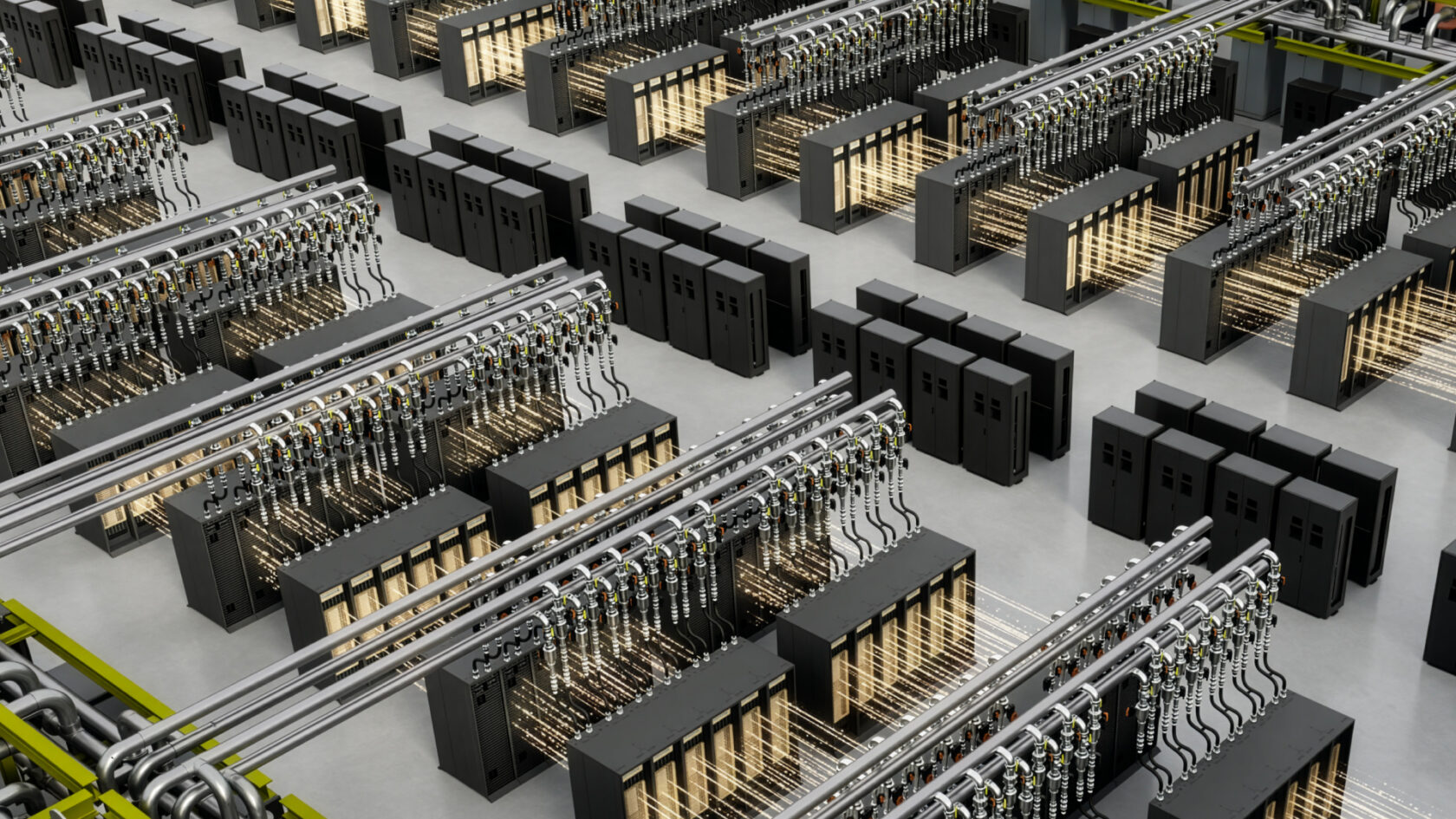
NVIDIA is actively promoting open standards and architectures, such as Vera Rubin and MGX, to accelerate the deployment and enhance the efficiency of large-scale AI factories. This strategy emphasizes collaboration with hyperscalers and industry partners to create a common foundation for next-generation AI infrastructure.
Imagine building giant super-brains for computers, called AI factories, that need a lot of power. NVIDIA is like a company that makes special LEGO bricks and instruction manuals for these brains. Now, they're sharing their best designs and tools with everyone, so it's easier for different companies to build these super-brains together, making them bigger, faster, and more efficient, just like everyone using the same LEGO instructions helps build a huge, amazing castle.
Analysis
NVIDIA's recent announcements at the Open Compute Project (OCP) Global Summit underscore a strategic pivot towards open standards and collaborative development in the rapidly expanding field of AI infrastructure. The company is contributing key designs and software components to foster a common foundation for scaling AI factories, which are evolving from megawatt to gigawatt power consumption. This move is designed to accelerate deployment, improve power efficiency, and enhance tokens-per-watt performance across the industry.
Vera Rubin
NVIDIA's Vera Rubin architecture is positioned as a cornerstone for next-generation AI factories, with its designs for racks and compute trays now contributed to OCP through the open NVIDIA MGX architecture. This open approach aims to provide system builders with a standardized blueprint, facilitating the development of advanced AI infrastructure. The Vera Rubin NVL72 serves as a foundation for large-scale AI training and inference, while a specialized Vera CPU rack design extends the MGX open architecture to support the burgeoning agentic AI era. This CPU rack is purpose-built for tasks like tool calling, orchestration, and sandboxed execution, enabling AI agents to interact with applications and data in real time.
MGX 1.2
The updated MGX 1.2 specification significantly expands the open architecture for AI factories, incorporating advancements like rack-scale blind-mate liquid cooling and interoperable rack-scale interconnect infrastructure. A notable addition is a liquid-cooled 5,000A busbar, designed to handle the higher power demands of modern AI systems, alongside native 19-inch equipment support and higher-density rack designs. This modularity, featuring configurable I/O bays and standardized power/cooling interfaces, is intended to streamline manufacturing, assembly, and field service, ultimately accelerating infrastructure buildout and enabling rack deployments up to 250kW while simplifying maintenance and promoting infrastructure reuse.
DSX OS
NVIDIA is also enhancing its DSX AI Factory platform with new open-source software components for DSX OS, the operating layer that unifies computing, networking, power, and cooling into a single optimized system. These components include NVIDIA Config Manager for automated switch configurations, the Cluster Readiness Engine for stress-testing GPU clusters to prevent job crashes, and the Rack Management Service for improved firmware management at scale. Additionally, the Cluster API Provider for NVIDIA Infrastructure Controller accelerates bare-metal deployment and tenant onboarding, transforming raw hardware into production-ready clusters in hours. Developed from NVIDIA's experience with DGX Cloud, these tools empower cloud providers and software partners to integrate advanced AI factory capabilities into their multi-tenant platforms, fostering a more coordinated and repeatable operational model for AI at scale.
Key points
- NVIDIA contributed Vera Rubin rack and compute tray designs to OCP through the open NVIDIA MGX architecture.
- New open standards for AI factory design and grid resilience were published in collaboration with hyperscalers.
- NVIDIA launched open-source software components for its DSX AI Factory platform, including Config Manager and Cluster Readiness Engine.
- The Vera CPU rack design extends the MGX open architecture to support agentic AI, focusing on tool calling and orchestration.
- Partnerships with Meta, Cisco, and Google were announced to advance open AI networking and transport standards.
The adoption of NVIDIA's open architectures and software components could significantly accelerate the global development and deployment of AI by standardizing infrastructure. This collaboration is expected to reduce complexity, improve efficiency, and foster broader innovation across the AI ecosystem, making advanced AI more accessible and powerful.
While promoting open standards, NVIDIA's dominant position in AI hardware means that even open architectures could lead to a de facto standardization around its ecosystem. This might inadvertently limit true hardware diversity and innovation from other vendors, potentially creating a new form of vendor lock-in for companies building AI factories.
Market signals
- NVDA NVIDIA's open architecture contributions and partnerships are expected to drive broader adoption of its AI infrastructure, strengthening its market position.
AI-generated analysis of potential market relevance. Not financial advice.



