Pakistan marks 25th death anniversary of classical music legend ‘Ustad Salamat Ali Khan’
Pakistan is observing the 25th death anniversary of Ustad Salamat Ali Khan, a legendary classical singer renowned for his contributions to Hindustani classical music and the Sham Chaurasia Gharana.
Intelligence analysis by Gemini 2.5 Flash
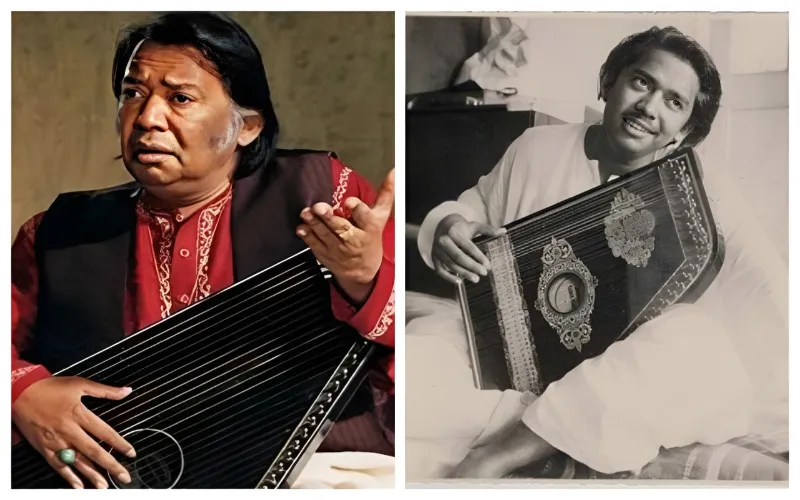
The nation commemorates Ustad Salamat Ali Khan, a maestro of classical music, on his 25th death anniversary. Born in British India and later settling in Lahore, he gained international acclaim and was instrumental in popularizing the Sham Chaurasia Gharana, leaving a profound legacy that continues to inspire musicians and enthusiasts.
Imagine a super talented singer who could make music sound like a beautiful, flowing river, teaching others to sing just as wonderfully. That's Ustad Salamat Ali Khan, and even though he's gone, his songs still inspire people like magic, keeping his special kind of music alive.
Analysis
A Legacy of Classical Excellence
Ustad Salamat Ali Khan, whose 25th death anniversary is being observed, stands as a towering figure in the realm of classical music, particularly within the Pakistani and broader Hindustani traditions. His journey began in Hoshiarpur, British India, where he was born into a family steeped in musical heritage. Under the tutelage of his father, Ustad Vilayat Ali Khan, and later the legendary Ustad Bade Ghulam Ali Khan, he honed his craft from a very young age. His early career saw him form a celebrated duo with his elder brother, Nazakat Ali Khan, captivating audiences across the Indian subcontinent with their exceptional mastery of Hindustani classical music. This foundational period established his reputation as a prodigious talent, setting the stage for a remarkable solo career and an enduring impact on the musical landscape.
The Sham Chaurasia Gharana's Torchbearer
One of Ustad Salamat Ali Khan's most significant contributions was his role in introducing and popularizing the rich tradition of the “Sham Chaurasia Gharana” to audiences both within Pakistan and internationally. After the Partition of 1947, his family relocated to Lahore, where he continued to build his musical career and expand the reach of this distinct classical style. His international recognition soared following a performance at the Edinburgh Festival in 1969, leading to tours across the United Kingdom, the United States, Germany, Italy, Switzerland, Nepal, and Singapore. This global exposure was crucial in cementing the Gharana's place on the world stage and showcasing the depth and beauty of Pakistani classical music.
Enduring Influence on Pakistani Music
Ustad Salamat Ali Khan's influence extends far beyond his own performances. After transitioning to a solo career in 1973, he dedicated himself to nurturing the next generation of classical musicians. He trained his sons, Sharafat Ali Khan and Shafqat Ali Khan, who have since continued the family's illustrious musical tradition. Furthermore, his students included renowned artists such as the Sufi singer Abida Parveen, demonstrating the breadth of his pedagogical impact. The Government of Pakistan recognized his outstanding services to music with the prestigious Pride of Performance in 1977 and later the Sitara-e-Imtiaz. Even a quarter-century after his passing in Lahore on July 11, 2001, his melodies and teachings continue to resonate, inspiring countless classical singers and music lovers, ensuring his legacy remains a vibrant part of Pakistan's cultural fabric.
Key points
- Pakistan is observing the 25th death anniversary of classical music legend Ustad Salamat Ali Khan.
- He was instrumental in introducing and popularizing the 'Sham Chaurasia Gharana' globally.
- Born in British India, he moved to Lahore after Partition and gained international recognition.
- He trained his sons, Sharafat Ali Khan and Shafqat Ali Khan, and renowned Sufi singer Abida Parveen.
- Ustad Salamat Ali Khan was honored with the Pride of Performance (1977) and Sitara-e-Imtiaz by the Government of Pakistan.
The continued observance of Ustad Salamat Ali Khan's death anniversary ensures that his musical legacy and the rich traditions of the Sham Chaurasia Gharana remain alive and continue to inspire new generations of classical musicians and enthusiasts in Pakistan and beyond.