Pakistan’s access to finance initiatives show strong progress
Pakistan's access to finance initiatives have shown strong progress, with significant increases in housing finance, agriculture financing, and SME financing. The government is working to improve the financing ecosystem and increase access to affordable and inclusive finance.
Intelligence analysis by Llama
Pakistan's access to finance initiatives have made significant progress, with increases in housing finance, agriculture financing, and SME financing. The government is working to improve the financing ecosystem and increase access to affordable and inclusive finance.
Pakistan is making progress in giving people access to money to buy homes, farm, and start businesses. This can help the country's economy grow and people's lives improve.
Analysis
Access to Finance Initiatives Show Strong Progress in Pakistan
Pakistan's access to finance initiatives have shown strong progress, with significant increases in housing finance, agriculture financing, and SME financing. The government is working to improve the financing ecosystem and increase access to affordable and inclusive finance.
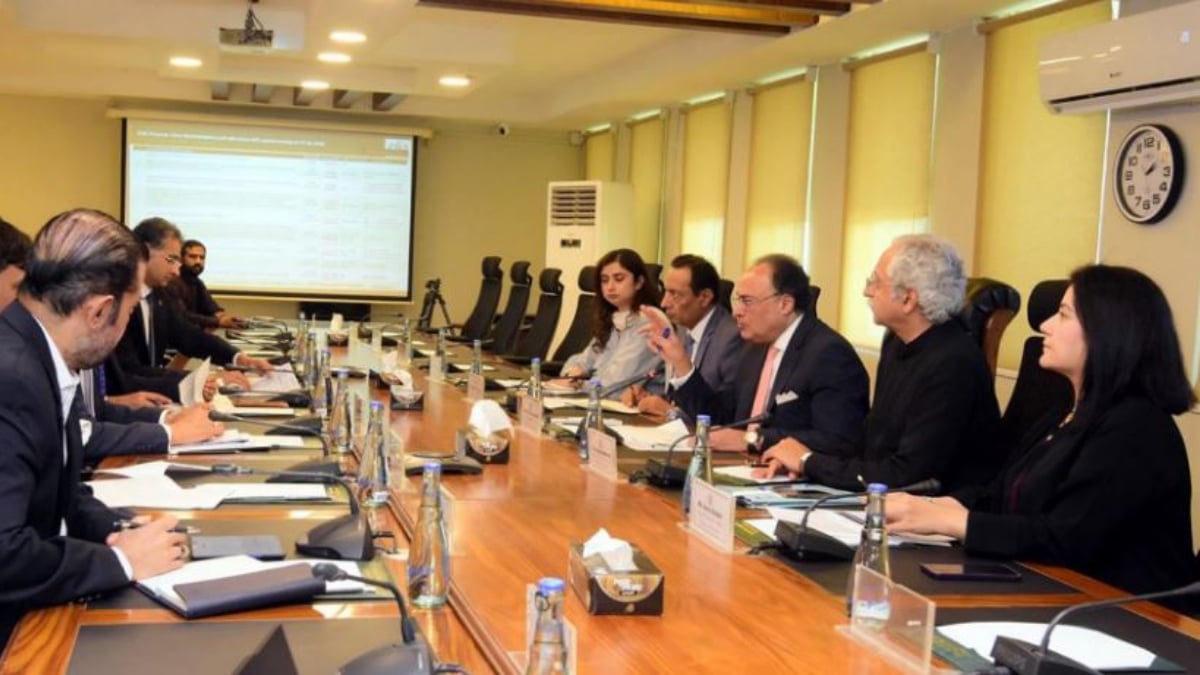
The Access to Finance Steering Committee, chaired by Federal Minister for Finance and Revenue, Senator Muhammad Aurangzeb, reviewed progress on initiatives to expand affordable and inclusive finance across housing, agriculture, SMEs, exports, information technology, renewable energy, and other priority sectors. The committee noted significant progress across select Access to Finance initiatives since the close of FY26, alongside important legal, regulatory and institutional reforms strengthening the overall financing ecosystem.
The finance minister emphasized that the objective is to channel greater financial-sector capacity towards productive investment, enterprise creation, home ownership, agricultural productivity and exports, translating macroeconomic stability into stronger, private sector-led and inclusive growth.
Housing Finance Sees Significant Increase
Total housing finance increased from around Rs.294 billion at the end of June to Rs.307 billion by mid-August. Progress under the Wazir-e-Azam Apna Ghar Program – Ghar Ho To Apna accelerated significantly. Since June, applications increased 52 percent to nearly 139,000, approvals rose 84 percent to over 46,000, approved financing nearly doubled from Rs144 billion to Rs279 billion, while loans disbursed increased 59 percent to over 7,600, amounting to more than Rs38 billion.
Agriculture Borrowers Increase
Agriculture borrowers increased from around 3.26 million at end-June to 3.37 million by mid-August, adding approximately 115,000 borrowers, while agriculture financing remained around Rs1.26 trillion. Under Zarkhez-e – Asaan Zarai Qarza, more than 58,000 farmers have registered. The scheme is designed to provide uncollateralised financing to smallholder farmers, including tenant farmers, primarily for agricultural inputs.
SME Financing Sees Growth
On SMEs, formal financing stood at around Rs1.05 trillion, covering approximately 330,000 businesses. The committee reviewed the ongoing credit-scoring pilot across 13 banks, aimed at improving credit assessment through proxy and alternative methods to assess cash flows and widening access beyond traditional collateral-based lending.
Connecting Access to Finance with Export-Led Growth Agenda
The committee placed particular emphasis on connecting Access to Finance with the Government’s export-led growth agenda, reviewing enhanced financing and refinancing support for exporters and SMEs, including access to working capital and long-term investment finance. It also welcomed the Performance Based Rebate on Incremental Exports (PRIE), effective July 1, 2026, under which exporters achieving growth of up to 10 percent are eligible for a 1 percent rebate on incremental exports, while growth above 10 percent attracts a 2 percent rebate.
Conclusion
Pakistan's access to finance initiatives have shown strong progress, with significant increases in housing finance, agriculture financing, and SME financing. The government is working to improve the financing ecosystem and increase access to affordable and inclusive finance. This can have a positive impact on the country's economy and people's lives.
Key points
- Pakistan's access to finance initiatives have shown strong progress, with significant increases in housing finance, agriculture financing, and SME financing.
- The government is working to improve the financing ecosystem and increase access to affordable and inclusive finance.
- The Access to Finance Steering Committee has reviewed progress on initiatives to expand affordable and inclusive finance across housing, agriculture, SMEs, exports, information technology, renewable energy, and other priority sectors.
- The committee has emphasized the importance of connecting Access to Finance with the Government’s export-led growth agenda.
- The Performance Based Rebate on Incremental Exports (PRIE) has been welcomed as a positive step towards supporting exporters and SMEs.
If these initiatives continue to progress, they can lead to increased economic growth, improved living standards, and a more stable financial system in Pakistan.
However, there are risks associated with these initiatives, such as the potential for inflation, interest rate hikes, and decreased investor confidence, which could negatively impact the economy and people's lives.