Persian edition of “Siddhartha” republished
The 17th edition of the Persian translation of Hermann Hesse’s “Siddhartha” has been published by Mahi Publications in Tehran. The novel explores the human spirit's quest for enlightenment through the journey of Siddhartha.
Intelligence analysis by Llama
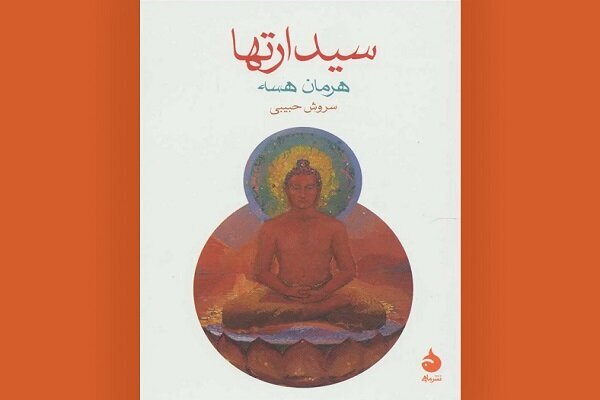
The 17th edition of the Persian translation of Hermann Hesse’s “Siddhartha” has been published. The novel follows Siddhartha’s journey to discover the truth of existence, exploring the human spirit's quest for enlightenment.
Siddhartha is a story about a young man named Siddhartha who wants to find the truth about life. He goes on a journey to discover the meaning of existence, meeting many people and having many experiences along the way. He learns that the truth is not something that can be taught, but something that must be experienced individually. It's like trying to find a hidden treasure, and the journey is just as important as the destination.
Analysis
A Timeless Quest for Enlightenment
Hermann Hesse’s “Siddhartha” is a timeless tale of self-discovery and spiritual exploration. The novel follows the journey of Siddhartha, a young Brahmin who embarks on a lifelong quest to find meaning and enlightenment. Set in ancient India during the era of Gautama Buddha, the narrative is a lyrical exploration of the human spirit’s quest for truth.
Siddhartha’s journey is marked by a series of transformative experiences that challenge his understanding of the world. He renounces his home to join the Samanas, ascetic monks who embrace extreme deprivation, but eventually discovers that asceticism is merely a temporary escape from the self. This realization leads him to the Buddha, referred to in the text as Gotama, and he departs alone, concluding that enlightenment cannot be taught through doctrine; it must be experienced individually.
Siddhartha’s path then shifts from the spiritual to the material. In the city, he meets Kamala and enters the world of commerce under the businessman Kamaswami. Utilizing the discipline of his past, he quickly amasses wealth. Yet, the luxury of the city becomes a gilded cage, and Siddhartha reaches a breaking point, contemplating suicide by the river. It is here that he experiences a spiritual rebirth, hearing the holy sound “Om,” which reconnects him to the universe.
Siddhartha decides to remain by the water, apprenticing himself to Vasudeva, a humble ferryman. Under Vasudeva’s guidance, he learns to “listen” to the river, realizing that it contains all the voices of time—past, present, and future. This peace is tested when he reunites with Kamala and discovers he has a son. After Kamala’s death, the boy becomes rebellious and eventually flees. Though Siddhartha is desperate to follow him, Vasudeva urges him to let the boy find his own path, just as Siddhartha did in his youth.
Through this loss, Siddhartha realizes that time is an illusion and that suffering is an integral part of the jubilant fellowship of all connected things. Having passed his wisdom to Siddhartha, Vasudeva departs into the woods, leaving Siddhartha peacefully fulfilled. The novel reaches its resolution when Govinda, now an elderly monk, seeks out the legendary enlightened ferryman. He does not initially recognize the man as his childhood companion. When Govinda asks for the secret of wisdom, Siddhartha explains that language is too limited to capture the fullness of truth; for every true statement, there is an opposite that is also true. He urges Govinda to love the world in its completeness, recognizing that nature works in a self-sustaining cycle.
In a final, transcendent moment, Siddhartha asks Govinda to kiss his forehead. Through this touch, Govinda experiences the same visions of timelessness and unity that Siddhartha found by the river. Bowing to his radiantly smiling friend, Govinda finally understands that the journey to enlightenment is not a destination, but a continuous flow of becoming.
Key points
- The 17th edition of the Persian translation of Hermann Hesse’s “Siddhartha” has been published.
- The novel follows the journey of Siddhartha, a young Brahmin who embarks on a lifelong quest to find meaning and enlightenment.
- Siddhartha’s journey is marked by a series of transformative experiences that challenge his understanding of the world.
- The novel explores the human spirit’s quest for truth and the importance of experiencing individual truth.
- The story highlights the challenges and difficulties that Siddhartha faces on his journey, including the loss of loved ones and the struggle to find meaning in a seemingly meaningless world.
The publication of the Persian edition of “Siddhartha” suggests a continued interest in Hesse’s work and a desire to explore the human spirit’s quest for enlightenment. This could lead to a greater understanding and appreciation of the novel’s themes and ideas.
The story also highlights the challenges and difficulties that Siddhartha faces on his journey, including the loss of loved ones and the struggle to find meaning in a seemingly meaningless world. This could lead to a greater understanding of the human experience and the importance of perseverance in the face of adversity.