Philippines sees no impact on defence ties from US Middle East redeployment
The Philippines does not anticipate a reduction in military activities with the United States, despite the redeployment of some U.S. defense assets, including an aircraft carrier, to the Middle East. A military spokesperson affirmed the "ironclad" defense commitment betwe…
Intelligence analysis by Gemini 2.5 Flash
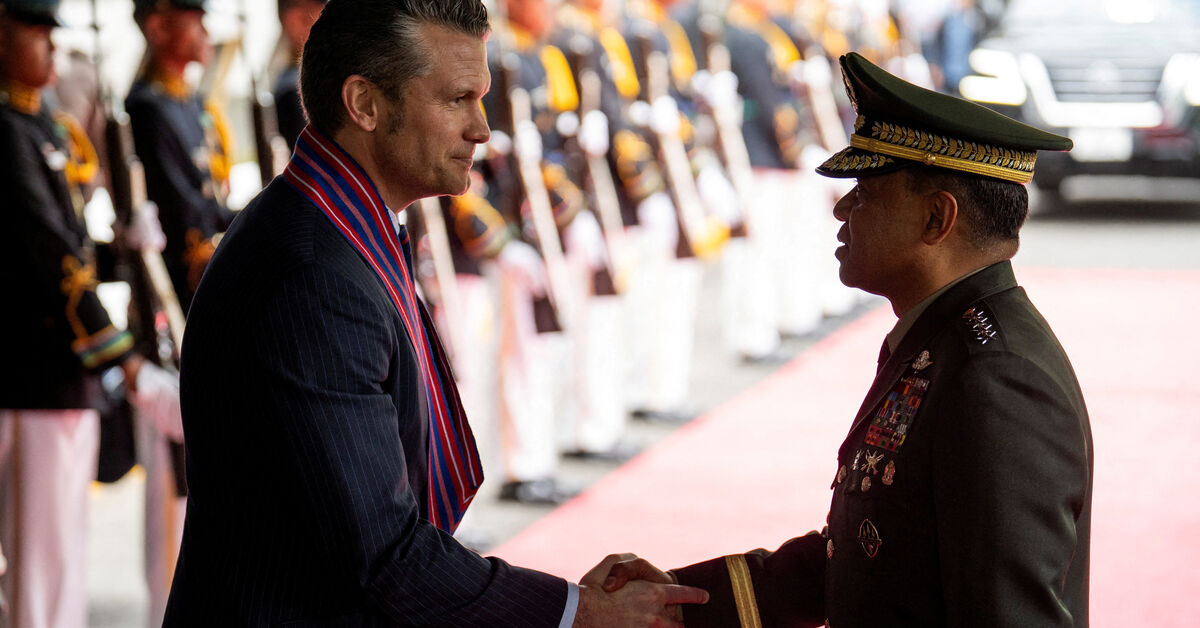
Manila asserts that the redeployment of U.S. defense assets from the Pacific to the Middle East will not diminish its defense cooperation with treaty ally the United States. This assurance comes amidst questions about U.S. arrangements in the Indo-Pacific and a separate instruction from President Trump to scale back exercises with South Korea.
Imagine your friend has two big toy boxes, one for playing in your yard and one for playing across the street. If they move some toys from your yard's box to the one across the street because something important is happening there, you might worry you won't play as much. But your friend's helper says, "Don't worry, we still have plenty of toys for our games, and our friendship is super strong!" That's like what's happening with the Philippines and the U.S. military.
Analysis
The recent redeployment of U.S. defense assets, notably the USS George Washington aircraft carrier, from the Pacific to the Middle East has prompted discussions regarding the stability of U.S. defense arrangements in the Indo-Pacific. Despite this significant movement, the Philippines, a key U.S. treaty ally in Asia, has expressed confidence that its military activities and defense ties with Washington will remain unaffected. This stance underscores the perceived robustness of the bilateral relationship, which is built upon a decades-old mutual defense treaty and various agreements facilitating visiting forces and access to defense sites across the Philippine archipelago.
USS George Washington
The movement of the USS George Washington aircraft carrier is a tangible sign of the U.S. military's dynamic resource allocation, responding to evolving global security needs. While such redeployments naturally raise questions among allies about sustained presence, the Philippine military's assessment suggests that the strategic shift to the Middle East is not seen as a detraction from the U.S. commitment to the Indo-Pacific. This perspective is crucial for regional stability, as the presence of U.S. assets is often viewed as a deterrent against potential aggressors and a guarantor of maritime security in contested areas.
Roy Vincent Trinidad
Roy Vincent Trinidad, a military spokesperson for the Philippines, explicitly stated that Manila does not foresee "any dip or any slowing down in our activities" with the United States. He further emphasized that the "defence commitment between the U.S. and the Philippines is ironclad." These remarks serve to reassure both domestic and international audiences about the enduring strength of the alliance, even as U.S. strategic priorities necessitate asset movements. The Philippines hosts numerous joint exercises and expert exchanges annually, and the continuity of these activities is vital for interoperability and collective defense capabilities.
Elbridge Colby
Adding to the reassurances, Pentagon policy chief Elbridge Colby, during a recent visit to Manila, reiterated Washington's unwavering commitment to the Indo-Pacific region. Colby's statement that the United States is not disengaging from Asia and remains focused on maintaining a favorable balance of power directly addresses any concerns that might arise from the Middle East redeployment. This dual messaging—of strategic flexibility in asset deployment coupled with steadfast commitment to regional alliances—is critical for managing perceptions and reinforcing trust among allies in a complex geopolitical landscape. The U.S. continues to balance its global security interests while striving to maintain strong partnerships.
Key points
- The Philippines does not expect a reduction in military activities with the U.S. despite asset redeployment.
- Some U.S. defense assets, including the USS George Washington aircraft carrier, are being moved to the Middle East.
- A Philippine military spokesperson affirmed the "ironclad" defense commitment with the U.S.
- The U.S. reiterated its commitment to the Indo-Pacific, focusing on maintaining a favorable balance of power.
- President Trump separately instructed the Pentagon to scale back joint military exercises with South Korea.
The Philippines' confidence in continued robust defense ties suggests stability in the Indo-Pacific despite U.S. asset shifts, potentially allowing for sustained regional security cooperation and deterrence. The U.S. reiteration of commitment to the Indo-Pacific also helps maintain a favorable balance of power, fostering a sense of security among allies.
While the Philippines expresses confidence, the redeployment of U.S. assets to the Middle East could still subtly strain resources or attention, potentially leading to a perceived, if not actual, reduction in the pace or scale of some activities over time. President Trump's separate instruction regarding South Korea also hints at potential future shifts in U.S. alliance management, creating uncertainty.