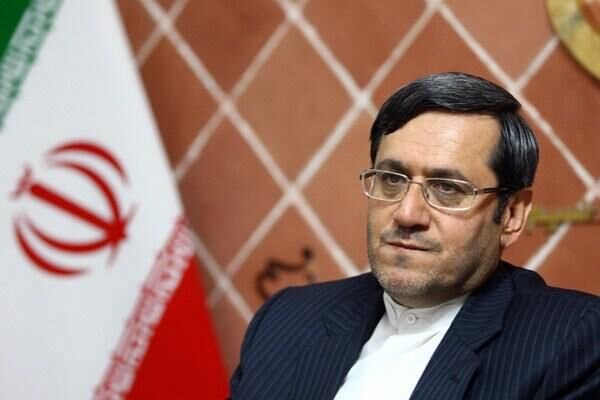
Poland deputy FM meets Araghchi in Tehran
Polish Deputy Foreign Minister Wojciech Zajączkowski met with Iranian Foreign Minister Abbas Araghchi in Tehran for political consultations, where Araghchi blamed US and Israeli aggression for West Asia's insecurity.
Intelligence analysis by Gemini 2.5 Flash

During the third round of political consultations between Iran and Poland, Iranian Foreign Minister Abbas Araghchi discussed strengthening bilateral ties with Polish Deputy Foreign Minister Wojciech Zajączkowski. Araghchi used the opportunity to strongly criticize the United States and the Zionist regime for regional instability, particularly in the Strait of Hormuz, and urged Europea…
Imagine two countries, Iran and Poland, are having a friendly chat to talk about how they can work together. But during the chat, Iran's top diplomat also used the chance to say that some big problems and dangers in their neighborhood, especially near a very important sea lane called the Strait of Hormuz, are caused by the actions of America and Israel. He also told other European countries they should speak up about it.
Analysis
The meeting between Polish Deputy Foreign Minister Wojciech Zajączkowski and Iranian Foreign Minister Abbas Araghchi in Tehran serves as a significant diplomatic exchange, even as it became a platform for Iran to reiterate its strong geopolitical positions. The visit, part of the third round of political consultations, underscores ongoing efforts to maintain and potentially strengthen bilateral ties between Iran and Poland, despite the broader regional tensions that dominate Iran's foreign policy discourse. The discussions touched upon historical positive relations and the importance of leveraging existing capacities for mutual benefit, indicating a desire for continued engagement on various fronts.
Wojciech Zajączkowski
Polish Deputy Foreign Minister Wojciech Zajączkowski's visit to Tehran was framed as a continuation of political consultations, signaling Poland's interest in maintaining diplomatic channels with Iran. His report on talks with his Iranian counterpart and explanation of Poland's positions on regional and international developments suggest a balanced approach, aiming to understand and engage with Iran's perspective while also articulating European viewpoints. The fact that such a high-level meeting took place amidst heightened regional tensions indicates a commitment from both sides to dialogue, even if their stances on critical issues diverge. This diplomatic engagement provides a crucial avenue for communication and potential de-escalation, however limited.
Abbas Araghchi
Iranian Foreign Minister Abbas Araghchi utilized the meeting to deliver a pointed critique of the United States and the Zionist regime, directly attributing insecurity in West Asia and the Strait of Hormuz to their aggressive actions. His condemnation extended to some European countries, accusing them of complicity or inaction regarding military aggression against Iran. Araghchi's insistence on a principled stance from all countries, including European governments, to condemn such actions highlights Iran's demand for international accountability and solidarity. Furthermore, his assertion that Iran will not hesitate to defend its national sovereignty and territorial integrity, while also being steadfast in using diplomacy, underscores a dual strategy of deterrence and engagement.
Strait of Hormuz
The Strait of Hormuz, a critical global chokepoint for oil shipments, featured prominently in Araghchi's remarks as a flashpoint of regional insecurity. By explicitly linking the instability in this vital waterway to the aggressive actions of the US and the Zionist regime, Iran seeks to frame its own actions as defensive responses to external provocations. This narrative is crucial for Iran in garnering international understanding and potentially support, particularly from countries that rely on the Strait for energy supplies. The emphasis on the need for all countries to condemn military aggression in the region reflects Iran's concern over its strategic interests and its desire to prevent further escalation in a highly sensitive maritime corridor.
Key points
- Polish Deputy Foreign Minister Wojciech Zajączkowski met Iranian Foreign Minister Abbas Araghchi in Tehran.
- The meeting was part of the third round of political consultations between Iran and Poland.
- Araghchi blamed US and Israeli aggression for insecurity in West Asia and the Strait of Hormuz.
- Iran criticized some European countries for complicity or inaction regarding military aggression against Iran.
- Araghchi affirmed Iran's commitment to diplomacy for regional peace but also its resolve to defend national sovereignty.
The continuation of political consultations between Iran and Poland, despite regional tensions, suggests a commitment to diplomatic engagement. This ongoing dialogue could provide a channel for understanding differing perspectives and potentially lead to strengthened bilateral cooperation in various fields, fostering stability through communication.
Iran's strong accusations against the US and Israel, coupled with criticism of European inaction, could further entrench existing geopolitical divides. This firm stance, while asserting Iran's sovereignty, risks escalating rhetoric and making it more challenging to find common ground on regional security issues, potentially leading to increased tensions.
Market signals
- OIL Iranian statements blaming US and Israeli aggression for insecurity in the Strait of Hormuz highlight potential supply route risks, which can drive oil prices higher.
AI-generated analysis of potential market relevance. Not financial advice.