Protests fueled by high cost of living hit streets in France and Germany
Thousands protested in France and Germany on Saturday over the high cost of living and perceived political neglect. While largely peaceful, some clashes and arrests occurred.
Intelligence analysis by Gemini 2.5 Flash Lite
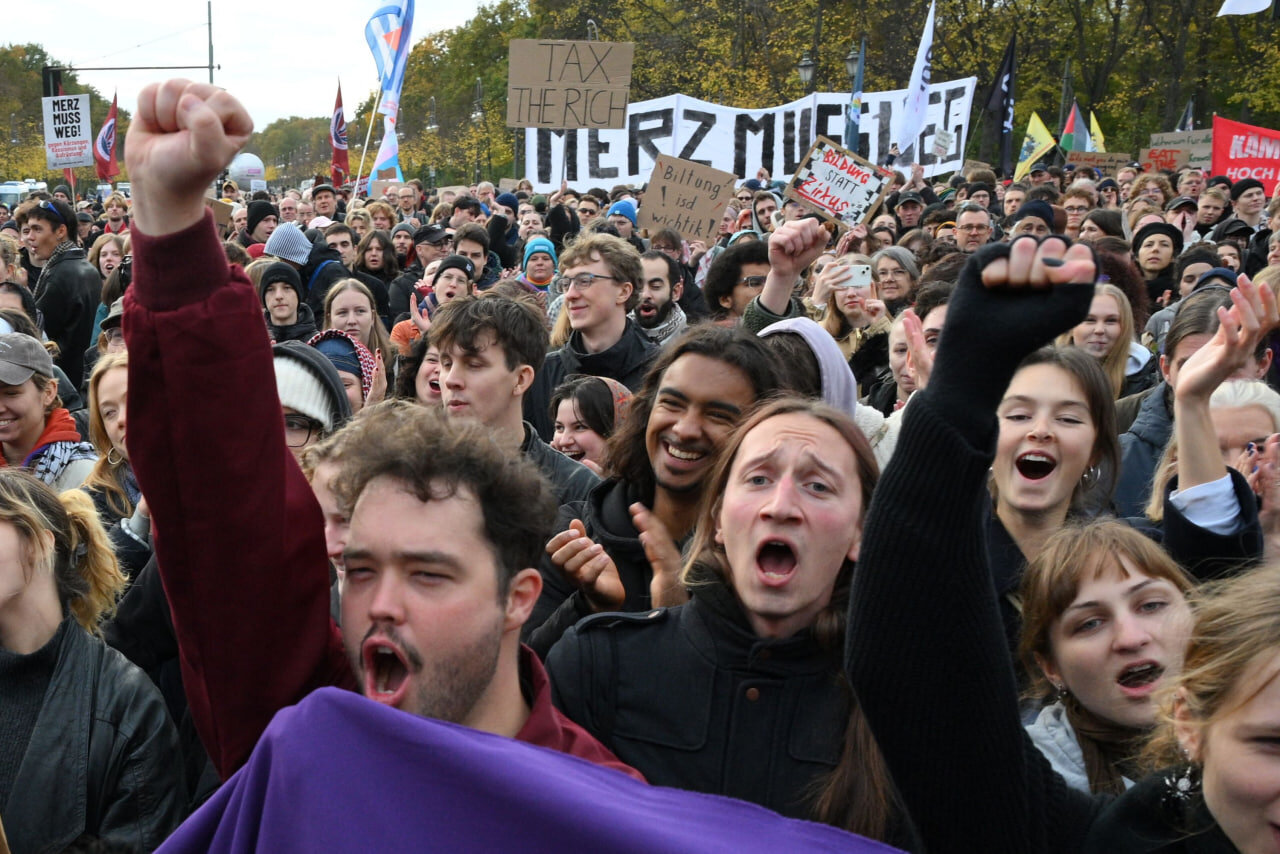
Young people in France and Germany are protesting against rising living costs and political elites they believe are ignoring their concerns. The demonstrations, organized by groups like 'GenZ regelt!', highlight anxieties about the future, government spending, and military policies.
Imagine your allowance isn't enough to buy the snacks you like anymore because prices went up a lot. Young people in France and Germany are marching because they feel adults in charge aren't listening to their worries about affording things and having a good future.
Analysis
GenZ regelt!
The "GenZ regelt!" movement, a youth-led initiative in Germany, is at the forefront of a wave of protests across Europe, inspired by similar demonstrations in France and Italy. The group's name, translating to "GenZ has got this," reflects a bold assertion of agency by young people who feel their concerns are being systematically overlooked by established political structures. Veronika Dinter, a spokesperson for the movement, articulated this sentiment, stating, "We're taking to the streets for a life that everyone can afford." This core message underscores a deep-seated anxiety about economic precarity and a pervasive skepticism regarding the possibility of a better future if current trends persist.
The grievances articulated by "GenZ regelt!" are multifaceted, extending beyond the immediate pressures of inflation and the high cost of living. Demonstrators are also voicing strong opposition to what they perceive as inadequate government spending on essential public services, such as education, citing poorly maintained schools as a tangible example of this neglect. Furthermore, there is significant discontent regarding sharply increased military spending and a new voluntary service model, which some fear could be a precursor to the reintroduction of mandatory military conscription. This complex web of concerns highlights a generational disconnect, where younger citizens feel that politicians are making decisions with little regard for their future well-being and priorities.
While the protests in Germany and France saw significant police presence and some instances of unrest, including tear gas deployment in French cities and fireworks in Germany, the overall demonstrations were largely peaceful. However, the organizers' hoped-for turnout was not fully realized, suggesting a potential challenge in mobilizing broader support. Authorities in Germany were reportedly in contact with their counterparts in France and Italy, indicating a concern that external radical elements might attempt to infiltrate these domestic protests. This cross-border communication highlights the interconnected nature of European social movements and the shared anxieties that transcend national borders, particularly in the face of economic challenges and political disillusionment.
Key points
- Thousands protested in France and Germany on Saturday due to the high cost of living.
- Demonstrations were largely peaceful, but some clashes and arrests occurred in both countries.
- German youth group 'GenZ regelt!' organized protests against political elites and perceived neglect.
- Concerns include the cost of living, government spending cuts, and increased military spending.
- Authorities expressed concern about potential radical involvement and coordinated with other European nations.
The widespread protests could pressure governments in France and Germany to address the cost of living crisis and generational concerns more effectively. Increased dialogue between youth movements and political elites might lead to policies that better reflect the needs and aspirations of younger citizens.
If governments fail to adequately respond to the protesters' demands, the demonstrations could escalate, leading to further social unrest and political instability. The perceived neglect of youth concerns might deepen disillusionment and alienate a significant portion of the population.


