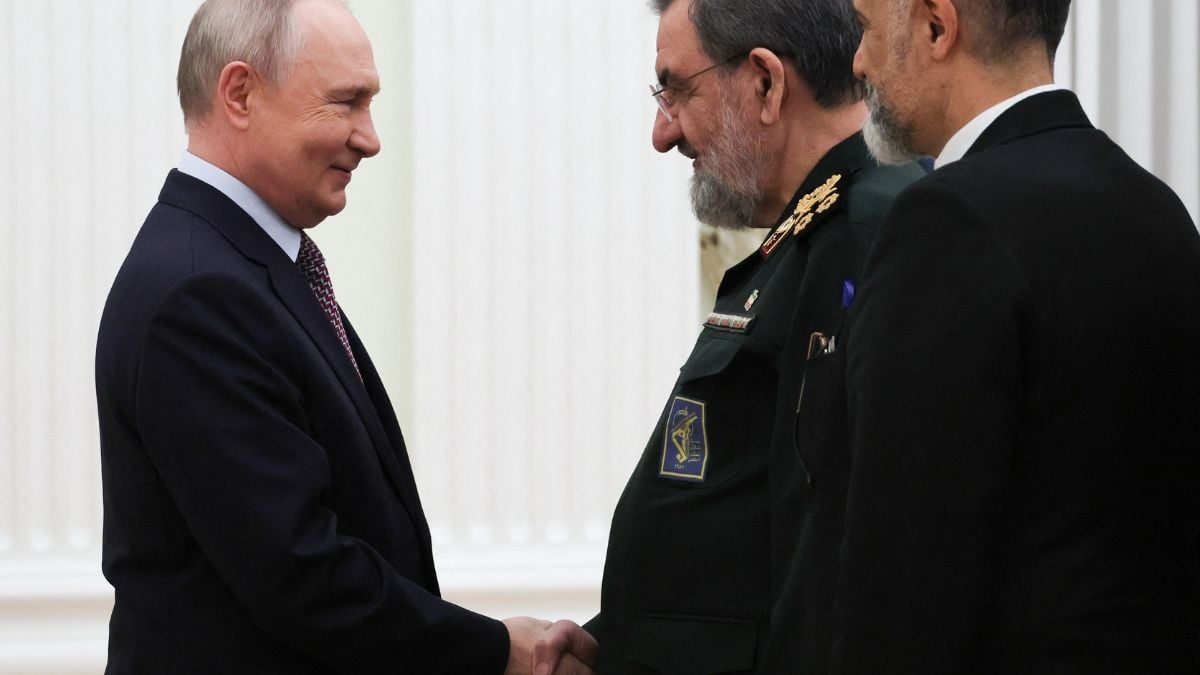
Putin receives Iran’s security chief in Moscow
Russian President Vladimir Putin met with Iran’s security chief, Mohsen Rezaei, in Moscow to discuss strengthening bilateral ties, including plans for a gas pipeline from Russia to Iran.
Intelligence analysis by Gemini 2.5 Flash
The meeting between Putin and Rezaei focused on energy cooperation, specifically a gas pipeline project aimed at addressing Iran's domestic shortages and facilitating Russian gas sales to neighboring countries. This comes as Russia and Iran, both heavily sanctioned, deepen their alliance amidst ongoing conflicts and regional security concerns.
Imagine two big countries, Russia and Iran, are like friends who both have lots of gas but also some problems getting it to everyone who needs it. The leader of Russia, Mr. Putin, met with Iran's security boss, Mr. Rezaei, to talk about building a giant gas pipe. This pipe would help Iran get enough gas for its homes and also let Russia sell its gas to other countries nearby, like a big gas highway. They also talked about keeping their neighborhood safe because there's been some fighting there.
Analysis
Mohsen Rezaei
Mohsen Rezaei, the secretary of Iran’s Supreme National Security Council, characterized his recent meeting with Russian President Vladimir Putin in Moscow as an "extremely important exchange." His presence underscores the high-level nature of the discussions between the two nations, signaling a strategic alignment on various fronts. Rezaei's remarks, reported by the Iranian embassy, highlighted the critical agenda items, particularly in the energy sector.
The Iranian official's statements to state TV confirmed that a significant portion of the dialogue revolved around the construction of gas pipelines. This initiative is designed to serve a dual purpose: to mitigate Iran's persistent natural gas shortages, which are crucial for heating systems, and to establish a conduit for Russian gas to reach other countries in the region. This strategic move reflects Iran's efforts to leverage its geopolitical position and energy infrastructure.
Gas Pipelines
The core of the discussions centered on the feasibility and implementation of gas pipelines originating from Russia and extending into Iran. This project is framed as a solution to Iran's long-standing domestic gas supply issues, which have been exacerbated by recent conflicts. By importing Russian gas, Iran aims to stabilize its internal energy market and ensure consistent supply for its population and industries.
Beyond domestic consumption, the pipeline project also envisions Iran as a transit hub, enabling the sale of Russian gas to other "neighbouring countries." This aspect positions Iran as a crucial player in regional energy distribution, potentially altering existing energy trade dynamics. The collaboration on such a large-scale infrastructure project highlights the deepening economic and strategic ties between Moscow and Tehran, especially given their shared experience with international sanctions.
February War
The context of the meeting is significantly shaped by the ongoing geopolitical tensions, particularly the "war with the United States and Israel that began in February." This conflict, which reportedly involved attacks on key Iranian infrastructure, including natural gas refineries, has underscored Iran's vulnerability and its need for strategic alliances. The intensified fighting, lasting nearly 40 days, has likely accelerated Iran's pursuit of energy security and robust partnerships.
Russia and Iran have notably strengthened their relationship since Moscow's full-scale invasion of Ukraine in 2022, both facing extensive international sanctions. This shared predicament has fostered a closer alignment, with both nations seeking to circumvent Western pressures and establish alternative economic and security frameworks. Putin's expressed readiness to mediate an end to the Middle East conflict, coupled with Rezaei's emphasis on regional security mechanisms and the inadmissibility of external interference, further illustrates their coordinated approach to global and regional affairs.
Key points
- Russian President Vladimir Putin met Iran's security chief Mohsen Rezaei in Moscow to discuss strengthening ties.
- Key discussions focused on the construction of gas pipelines from Russia to Iran.
- The pipeline aims to address Iran's natural gas shortages and facilitate Russian gas sales to neighboring countries.
- Russia and Iran have deepened their alliance since Russia's 2022 invasion of Ukraine, both facing heavy sanctions.
- Putin expressed readiness to mediate an end to the war involving the US and Israel that began in February.
The proposed gas pipeline could significantly enhance energy security for Iran, alleviating domestic shortages and potentially providing a stable energy source for other regional nations. This cooperation could foster greater economic stability and reduce energy-related vulnerabilities in a volatile region.
The ongoing war involving the US and Israel, as mentioned in the article, poses a significant risk to the stability and completion of such a large-scale infrastructure project. Furthermore, the extensive international sanctions on both Russia and Iran could complicate financing, construction, and operational aspects of the pipeline, limiting its potential benefits.